
Commercial Roofing Around Bozeman Yellowstone International Airport
Commercial Roofing Around Bozeman Yellowstone International Airport in Bozeman and the Gallatin Valley
The country northwest of Bozeman is where the valley shows its weather. Bozeman Yellowstone International Airport lies in unincorporated Gallatin County beside Belgrade, roughly 8 miles from Bozeman at 4,473 feet, and the business area around it holds small warehouses, contractor shops and office-and-yard buildings. On a March morning the roofs there tell you which way the wind came from: trim lifted on the windward corner, a drift against the lee wall, ice at a scupper that faces north.
If your building sits in this business area, which corner of the roof takes the wind first, and has anyone looked at it since the last storm?
What commercial buildings fill the business area?
The airfield covers 2,481 acres and belongs to the Gallatin Airport Authority, and the commercial buildings around it gain from airport adjacency and I-90 access. They include a yard-equipped office-and-warehouse building completed in 2022, a warehouse condo building finished in 2024 and a 12-unit warehouse project minutes from the terminal.
Buildings of this kind commonly carry a metal or single-ply roof and serve contractors, small businesses and storage users. My work here starts with the roof plan, then the penetrations, then the edges.
The yard is part of the building here. Contractor and warehouse users park trailers, stack material and run forklifts right up to the wall, and any of that can damage a roof edge or a downspout. I check the lower few feet of the wall for impact marks, the gutter ends for dents and the sidewalk for ice that a clogged downspout leaves behind. A roof is only as good as the way it empties onto the ground. Streets such as the Jackrabbit Lane corridor and the Copper Ranch Road business area each have their own details.
How does airport growth affect nearby roofs?
Air traffic here is climbing, with about 2.8 million passengers in 2025 and a $180 million expansion announced. Growth like that tends to pull contractors, vendors and storage users into the surrounding area, and it adds buildings to the same stretch of valley. A new tenant often arrives with new rooftop equipment, and each unit is another curb to flash and another path to protect.
For a roof owner, growth means more neighbors, more traffic and more demand for crews. Scheduling matters. A roof that needs work should be walked before the busy season so repair slots are available. For building owners who lease space to businesses tied to the airport, the roof is part of the lease relationship, and a written condition report helps both sides. Dated photos of the roof at the start of a tenancy and at its end settle most questions about who owes what, and a moisture scan before a long lease is signed shows whether the insulation is dry. The report is a short document, and it saves a long discussion. Our roof condition reports are written for that use.
What does wind do on open ground near the airfield?
This stretch lies in the northern part of the valley. Gusts hit 89 mph in the storm of early August 2013, which also brought golf-ball stones to Belgrade and north Bozeman. Bozeman's design wind is 110 mph, and Livingston's airport station, farther east, is one of the windiest in the country.
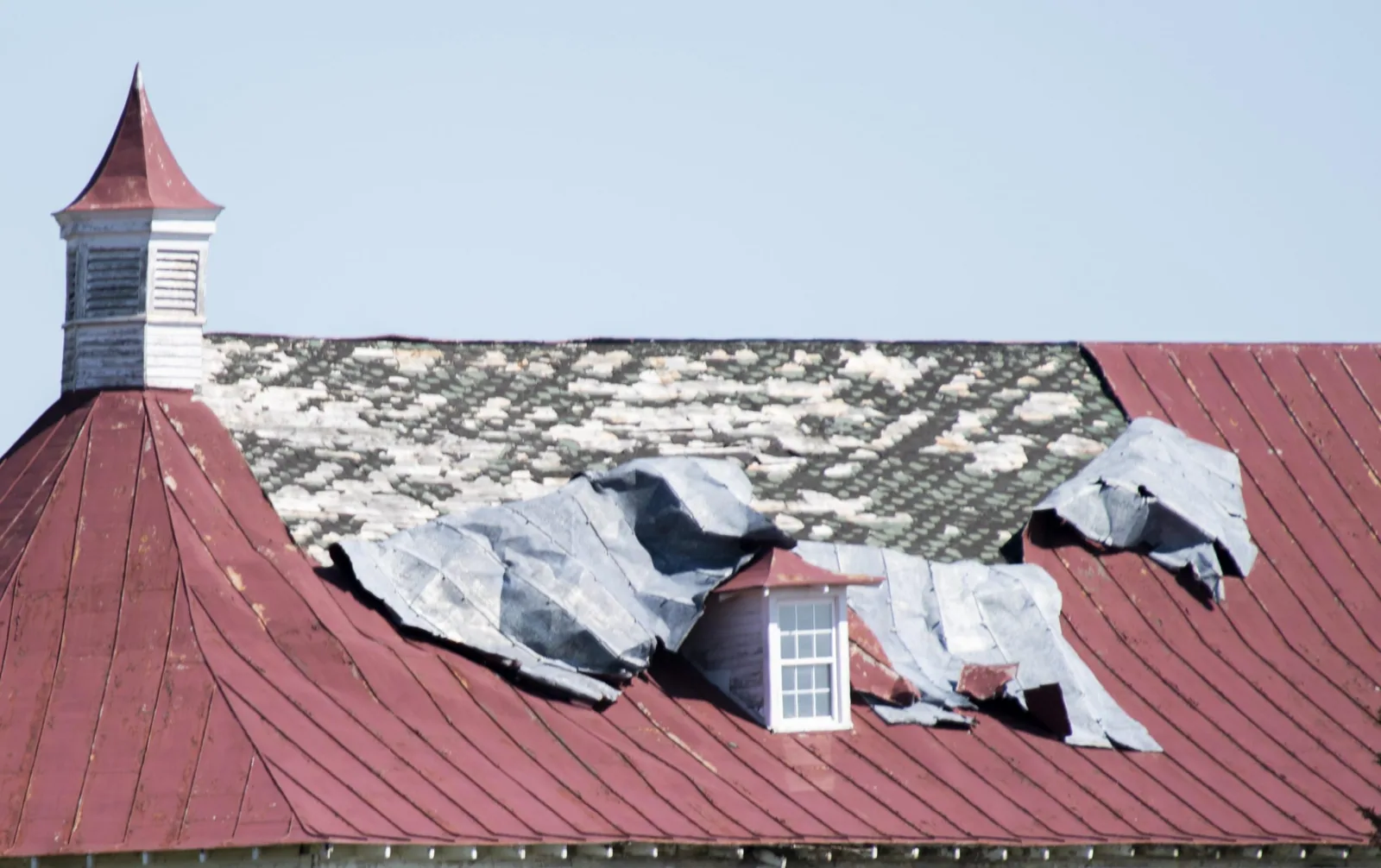
The roofs most at risk are the ones with loose trim, old sealant and fasteners that have started to back out. I check the roof edge from the ground first, then up close. On metal, I look at rake and eave trim, ridge cap closures and the first rows of screws. On membrane, I check the perimeter attachment and the flashing at the parapet. A wind damage repair after a storm starts at the windward corner and follows the failure line. When hail rides in with the wind, as it did across Belgrade in August 2013, the second step is a walk of the field for bruises and a check of every skylight and rooftop unit housing for dents. Dated photographs taken the same week support any insurance conversation that follows.
How do drifts and thaw cycles behave out here?
Winters here match Bozeman's: about 91 inches of snow a year and a record low of minus 46. The airport area lies in the same valley, and drifts form behind walls, rooftop units and parapets. Those drifts load the roof unevenly, and the melt runs to the nearest low point.
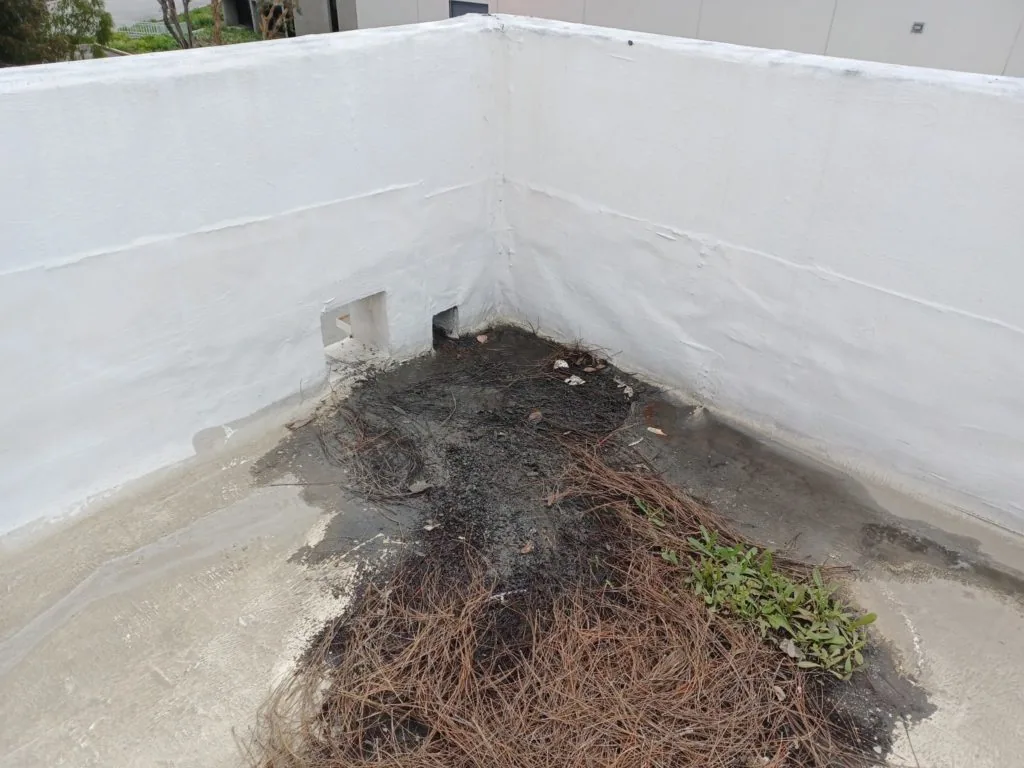
On a small commercial roof, the low point is often a single scupper or a single drain. If that opening freezes, the water backs up against the wall. I check each scupper, sump and gutter before the first freeze and note which ones sit in shade. A drain and scupper repair can be as simple as a larger opening or a heat cable, and it prevents a lot of damage. Where a building is a few years old, a walk often finds early details to fix. Rooftop units added by a tenant after the building opened are the common source: the curb was cut, the unit was set and the flashing was left to the sealant alone. The fix is a proper curb flashing with a termination bar, tested with a hose before the tenant moves on to the next project, and the unit goes on the roof plan so the next crew knows it is there. Leases that require roofer approval before any roof cut keep the problem from repeating.
How do we handle work on buildings tied to aviation?
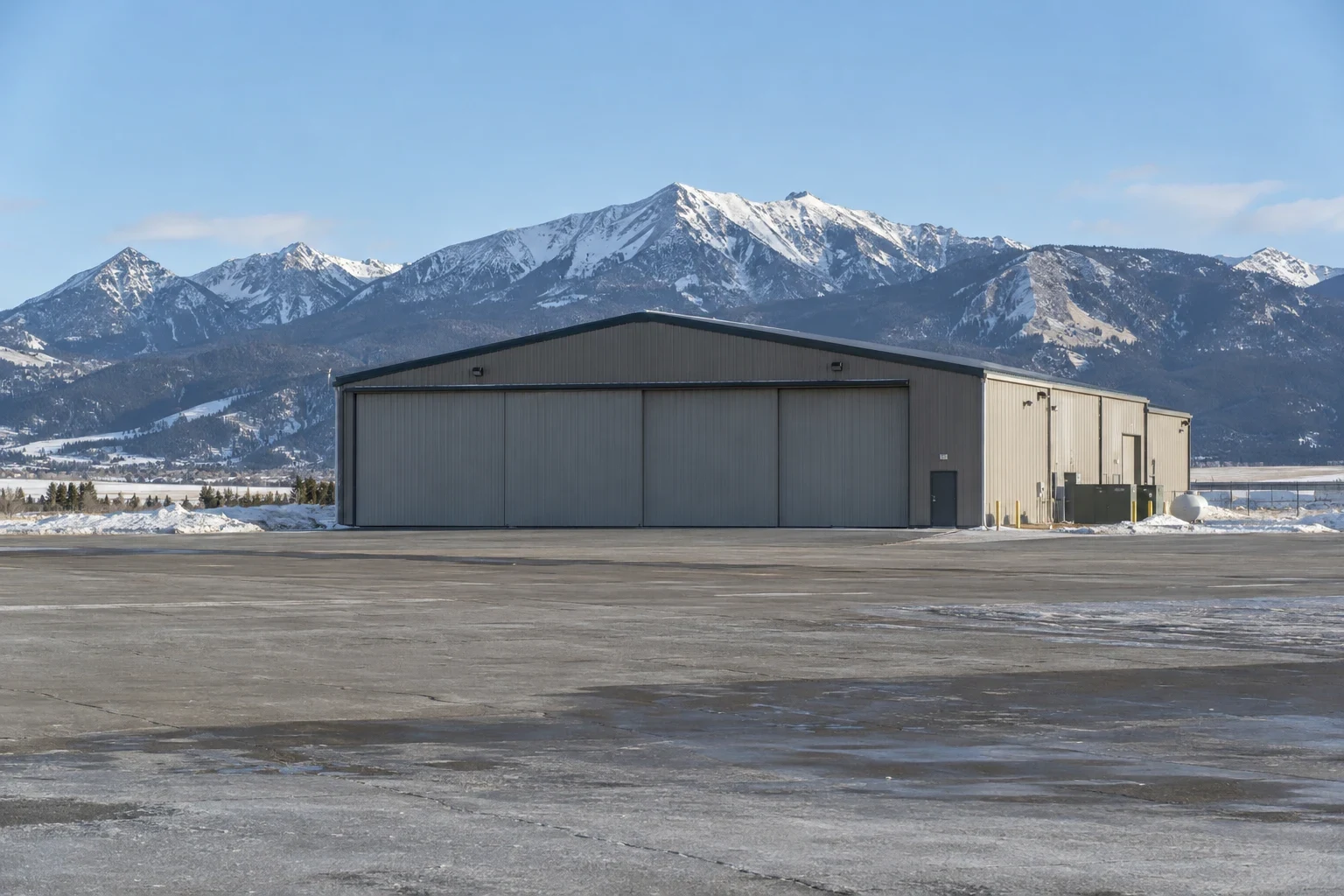
Buildings that serve aviation, such as hangars or aircraft service shops, have long spans, tall doors and valuable contents, and the aircraft hangar roof gets its own structural and interior-protection plan. Work near an active airfield also follows rules on crane height, vehicle routes and loose debris, and the airport authority or the building owner sets the terms. We keep sheet material tied down at the end of every shift, stage trucks away from movement areas and use lifts instead of tall cranes wherever the job allows. Those habits protect the crew and keep a roof job from becoming an airfield problem. We plan to them before the first load arrives.
Neighboring places share the same pattern. Belgrade is the nearest town, and Four Corners sits about 7 miles west of Bozeman. Our emergency roof repair crews respond around the clock, and a storm on the open ground near the airfield is exactly the situation they are for.
Questions About Commercial Roofing Around Bozeman Yellowstone International Airport
Do we need airport approval for roof work on a nearby building?
It depends on the building's location and the equipment used. Crane and lift heights near an airfield can be restricted. We ask the owner and the airport authority early and plan the equipment to match.
What roof edge details matter most in open country?
Edge metal, perimeter fasteners and the first rows of the field. Wind uplift peaks at corners and eaves, so refastening and replacing thin trim there gives the most protection for the cost.
Should a new building near the airport get a first-year roof walk?
Yes. A walk catches misplaced fasteners, unsealed curbs and loose trim before the first winter. The cost is small compared with a claim.
How do we get a roof ready for a heavy-snow year?
Clear drains, tighten flashing, add snow guards where slides threaten doors and check the fasteners at the edge. A fall walk with a written list is the quickest way to get this done.