
Metal Roof Retrofit and Restoration in Bozeman, MT
Metal Roof Retrofit and Restoration in Bozeman and the Gallatin Valley
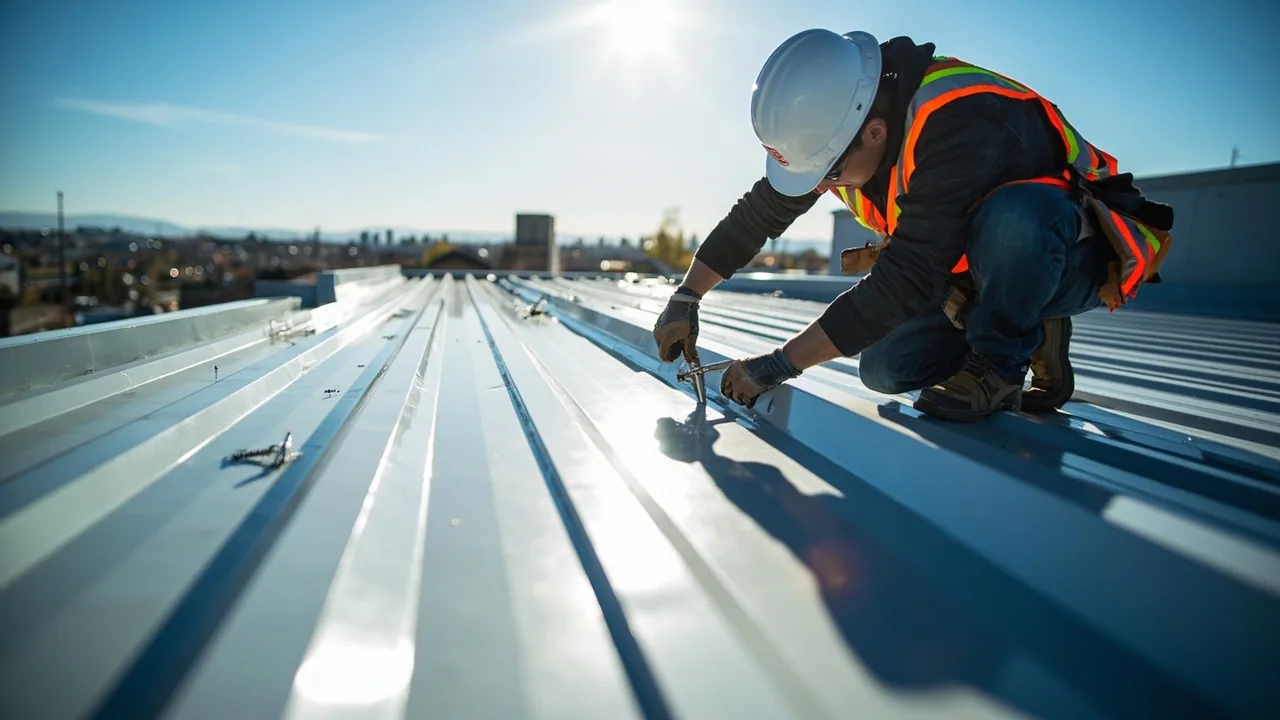
Run a hand along a screw line on an older metal shop roof in April and count the heads that stand proud of the panel. Each one has backed out a little, and the rubber washer under it has split in the sun and cold. Water follows the screw into the purlin, then into the building. On an older flex or storage building, that pattern can repeat on every panel. Bozeman, MT, with nights near 15 degrees F in January and snowfall near 91 inches, puts fasteners through a long run of cold cycles. How many of your screws have backed out?
We retrofit and restore exposed-fastener metal roofs across the Gallatin Valley, and we describe what the panels are doing before we talk about what to do with them.
What is an exposed-fastener metal roof, and how does it fail?
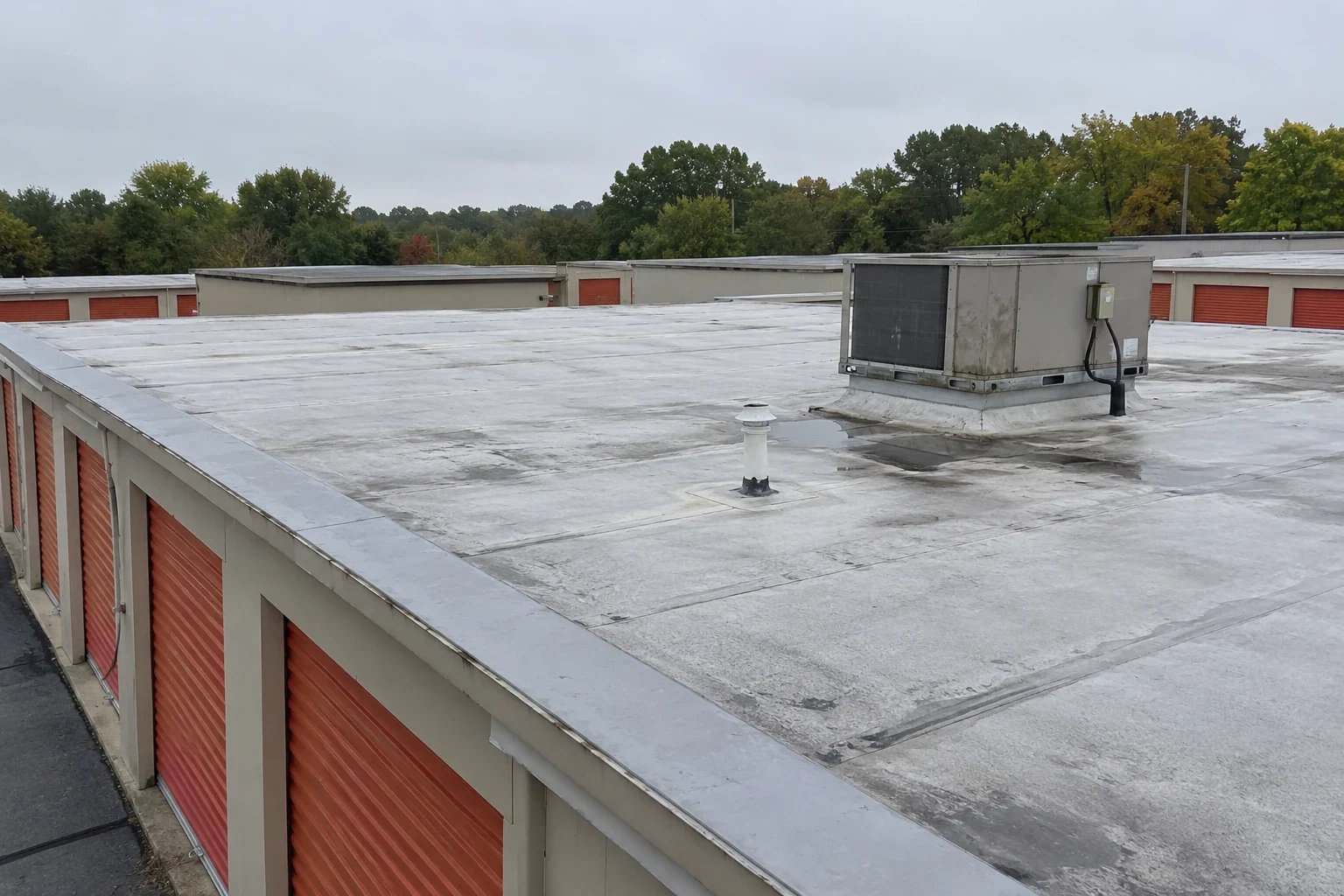
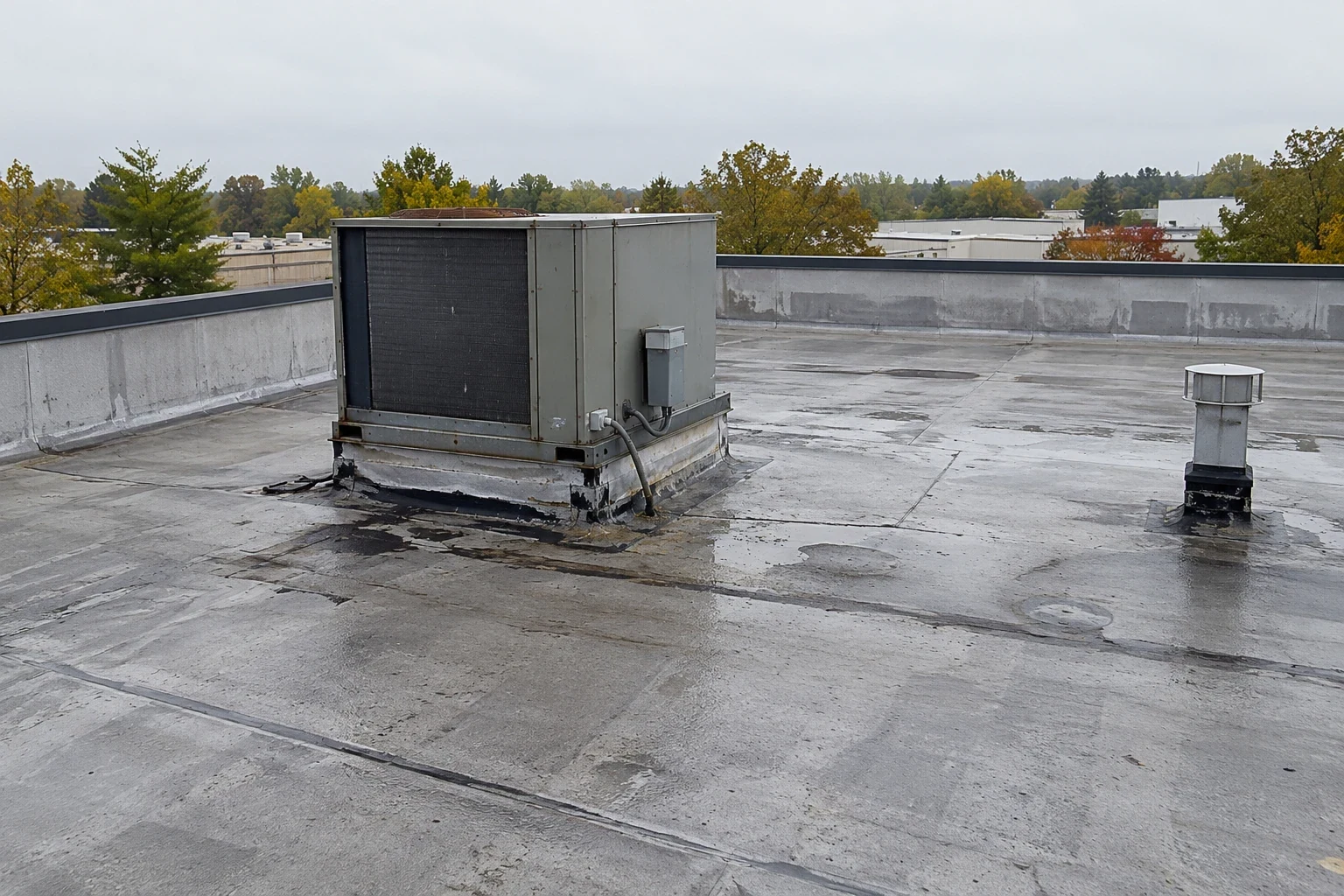
An exposed-fastener roof is made of corrugated or ribbed metal panels held down by screws that pass through the panel and into purlins below. Each screw has a washer that seals the hole. The system is simple and inexpensive, and it is common on shops, barns, storage buildings, light industrial space and older commercial buildings.
The weakness is the screw. Metal expands and contracts with every temperature swing, and each cycle works the screw in its hole. The washer cracks, the hole elongates and the screw backs out. That failure is called fastener pull-out, and on an older roof it is a leading cause of leaks. The panel itself may be sound. The fasteners are not.
What does restoration involve?
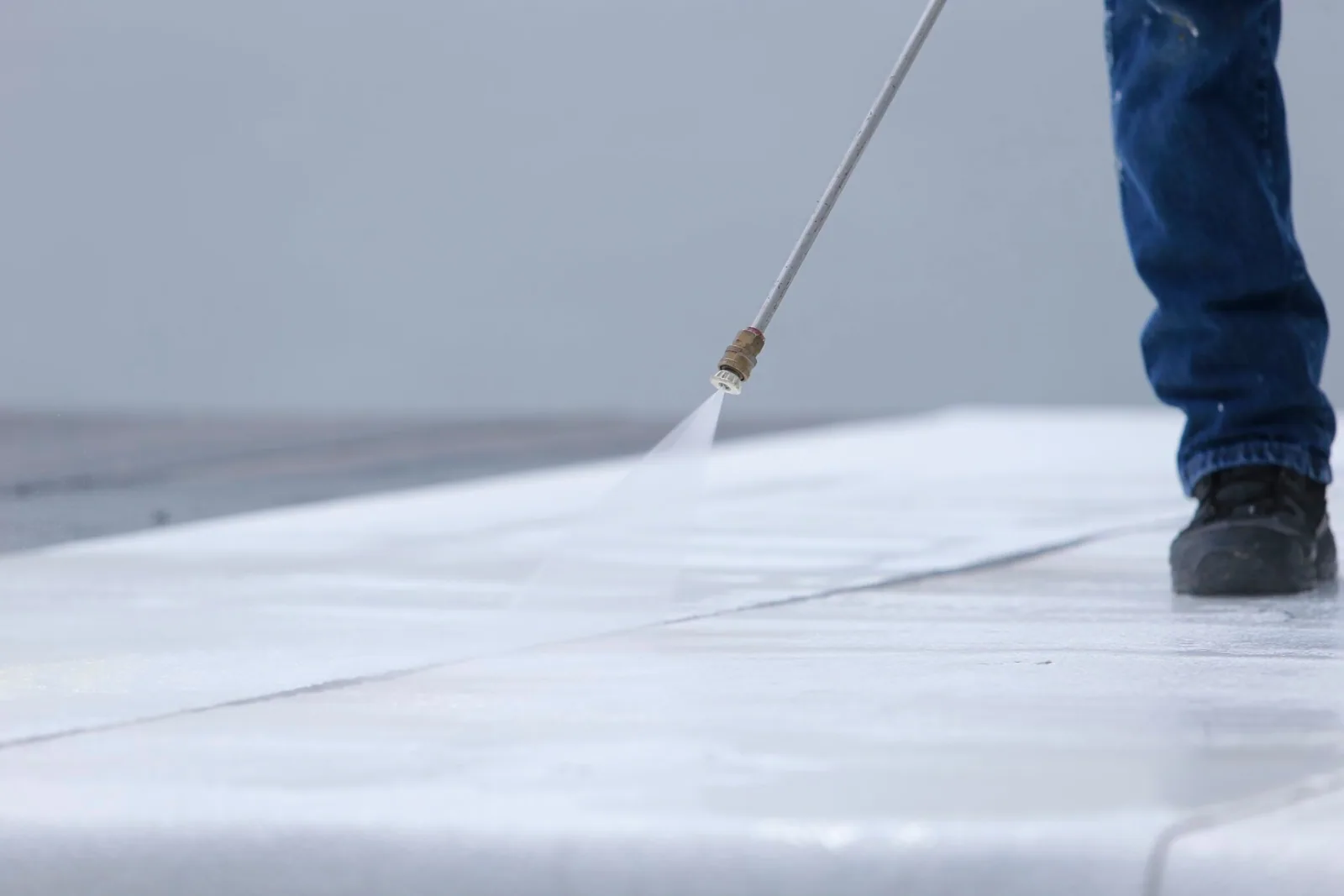
Restoration keeps the existing panels and fixes what is failing. We walk the roof and tag loose and missing fasteners, then replace them with larger-diameter screws and new washers at the same locations, driven to the correct torque. We seal laps and seams with compatible butyl tape or sealant, re-flash penetrations and clean the surface.
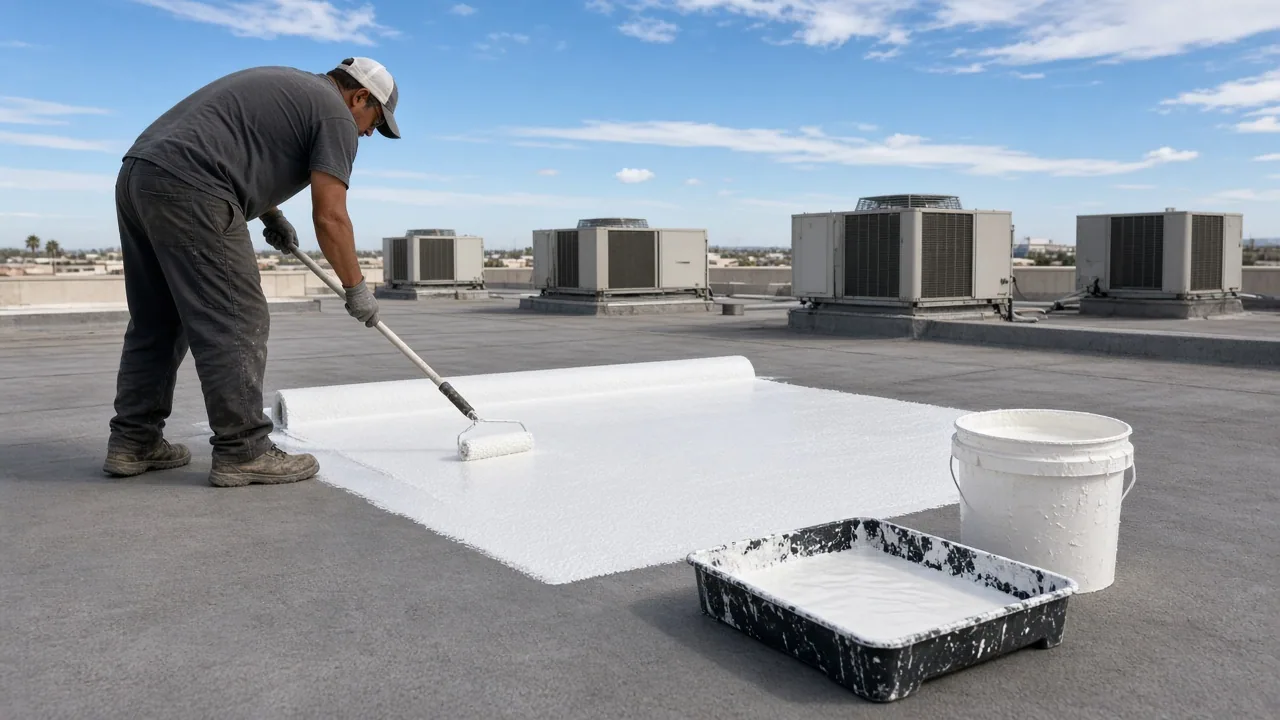
If the panels are sound, a liquid-applied coating can then seal the whole roof. A silicone coating and an acrylic coating each have a place on metal, and the choice depends on slope, ponding and the substrate. The panels need to be clean, rust-treated and primed where required. Skipping prep is what makes a coating fail, so we write the prep steps into the scope.
When is a retrofit better than a restoration?
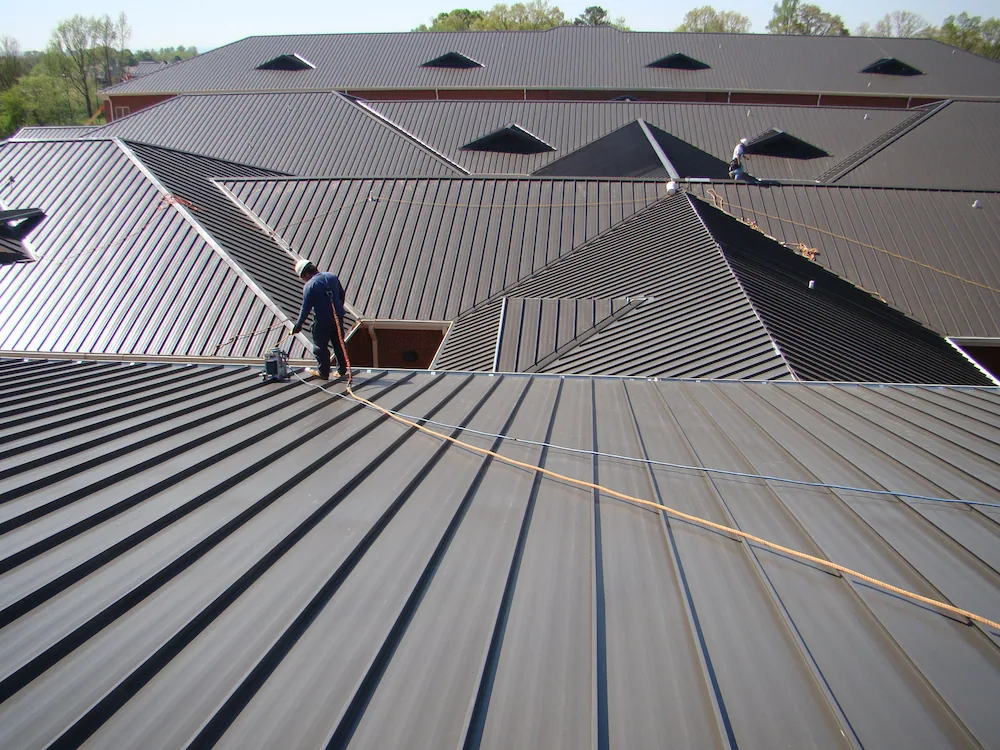
Choose a retrofit when panels are corroded through, when the building has leaked for years or when the owner wants a long-lived roof without tear-off. A retrofit adds a new roof over the old one. For metal, that often means installing a framing system, new insulation if desired and a new standing seam metal roof on top, with hidden fasteners and clips that allow movement.
The deck and framing must carry the extra weight and the snow. For Bozeman the criteria are 50 psf of snow at ground level and 110 mph of design wind, and a retrofit changes the load path. We check the purlins and the connections and ask for drawings where they exist. A core or a cut at a few panels confirms what sits beneath.
Which valley buildings need this work?
Light industrial and flex buildings are going up near Belgrade, and metal roofs on the older ones in that area have been through more winters. Four Corners, where U.S. 191, Montana 84 and Montana 85 meet west of Bozeman, grew from 3,146 residents in 2010 to 5,901 in 2020. A building's age says little about its roof, so we walk each one and read the panels.
Owners of self-storage buildings and flex industrial space get the most from a clean plan, because a leak over stored goods is costly. The Four Corners area and the Belgrade side of the valley share the same stresses: wind, snow and loose screws.
How does wind change the plan?
Early August 2013 sent 89 mph gusts over Belgrade and the north side of Bozeman, and the Triple Tree Road sensors southeast of town reached 65 mph on August 29, 2023. Livingston's wind record is second only to Guadalupe Pass, Texas, among U.S. airport stations. A metal roof with failing fasteners can lose panels at the edge in that kind of wind.
We check the perimeter first. Edge screws are spaced closer than field screws for a reason, and a loose edge row is the beginning of a peel. We re-fasten the edges, replace missing trim and photograph each fix. If a panel is already lifted, a temporary strap or sealant holds it until the permanent repair. After a storm, a commercial roof repair visit confirms that nothing else moved.
What do snow and ice do to a fastened panel?
Snow slides off the panels in sheets, and ice forms at the eave and in gutters. A rib that holds meltwater against a screw line lets water find a path. Condensation under the panels is another source, because a cold metal skin over a warm, humid building drips like a glass of ice water. A leak that looks like roof failure can be condensation, and the fix lies with insulation, vapor control and ventilation.
We tell the two apart by pattern and time. Leaks that appear during rain or snowmelt point to fasteners and laps. Drips that show on cold, clear mornings point to condensation. A coating restoration cannot cure condensation, so we sort that out first.
How do we scope the job?
We count. The sheet lists panels, fasteners, laps, penetrations and trim, with a repair method and a quantity for each. We photograph a sample of each defect and mark its location on the plan. The owner sees the number of fasteners to be replaced, the sealant to be applied and the coating area, which keeps the price tied to the roof.
Timing follows the weather. Sealants and coatings need dry surfaces and workable temperatures, so major work takes place in the warm, dry window and cold months are for temporary repairs. We hold backup dates for storms and write them into the schedule.
Closeout is a walk with the owner. We check the fasteners against the count, test the laps, photograph the finished coating or panels and hand over the product data, warranty terms and the sealant and coating batch numbers for the file. That file is what the next crew reads before it climbs, and it keeps a coating from going over a sealant it cannot bond to.
Questions About Metal Roof Retrofit and Restoration
Can I just replace the screws on an old metal roof?
Often yes, if the panels are sound. Use larger-diameter screws with new washers, seal the laps and re-flash penetrations. A walk and a count tell whether the roof can be restored or whether a retrofit is the better value.
Why do new screws sometimes fail again?
The old hole may be too wide, the purlin may be soft or the panel may move more than the fastener allows. Oversized screws and a check of the purlin condition solve most repeats.
Is a coating enough on rusty metal?
Not by itself. Rust must be treated and primed, and perforated panels need replacing. A coating is a seal and a finish, not a structural repair.
How can I tell condensation from a roof leak?
Timing is the clue. Leaks show during rain or thaw, and condensation shows on cold, clear mornings. A walk inside and out, plus a look at insulation and ventilation, settles it.
Does a retrofit need a permit?
The building department decides, since a retrofit changes the roof structure and load. We prepare the details and drawings the application calls for.