
Warehouse Roofing in Bozeman, MT
Warehouse Roofing in Bozeman and the Gallatin Valley
A warehouse near Belgrade has a quiet roof for most of the year and a busy one when the thaw starts. The long field of membrane does nothing visible until March, when the drifts behind the parapet melt, the sun hits the dock side first and the water runs along a seam that was welded on a cold morning. The first sign inside is often a drip landing on pallets. Bozeman, MT piles up about 91 inches in an average winter, and a wide, low roof holds a lot of it. Where does water first show up inside your building?
We inspect, repair and replace warehouse roofs across the Gallatin Valley, and we describe the roof as it is before anyone prices work.
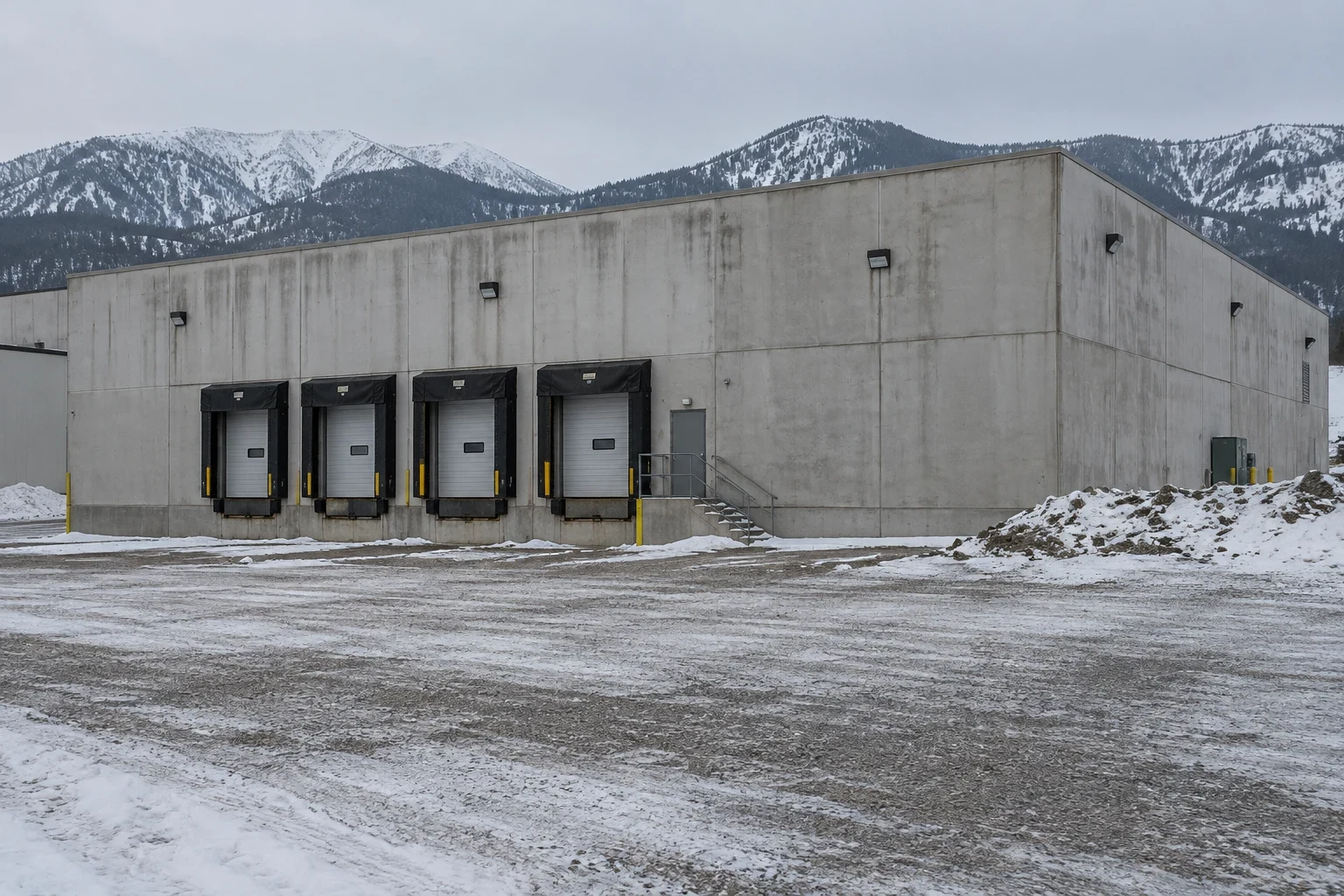
What kind of warehouses are going up in the valley?
Belgrade is seeing light industrial and flex buildings go up, including a 12-unit warehouse project minutes from the airport. A small-bay building like that puts many tenants under a shared roof, and a roof that serves a dozen units can leak into any of them. The owner needs a plan that shows which unit sits under which section of roof.
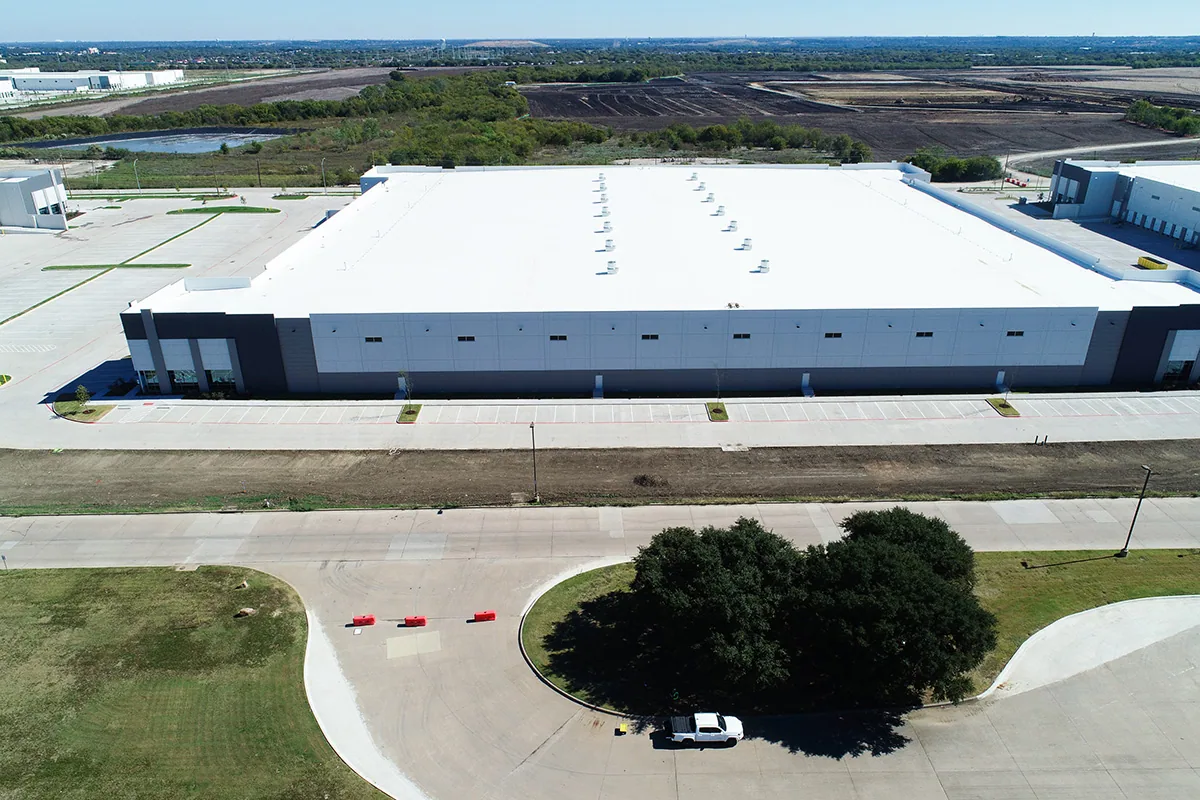
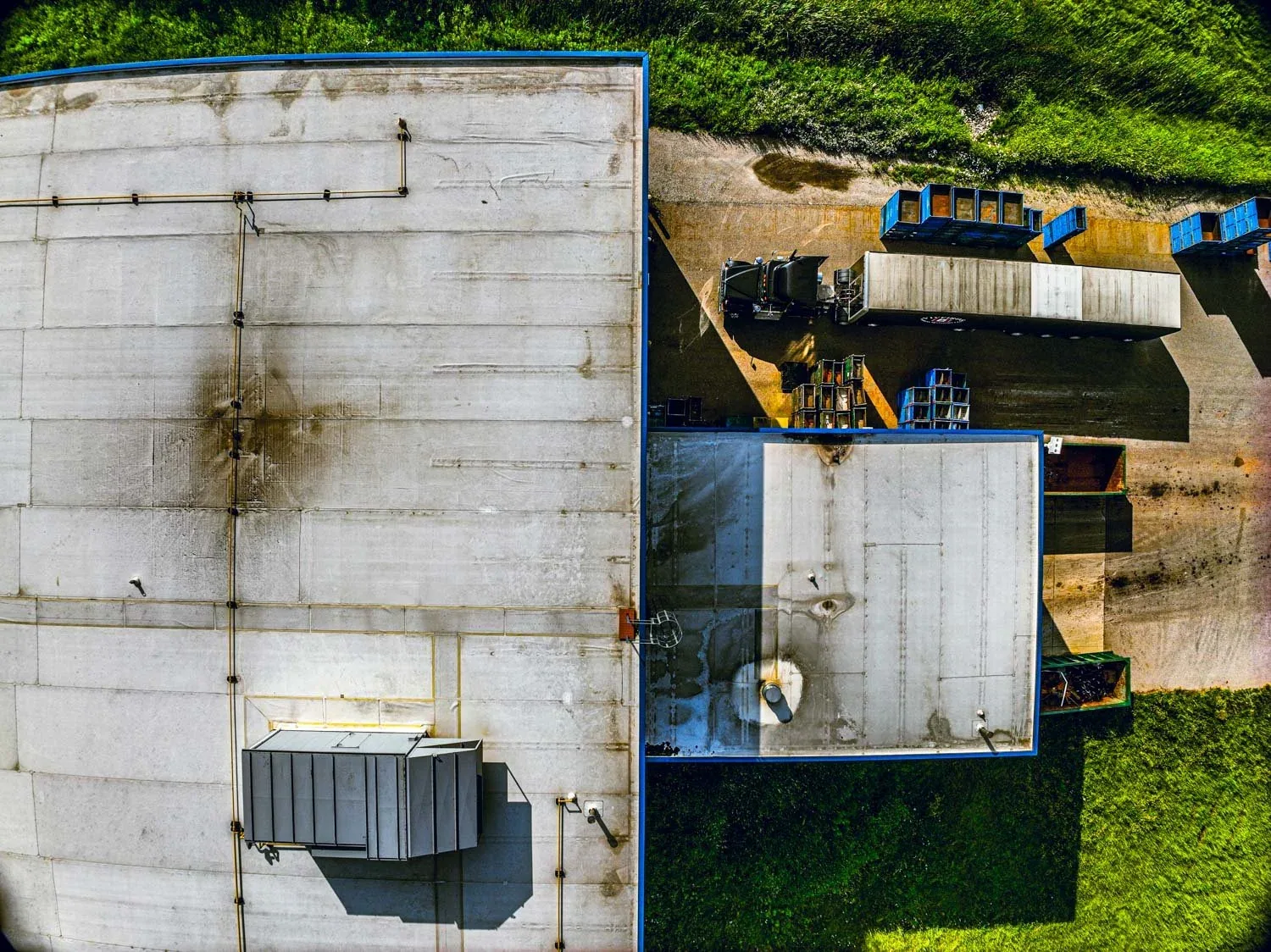
Larger distribution-style buildings follow a different pattern, with fewer tenants and more dock doors, as on a distribution center roof. For both, we start with the same walk: seams, drains, edges, penetrations and equipment, with a photo and a position on the plan for each finding.
A flex industrial building mixes office, showroom and warehouse under one roof line. The office section can have a different roof from the warehouse behind it, and the joint between the two is a place to look. We note each section's membrane and each transition on the plan.
What does snow do to a wide, low roof?
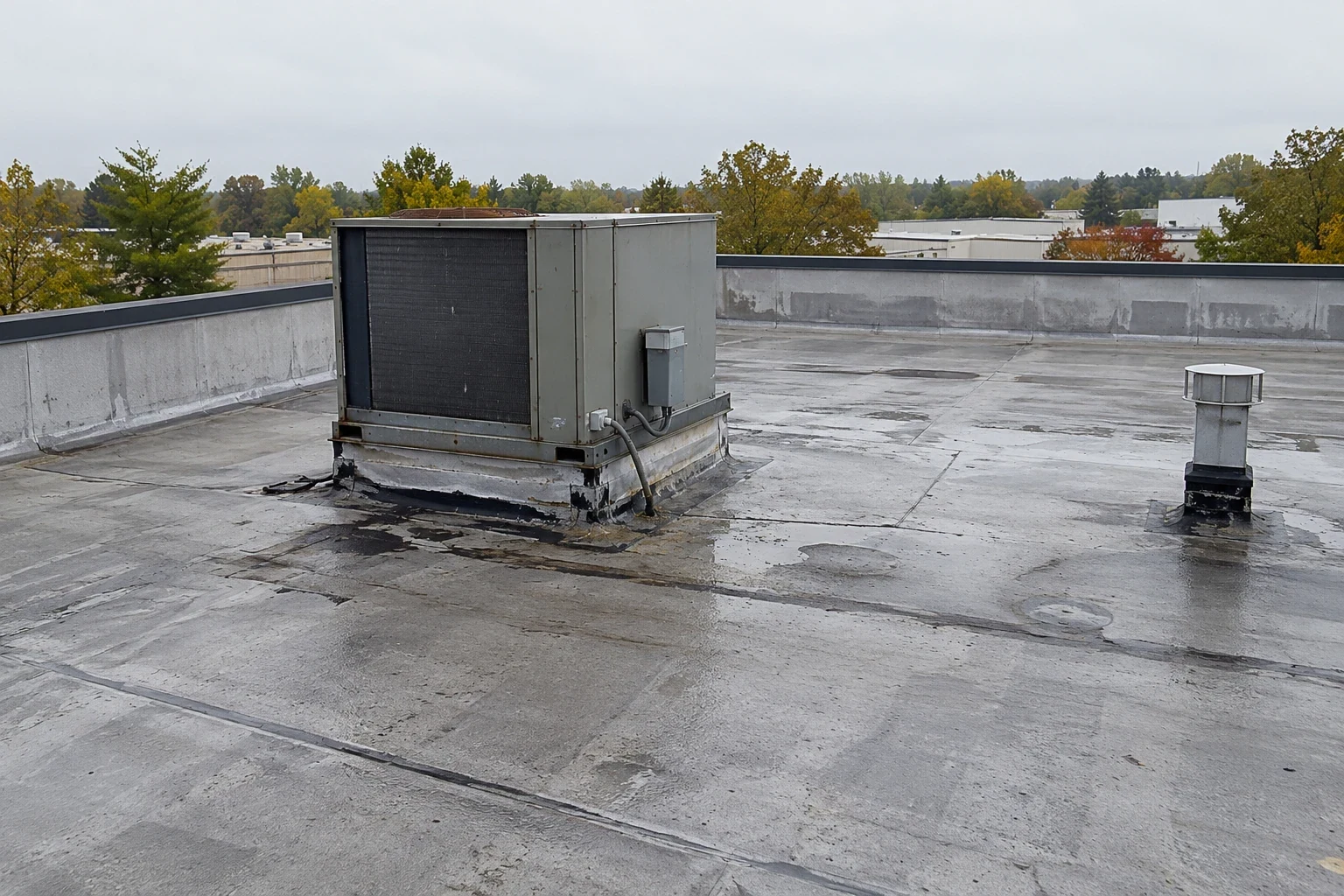
Bozeman's 50 psf ground snow load is an average, and a wide roof with a parapet or rooftop units collects drifts that exceed it locally. Drifts sit against walls and equipment, then melt unevenly. Meltwater runs to the nearest low spot, and if the drain there is blocked, it ponds. Standing water adds weight, collects dirt and sits on seams through freeze and thaw.
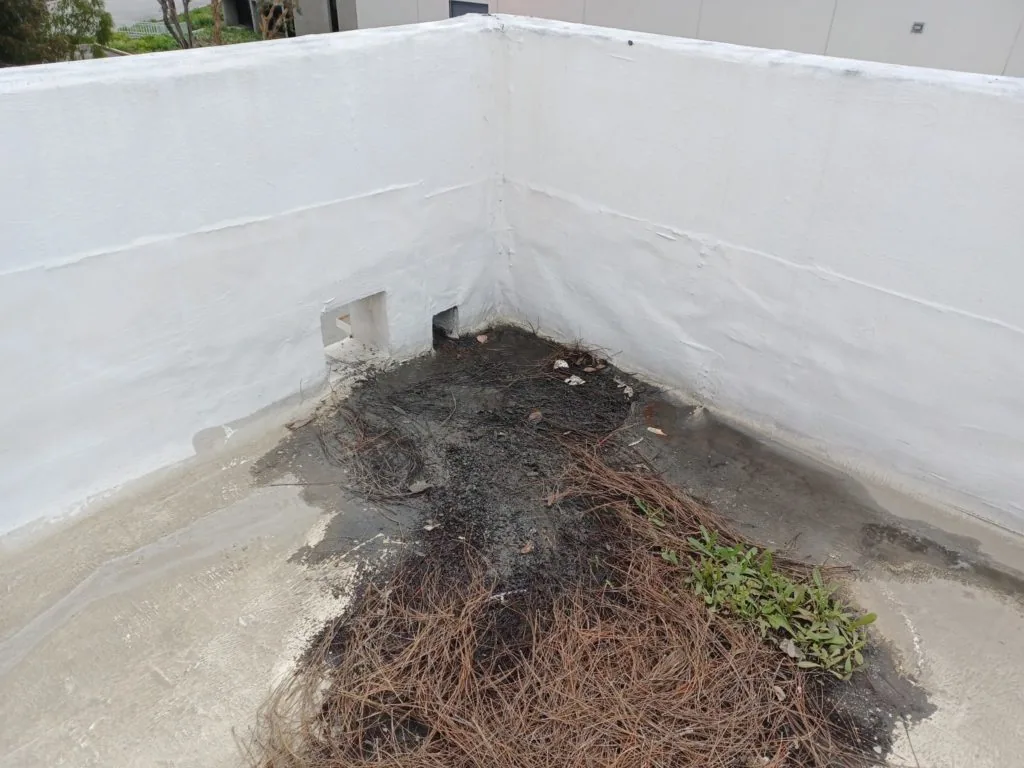
We check roof drains and scuppers before the first heavy snow and again after the main thaw. We note where water stands, how long it takes to clear and whether the deck has sagged. A ponding line on a warehouse roof is a map of where the deck and the drains disagree.
Why do warehouse edges fail first?
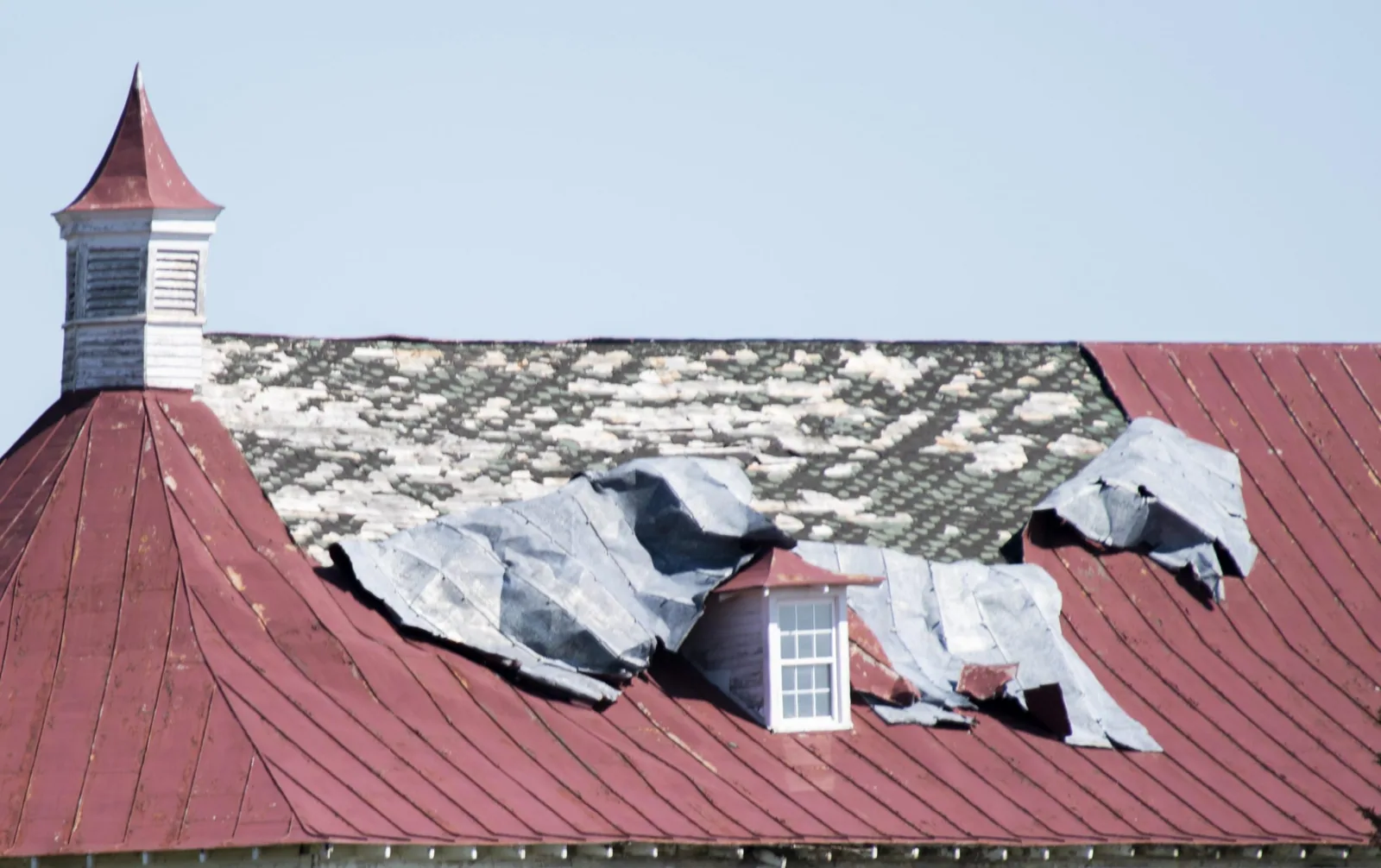
Wide roofs catch wind. In early August 2013, Belgrade and north Bozeman took 89 mph gusts along with golf-ball hail, and the Triple Tree Road sensors southeast of Bozeman topped out at 65 mph in late August 2023. Wind lifts edge metal, peels membrane at corners and pulls at the last row of fasteners.
On every warehouse walk we test the perimeter: coping, edge metal, flashing at walls and the first rows of fasteners or adhesive. A loose edge is a small repair in the fall and a large one after a gust. Wind damage repair starts with a temporary seal at the lifted edge, then a check of how far the lift ran under the field.
How does hail show up on a warehouse roof?
Hail is the other big storm in the valley. The June 30, 2010 storms put golfball-size stones on Bozeman for roughly thirty minutes and baseball-size stones east of Gallatin Field. Hail of 1.50 inches also pelted the Gallatin River corridor northwest of Bozeman Hot Springs in May 2023. A long roof has a lot of surface to mark.
After a storm we walk the field in a grid, flag bruises and cut a core at the deepest. A drone roof inspection speeds the survey on a big roof and gives the owner a dated set of images. Cosmetic marks go in one column and damage that reached the insulation in another, with photographs for both, so an insurer sees the same roof we do.
Which roof systems suit a warehouse?
A TPO sheet is a common choice on a long, quiet roof, with welded seams and a reflective surface. Metal is common on small-bay buildings, and an older exposed-fastener roof may need a metal roof retrofit. The right choice depends on the deck, the slope, the equipment and the budget year.
Each option comes with installed cost, expected service and a repair path. A core cut and an infrared moisture survey come first, because the insulation condition decides whether a recover is possible or whether the wet section must come out.
How is the job scheduled around a working warehouse?
A warehouse does not close for a roof. We plan the tear-off in sections that can be dried in each day, keep dock approaches clear and place the laydown yard where trucks do not need to cross it. Interior racking, sprinklers and stored goods near leaks get protection first.
Work near the Copper Ranch Road business area and along Jackrabbit Lane follows the same sequence: map the phases, set the crane pick, confirm access and price the work in sections. The owner receives photographs, a drain map and warranty terms at closeout.
Fire protection deserves its own line in the plan. Sprinkler mains, hanger rods and heater units hang from the same structure the roof sits on, and a tear-off that disturbs them needs coordination with the fire protection contractor and the insurer before the first panel comes off.
What does the owner keep after the work?
A roof file that outlasts the people who ordered the work. It holds the roof plan, the drain map, photographs of every detail before and after, the warranty terms and a dated list of repairs. When a tenant reports a drip, the file shows whether that section was flagged. When an insurer asks what the roof looked like before a storm, the file answers.
We update the file after every visit. A short entry takes minutes, and over a few winters it shows a pattern: the same corner opening each March, the same drain clogging each November. Patterns tell an owner where one fix saves many, and they turn a budget conversation from opinion into evidence.

Questions About Warehouse Roofing
How do I tell whether a warehouse roof can be repaired or needs replacing?
Check the insulation and the deck. If the insulation is dry and the failures sit at seams and flashings, repair works. If water has reached the insulation across a large area, replacement costs less per year of life. A scan and a few cores give the answer.
What should I do about a leak over stored goods?
Move or cover the goods, photograph the damage and call for a walk. We stop the water with a temporary repair, then find the entry point and write the permanent scope.
Can I schedule roofing around shipping seasons?
Yes, within the weather window. Heavy work goes in the warm, dry months, and the plan can avoid your busiest weeks by phasing sections. Tell us the dates when you request the walk.
Does a flex building with many tenants need a separate plan?
It benefits from one. A roof plan that maps each unit to its roof section lets the owner trace leaks and share repair costs fairly. We build that map during the first walk.
How often should a warehouse roof be walked?
Twice a year is a good rhythm, once in spring after the thaw and once in fall before the snow. After any hail or wind event, an extra walk is worth the time.