
Flex and Light-Industrial Roofing in Bozeman, MT
Flex and Light-Industrial Roofing in Bozeman and the Gallatin Valley
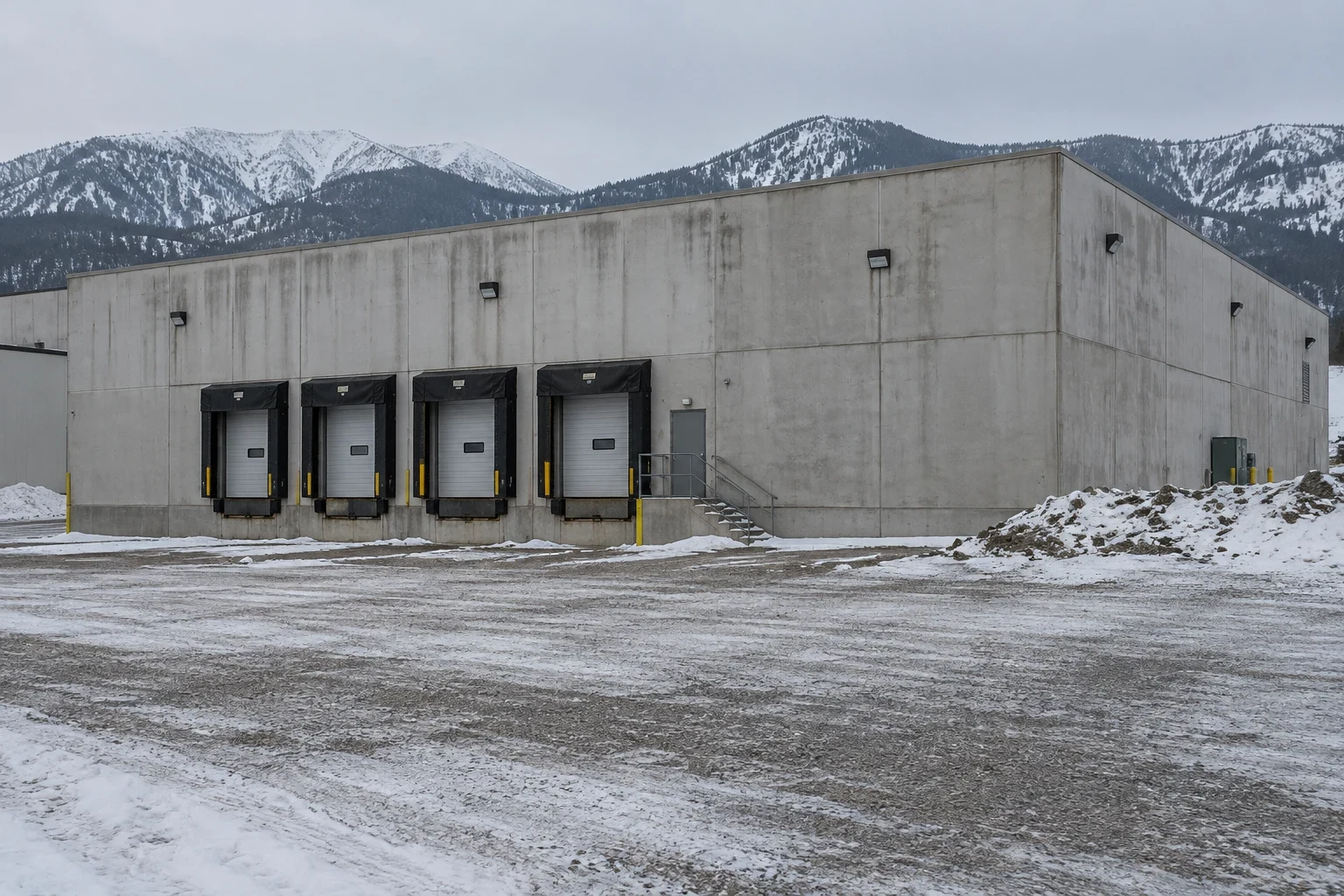
A flex building is a warehouse with an office stuck on the front, divided into units that different people own or lease. Each unit has its own overhead door, its own rooftop heater and often its own idea of who is responsible for the roof. After a Gallatin Valley winter, what I see on these buildings is a membrane or metal roof that is perfectly good over the middle and tired at the unit lines, with a heater curb leaking above one tenant and a drift of wet snow against the end wall.
Belgrade is seeing new light industrial and flex buildings, and a lease rarely spells out the roof. If a drip appears above your unit, do you know who pays for the repair, and who calls the roofer?
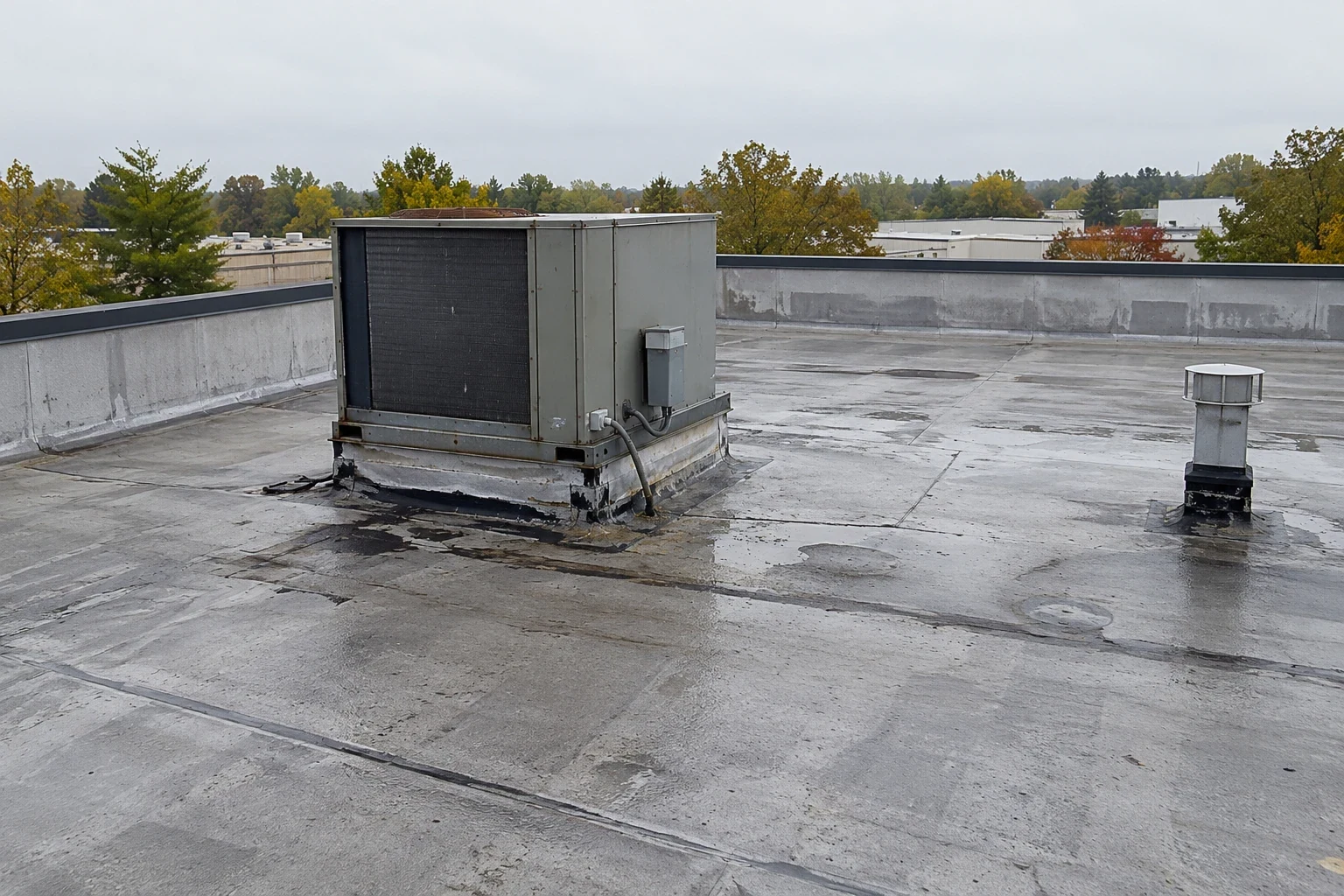
Who is responsible when four units share one roof?
That question decides how fast a leak gets fixed. In a warehouse condo, the owners usually share the roof through an association, and the association decides on repairs and reserves. In a leased flex building, the landlord holds the roof and the tenant holds the interior. In both cases the roof is one continuous membrane or metal skin across several units, so a leak in one bay can start in another.
A warehouse condo building finished in 2024 just south of the Jackrabbit Lane and I-90 interchange shows the form, and so does a 12-unit warehouse project in the Copper Ranch Road business area. In a building like either one, I walk the whole roof, not just the unit that called. A written roof map, with each unit's footprint overlaid on the condition findings, gives an association or landlord what it needs to decide who does what.
What are these roofs made of, and where do they fail?
New flex buildings commonly use light steel framing with a metal deck and either a single-ply membrane or standing seam panels. An office-and-warehouse building with yard space, built in 2022 along the Jackrabbit Lane corridor, falls in this group. A recently built roof is rarely worn out, but it is not immune. Early problems are about workmanship and details, not age.
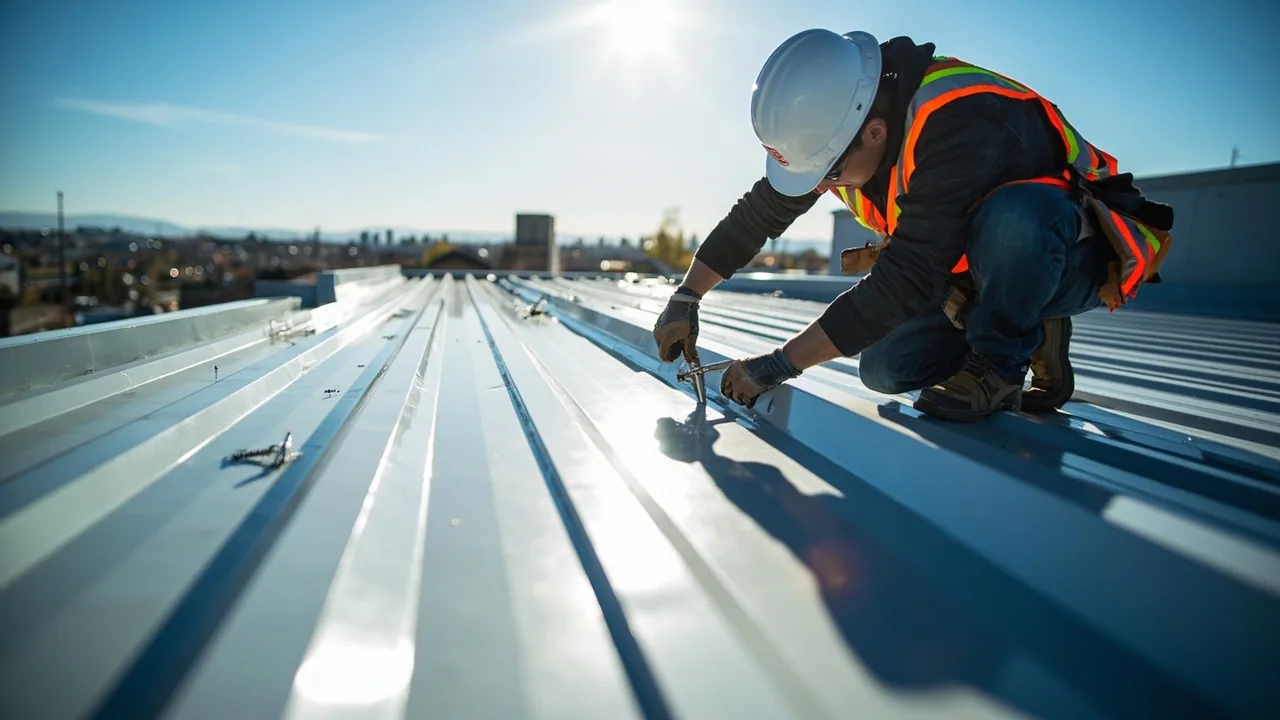
The first thing I check is every rooftop unit curb. Tenants add heaters, vents and exhaust fans after the roof is done, and each addition is a penetration someone cut and sealed. On a membrane roof the seam at a new curb is where I look first. On a metal roof I look at the screw pattern at panel laps, the closure strips at the ridge and the trim at the end walls. A roof that is only a few seasons old can still have a handful of misplaced fasteners that wick water, and finding them early costs far less than waiting for a stain.
What do drifts and thaw cycles do around the end wall?
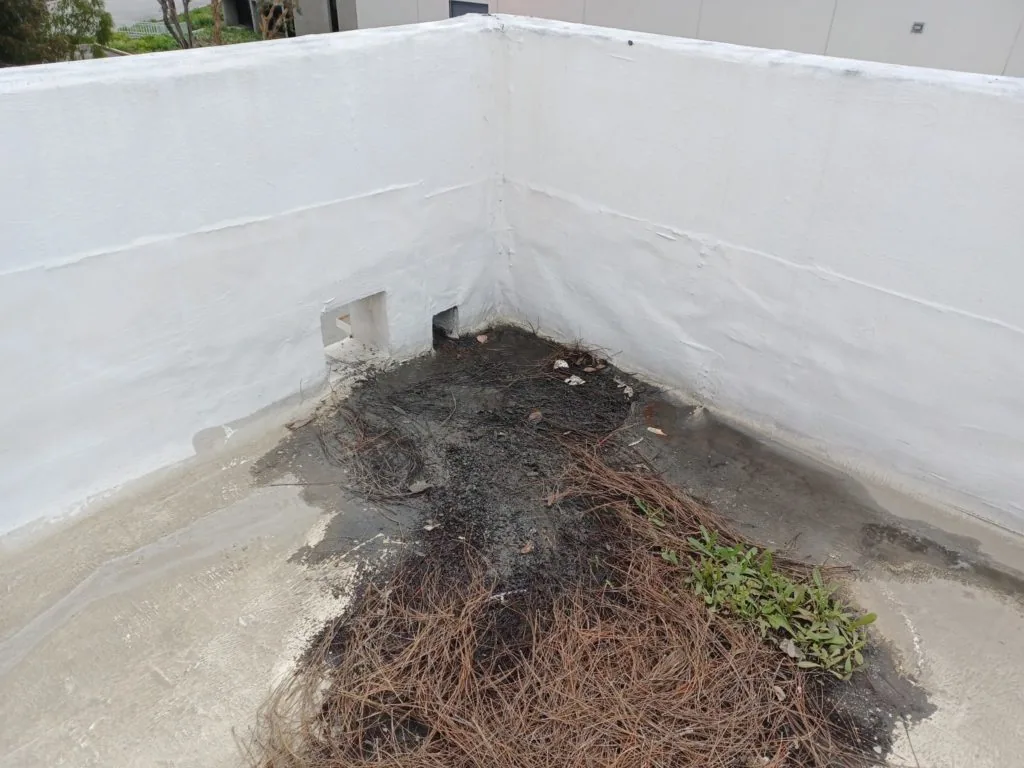
Bozeman takes close to 91 inches of snow a year, with January nights near 15 degrees F. On a flat, wide industrial roof, the wind sweeps snow across the field and deposits it against the tallest thing in the way: the end wall, the office block, a rooftop unit. That drift melts on a sunny day and the water runs back across the roof to the nearest low point. If the drain is blocked or the scupper is iced, the water sits against the wall flashing and freezes at night.
The designer's ground snow figure under the 2021 IBC is 50 psf, and a drift deeper than the average adds to that locally. I measure where drifts form, then check the flashing, the scuppers and the roof edge in those zones. Where drifts repeat, a cricket, a taller curb or a diverter changes the pattern. Roof drain and scupper work is usually the first recommendation after a winter walk.
Why does wind near the airport matter to a light-industrial roof?
Belgrade sits next to Bozeman Yellowstone International Airport, with Interstate 90 running along the city, and the Jackrabbit Lane corridor is a center for small warehouse and contractor buildings. The valley has recorded 89 mph gusts in the August 2013 storm that also dropped golf-ball hail across Belgrade, and 65 mph along Triple Tree Road in August 2023. Bozeman's basic wind speed is listed at 110 mph.
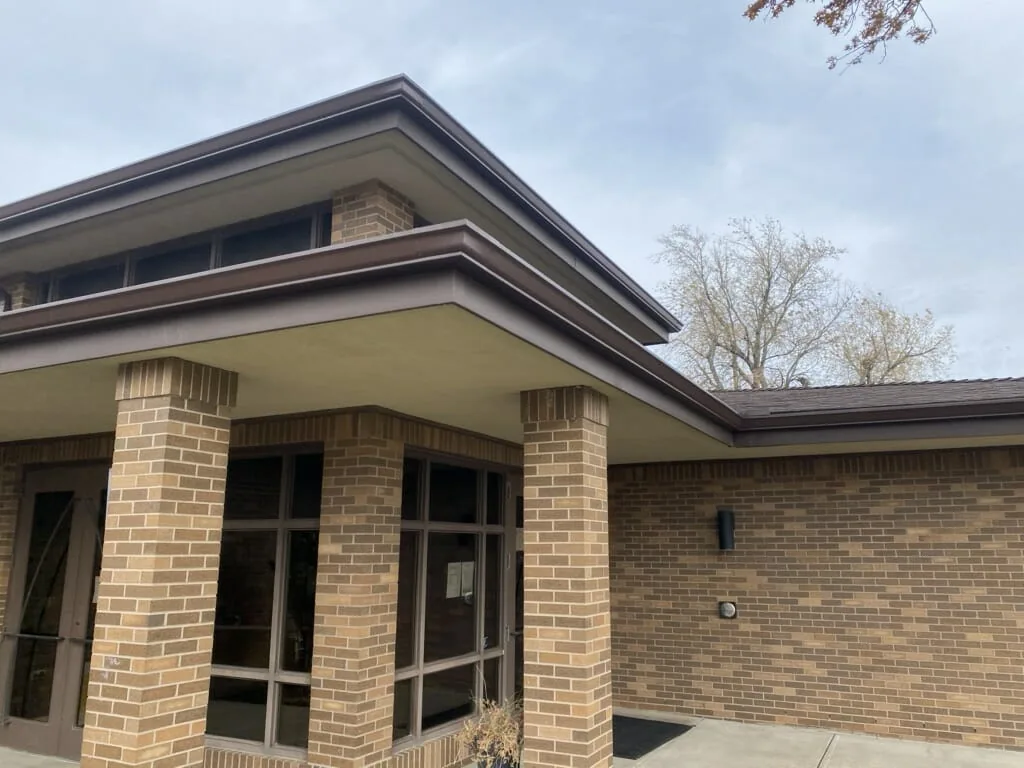
On a long, low building the corners and the edge carry the highest uplift. I look at the edge metal, the perimeter fasteners and the first rows of the field. A loose edge metal can tear a membrane from the corner inward in a single storm. Our edge metal and coping work includes refastening, resealing and replacing trim with a stronger profile where the original is thin. After a storm that damaged edges, hail damage repair and wind checks go together.
How should an owner plan roof work around tenants?
A tenant of a flex unit has stock, equipment and sometimes customers inside. I plan a roof job so that each unit is dried in daily, tear-off is limited to what can be closed the same day, and the crew takes the shortest path to the roof, so tenants are not walking around a staging area. If a tenant has a sensitive process, we arrange timing around it. Notice goes to every unit before the work starts, with a contact name and number. Dry-in photos at the end of each day go to the landlord or the association, so everyone sees what was opened and what was closed.
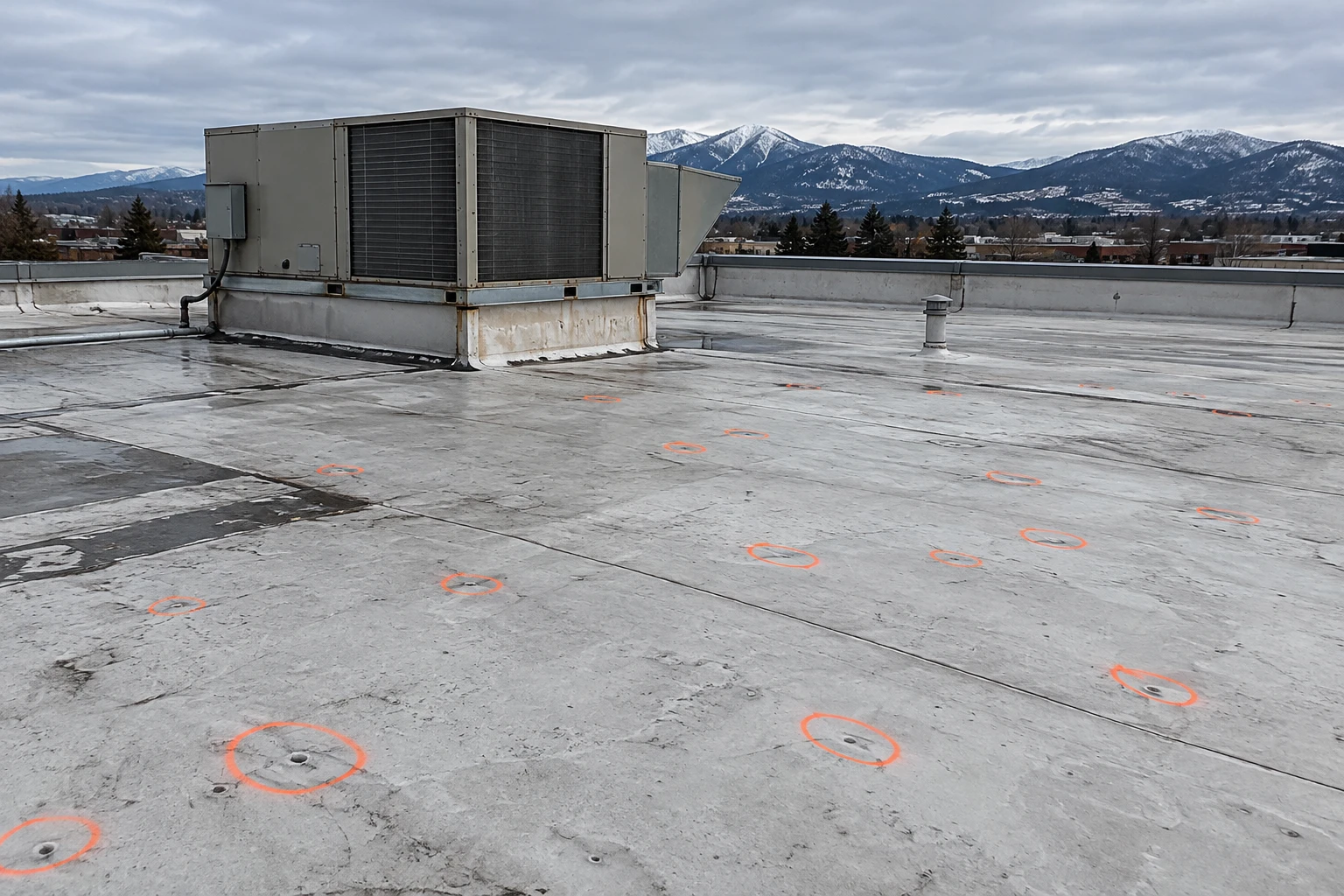
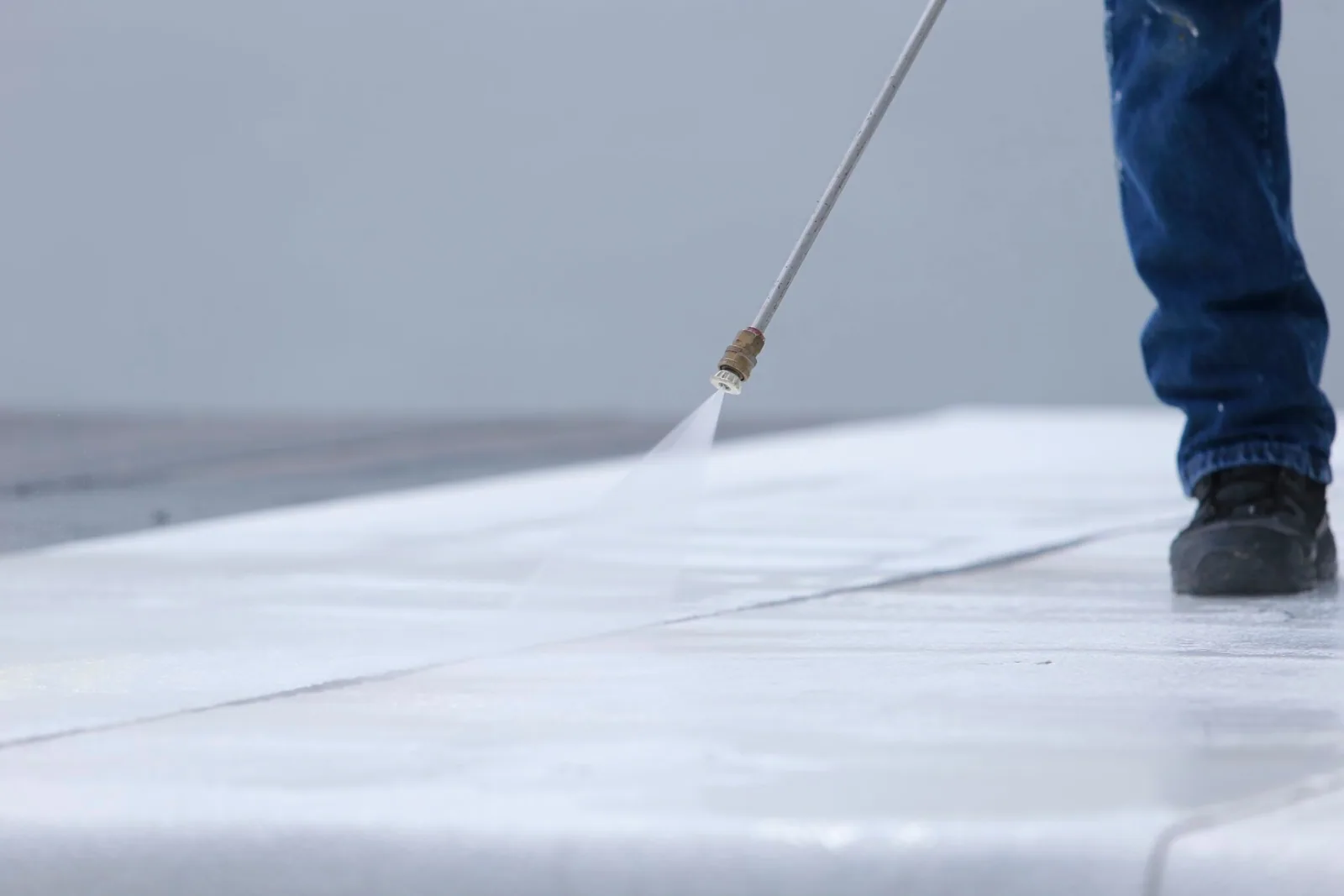
Roof options depend on condition. A sound, dry membrane may only need seam repair and a coating, such as silicone, to extend its service life. A failing metal roof can take a retrofit and avoid tear-off. A building that is only a few years old and leaking at details usually needs targeted repair. A warehouse roof is the nearest relative, though the multi-owner structure makes a flex building a planning job as much as a roofing one. A Belgrade association is best served by hearing the roof plan before the first leak, and a site of self-storage rows shares the many-doors-under-one-roof problem. Whoever answers the call should know which section covers which unit.
Questions About Flex and Light-Industrial Roofing
A tenant's unit leaks but the unit next door is dry. Who should be notified?
Start with the landlord or the association, because the roof is shared. Then ask for access to the roof above both units. Water often travels along a purlin or deck seam from a curb in a neighboring bay, so the unit that drips may not be the unit with the problem.
Do new buildings need a roof inspection before the first winter?
It is worth one. A walk catches misplaced fasteners, unsealed curbs and trim that was left loose while the building was finished. Fixing those items costs little compared with a claim after the first thaw.
Can an association spread roof costs across several years?
A reserve schedule is how most associations do it. A condition report sets out what is likely to be needed and when, and the board sets monthly dues to match. We can write the report in a format a board can adopt.
What happens when a tenant adds a rooftop heater?
Every new unit needs a curb, a flashing and a clean penetration through the deck. The best practice is to have the roofer do it or approve it, so the roof stays under the same details as the rest. A cut made by an HVAC crew with a sealant tube is the origin of many flex-roof leaks.