
Manufacturing Plant Roofing in Bozeman, MT
Manufacturing Plant Roofing in Bozeman and the Gallatin Valley
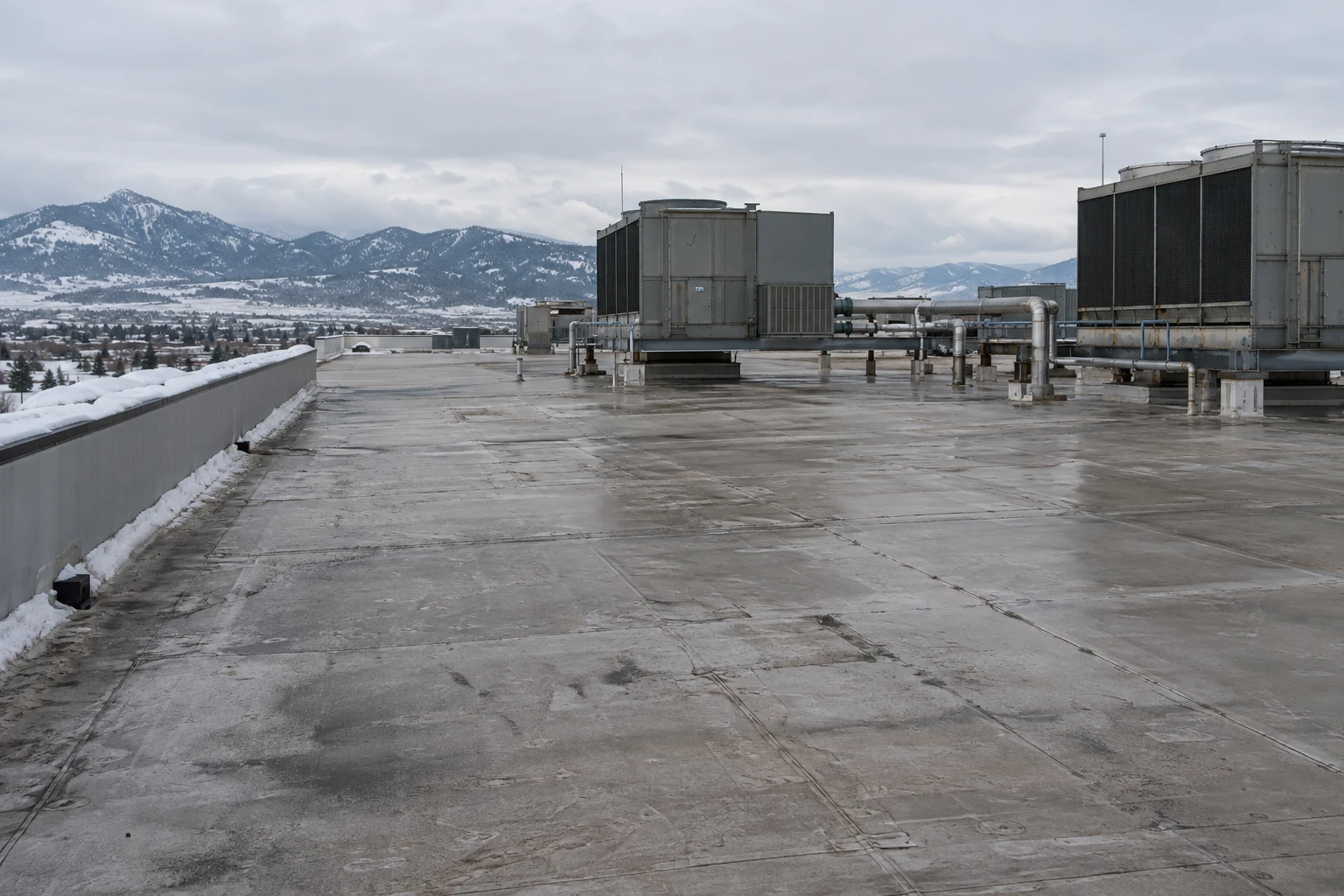
On a plant roof, the exhaust stacks and vent hoods are the first things a superintendent counts, and the staining around them is the second. After a few Gallatin Valley winters, each stack has its own stain pattern on the membrane, and the shape of the stain says what comes out of the pipe and where the wind carries it. A production building lives or dies by its uptime, and the roof has to protect what happens under it without making demands of its own. Bozeman, MT gets snow to the tune of 91 inches a year, so a plant roof carries drifts, ice and equipment together. What do your vents put on the roof?
We inspect, repair and replace manufacturing roofs across the Gallatin Valley, and we build the schedule around your production before we order material.

What kind of manufacturers work in the valley?
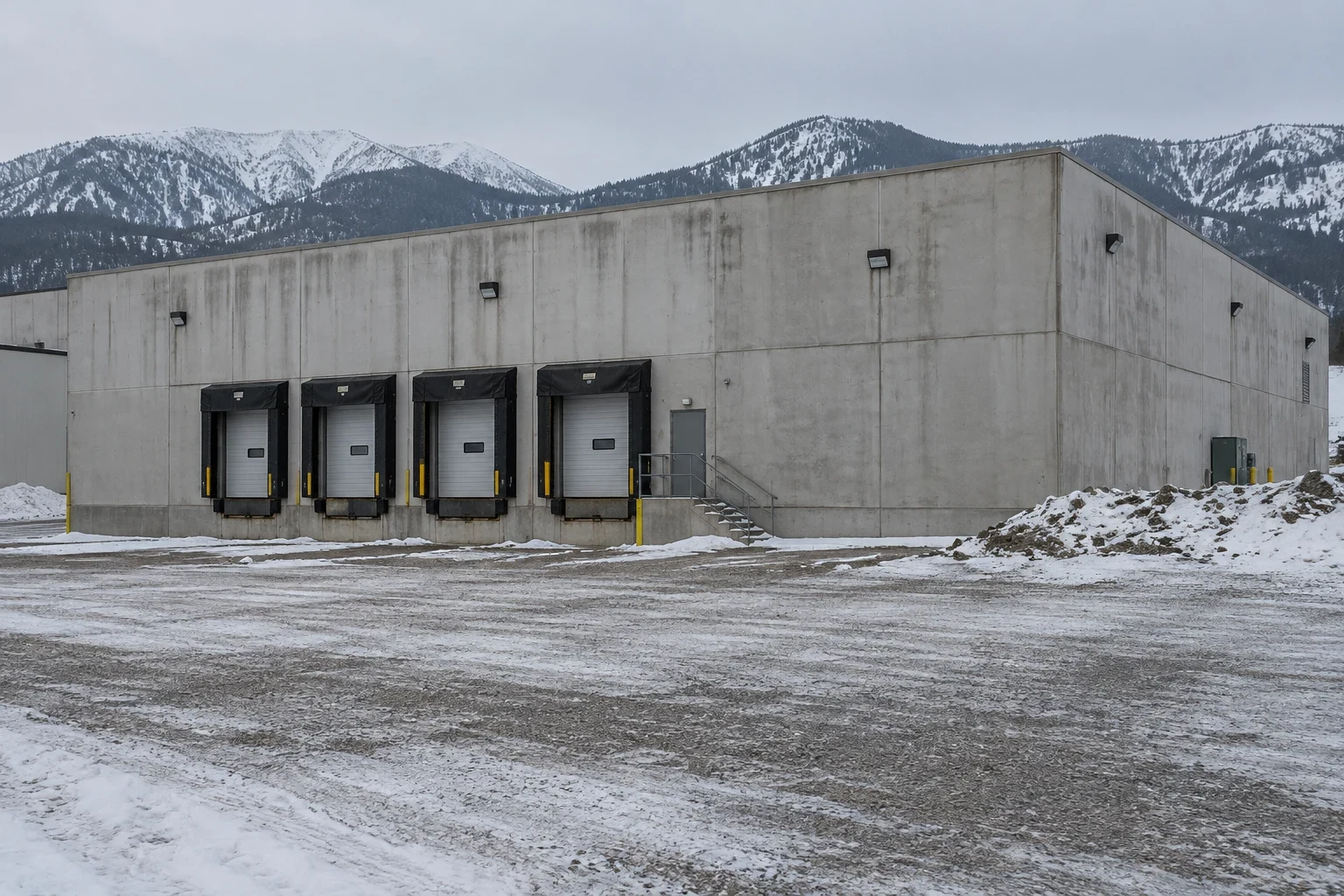
Simms Fishing Products and Mystery Ranch sit on Bozeman's list of largest employers, next to Bozeman Health and Montana State University, and the city also counts more than two dozen optics and laser companies, along with software and biotech firms. Belgrade adds CACI International, which does electronic warfare work after acquiring Ascent Vision Technology in 2020, and Xtant Medical. A walk settles what any one plant vents and what its roof carries.
Different kinds of manufacturing bring their own exhaust, humidity and cleanliness needs, and a roof spec follows those. A plant that depends on clean air needs protected intakes during any roof work.
Some operations also sit close to data center-style rooms, where a single leak can stop work. A plant with a server room or a clean room under part of its roof gets that section a closer look and the first repair slot. Large open assembly bays, by contrast, behave like a warehouse in how they collect drifts and shed water.
How do process exhaust and heat change the roof?
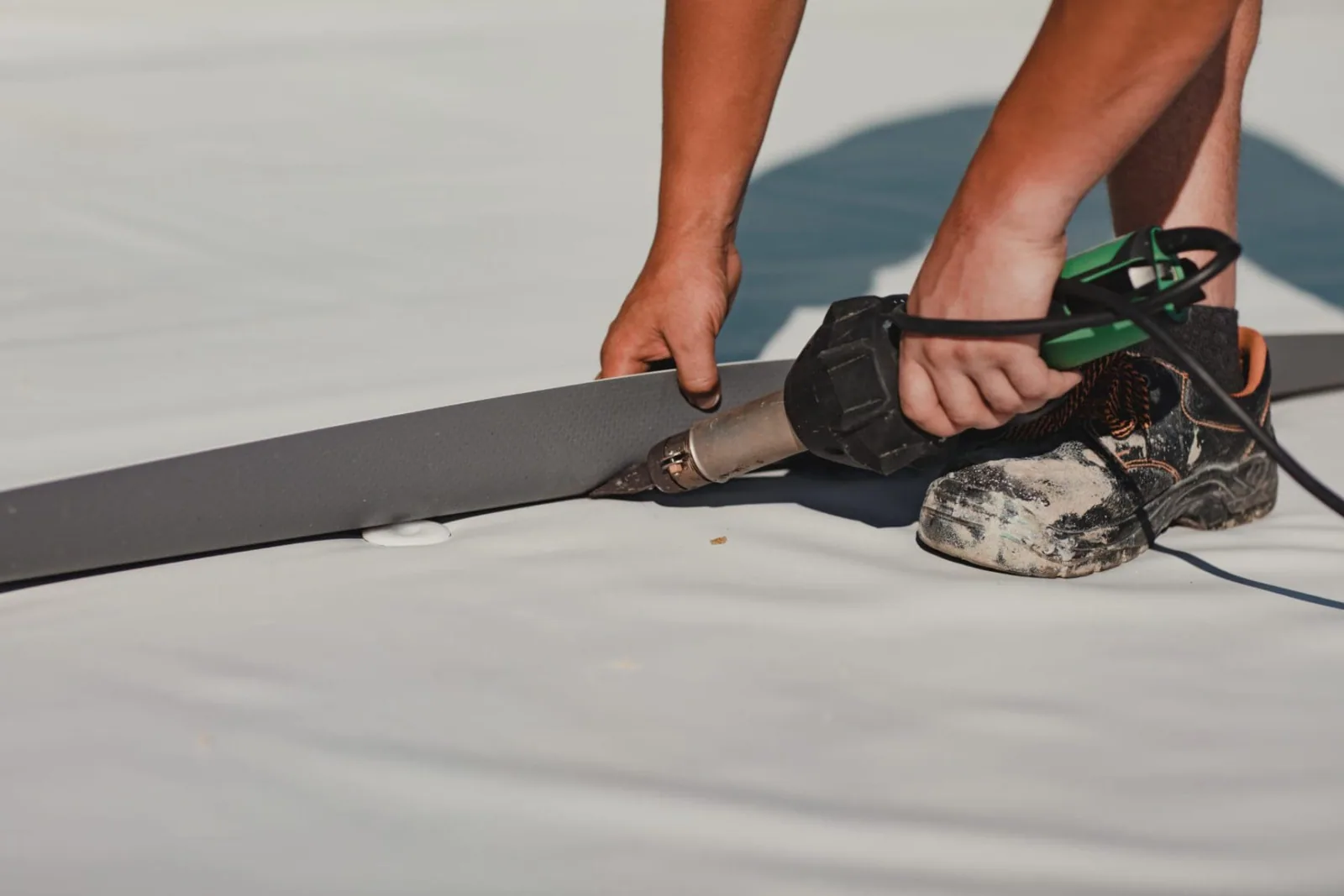
Exhaust carries heat, moisture, oils or fine particles, and all of those land on the membrane. Grease and oils soften some sheets. Chemical vapors craze others. Steady heat speeds the aging of any membrane within a few feet of a stack. A KEE or PVC sheet near the exhaust and a different sheet across the field is a common and sensible split.
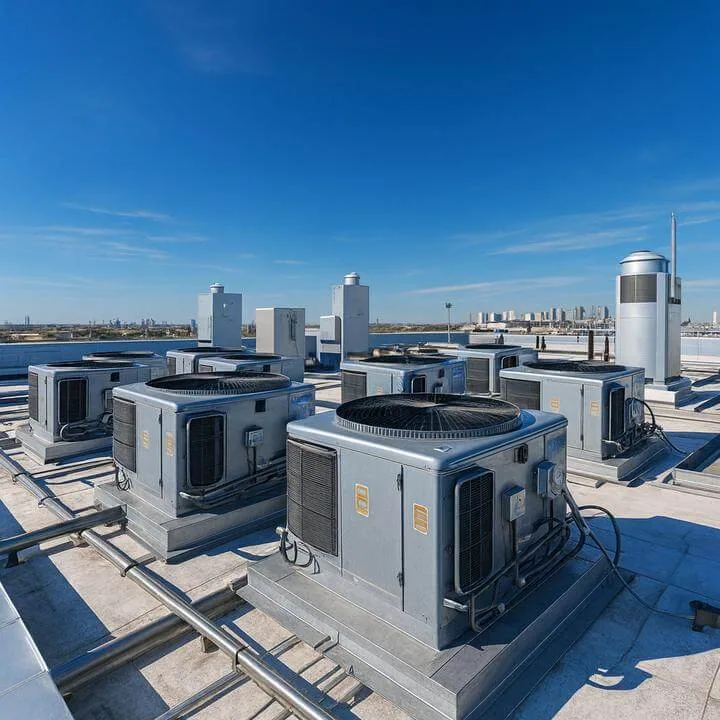
We map every stack, vent and fan, then check the sheet and flashing near each. Stained, dull or soft areas get a photograph and a note. The surface around a stack is where a membrane ages first, and a roof file that records those areas lets the owner replace only what has failed.
Heat deserves a second note. A hot exhaust plume that dries one patch of membrane while neighboring areas stay cold sets up a sharp temperature gradient, and the sheet flexes at that line every day. Seams that cross a plume path are the first to open. We keep seams out of those paths where the layout allows and probe the ones that cannot be moved.
Why do curbs and penetrations deserve their own attention?
A plant roof grows penetrations over the years. New lines, new conduit, new fans and abandoned openings accumulate. Each is a flashing detail and a place where thermal movement pulls at the seal. We count them, check each equipment curb and support and recommend removal or capping of anything unused.
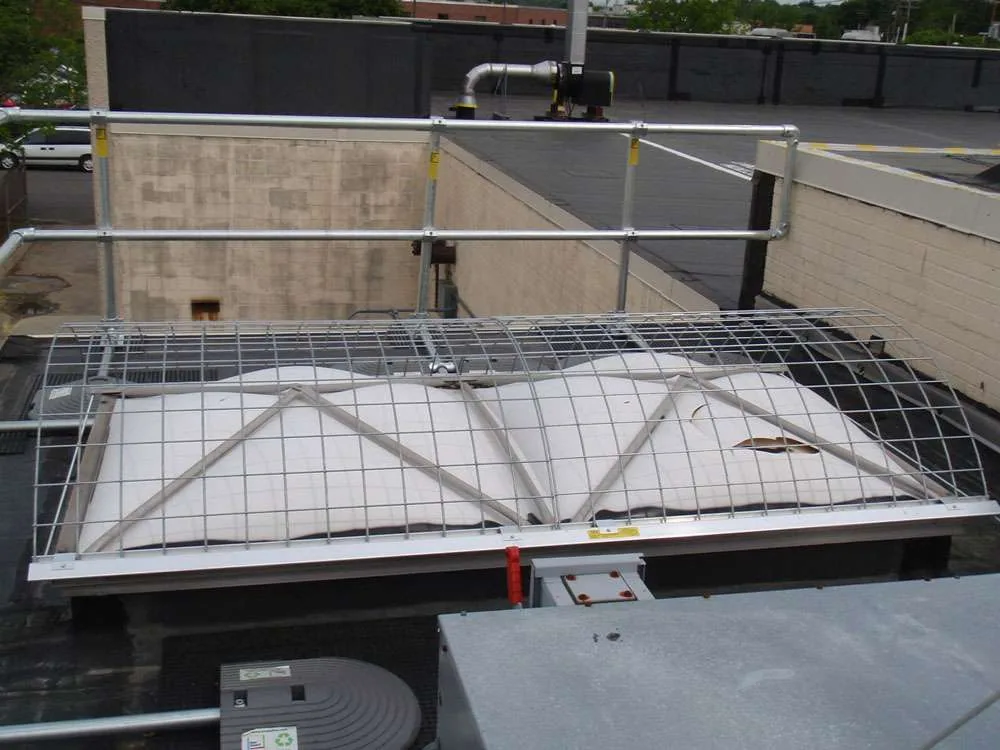
Skylights add another set of details. Small leaks on a modified building often start at skylight and penetration flashing. When a leak shows up over production, the first job is to stop the water, and the second is to find which detail let it in, so the repair is a fix and not a patch on a patch.
What do snow, ice and hail do to a plant roof?
Drifts behind parapets and equipment add local weight on top of Bozeman's 50 psf ground snow load. Thaw cycles then move meltwater toward drains, and a drain that is iced over leaves a pond on the deck. Hail adds its own risk. A thirty-minute fall of golfball stones on Bozeman in June 2010 was followed in early August 2013 by the same size over Belgrade and the north side, gusts hitting 89 mph.
After a storm we walk for bruises, check equipment tie-downs and clear drains. A hail bruise over a production floor is a risk to schedule, and a dated photo set helps an insurance claim. Cosmetic marks and damage that reached the insulation get written up separately, in plain terms.
Condensation is the quiet cousin of a leak. A plant with humid process air can drip from a cold deck on clear mornings, and the owner sees water inside with no rain outside. We separate the two by timing and pattern, then trace condensation to insulation, vapor control or ventilation, so no one pays for a roof repair that cannot cure it.
How is roof work planned around production?
A plant does not stop for a roof. We divide the roof into sections that follow production lines, with the most sensitive areas planned for planned shutdowns or the quietest shifts. The plan for occupied building reroofing sets noise, dust and air intake protection. If an intake serves a clean area, we shield it or ask for a temporary shutdown, and we agree on the plan with facility staff first.
Crane picks and material hoists are placed to avoid truck routes and emergency access. The laydown yard is small and fenced. When weather is moving in, no section opens that cannot be closed the same day. The same method suits plants near the Gallatin Field airport area and in Belgrade.
What goes in the roof file?
The roof plan, the exhaust and penetration map, photographs of every stack and curb, the drain map, the warranty terms and a dated list of repairs by location. When production adds a line, we update the map. When a leak appears, the file shows what is nearby and what was last repaired there.
We update the file after every visit and after every change on the roof. A plant can add lines, vents and equipment from one year to the next, and a current map keeps the roof from being a mystery to the next trade up there. A manufacturer's warranty may also ask for proof of care, and the file supplies it.

Questions About Manufacturing Plant Roofing
Can a plant roof be worked without a shutdown?
Usually, in sections, with protected intakes and agreed access. Sensitive areas may need a short planned shutdown or a quiet shift. We write those decisions into the plan with facility staff before work starts.
What if our exhaust changes?
Tell us before the equipment goes in. A new stack or a changed vapor can change what the membrane near it needs, and a flashing or sheet swap costs less before the equipment is set than after.
Why do stained areas around stacks matter?
The stain shows where the sheet is taking exposure. Soft, dull or crazed membrane there fails first. Cleaning, a protective pad or a better sheet at that spot extends the life of the rest of the field.
How are abandoned penetrations handled?
We cap and flash them or remove them, depending on what lies below. Each unused opening is a leak path waiting for a thaw, and the repair is cheap compared with water over a line.
What should be on hand when you walk the roof?
The equipment plan, the last roof report, warranty papers and any record of leaks. A contact who knows where the vents lead helps us tie what we see on the roof to what happens below.