
Data Center Roofing in Bozeman, MT
Data Center Roofing in Bozeman and the Gallatin Valley
The roof of a data center answers one question: what happens if water gets in? In most buildings, a drip means a bucket and a work order. Over a server hall it means an outage. Bozeman, MT hosts optics, laser, software and biotech companies, and technology buildings of any kind can hold equipment that cannot get wet. After a Gallatin Valley winter, with roughly 91 inches of snow and repeated thaw cycles, the roof over that equipment is tested every week from November to April. How many layers stand between your racks and the weather?
We inspect, repair and replace roofs on data centers, server rooms and technology buildings across the valley, and we plan the work as a risk exercise before it is a construction exercise.
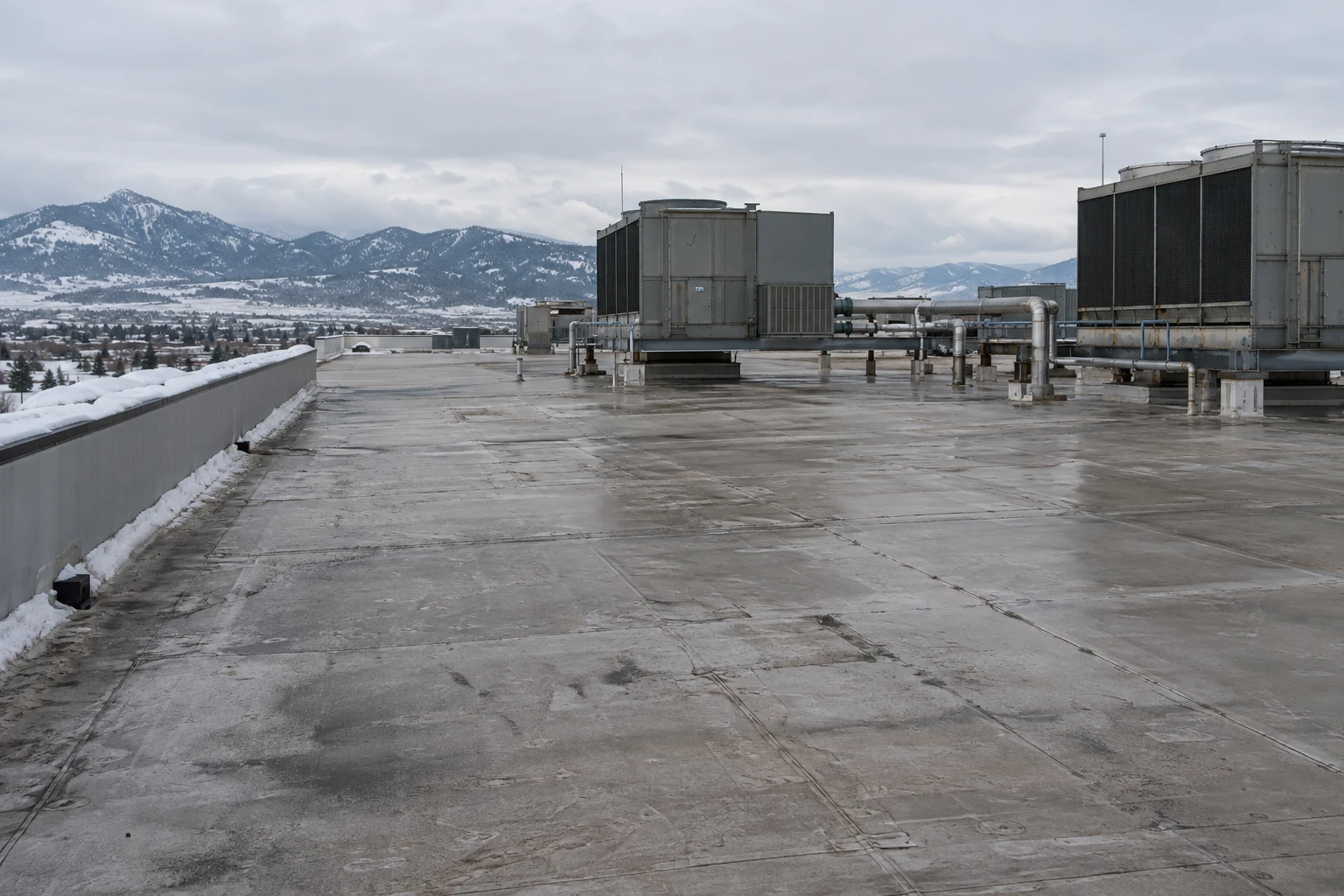
What makes a data center roof a special case?
The cost of a leak is not the roof repair. It is downtime, lost data and damaged hardware. So a data center roof is designed and maintained around leak prevention and early detection. Redundant drains and overflow scuppers prevent ponding. Few penetrations keep entry points down. Equipment sits on curbs that are tall and well flashed. A roof file records every penetration and every repair.
Many technology buildings also hold only part of their space for critical equipment. A server room on the top floor of an office building makes the roof above it a critical zone, while the rest of the roof is ordinary. We map those zones on the plan and treat them differently in inspection frequency and repair priority.
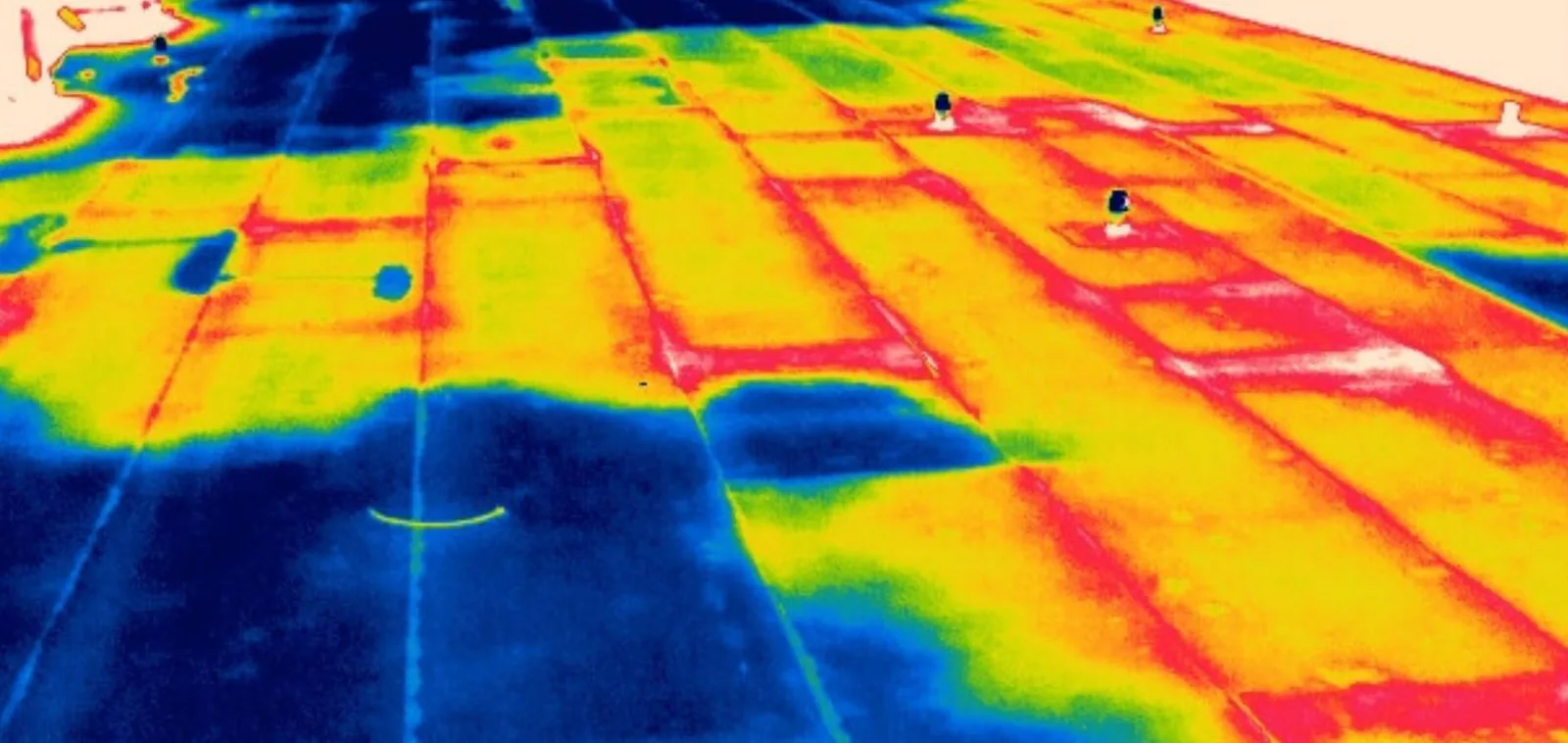
Detection comes next. Moisture sensors under the membrane, drain-level alarms and a regular infrared survey give an early warning that a ceiling stain never will. The sensors belong to the building's electronics contractor, and we shape the roof so they have a clean place to sit and log their locations on the plan.
Who in the valley needs this level of care?
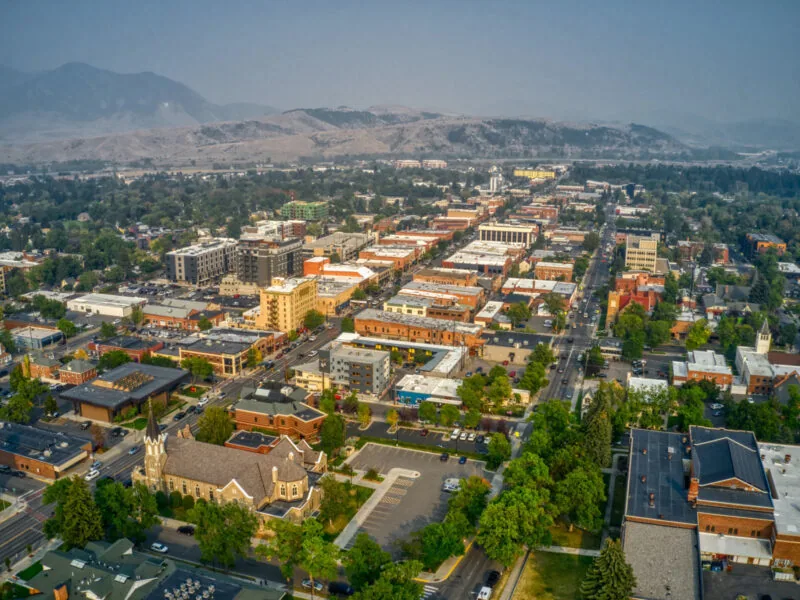
Bozeman is home to optics, laser, software and biotech firms, and Belgrade has CACI International and Xtant Medical. Whether a building in Bozeman, Belgrade or on the Montana State University campus has a server hall or lab under its roof is something only a walk answers, so we ask where the sensitive spaces sit and plan from there.
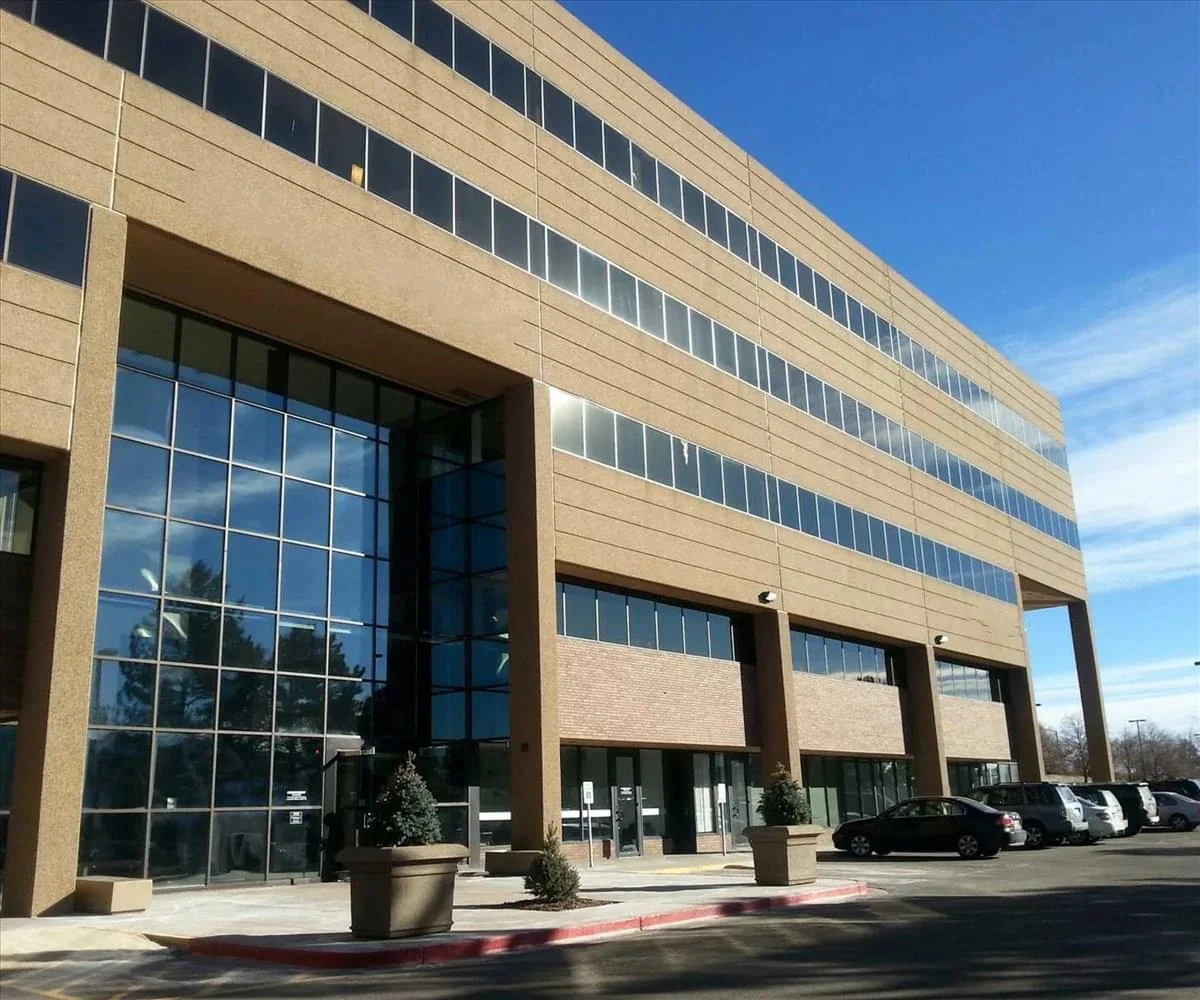
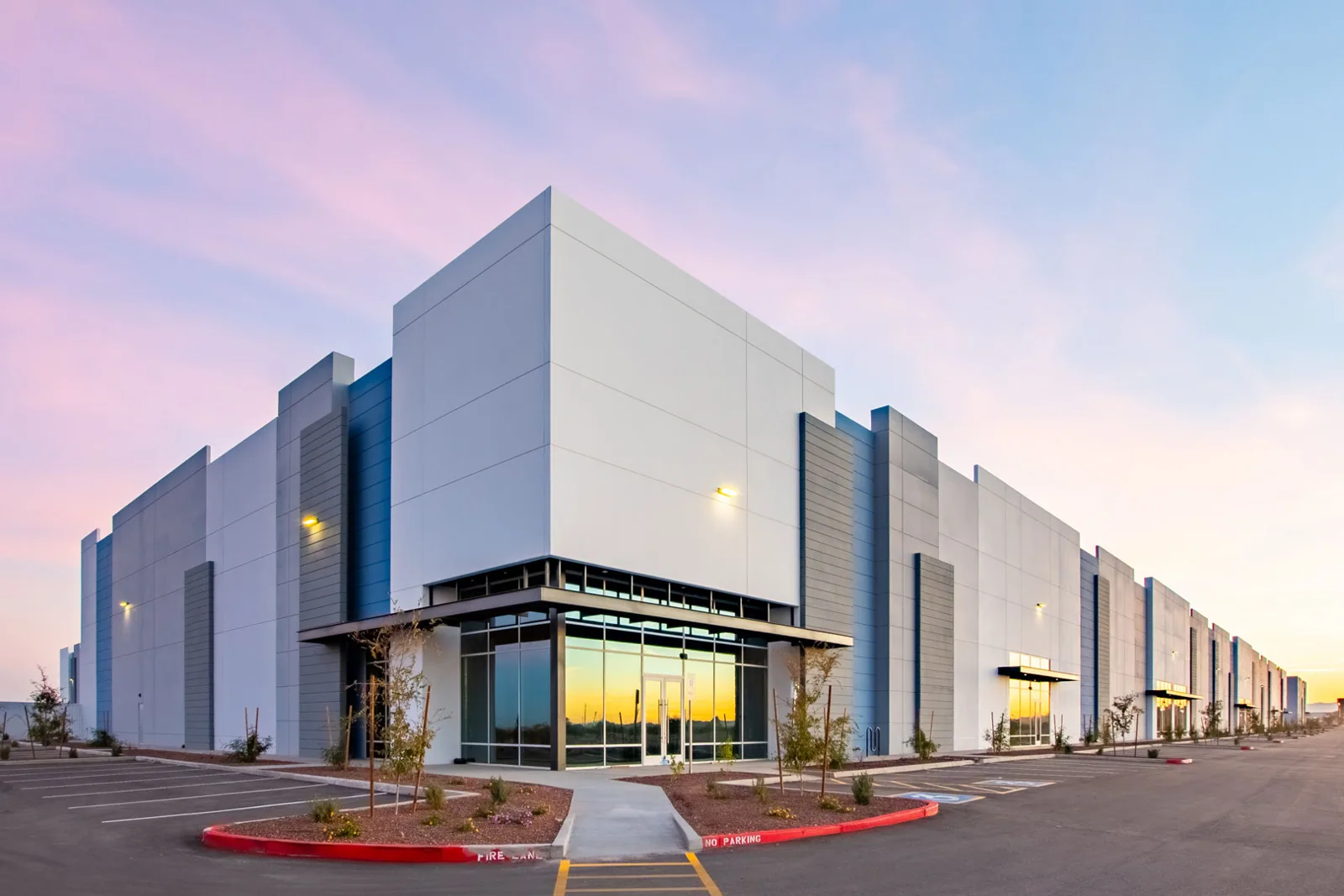
Any owner with a server room, lab, communications room or controlled-environment space under the roof can use the same method. An office building with a server closet and a manufacturing plant with a clean room share more with a data center than their roof type suggests.
How do we reduce the chance of a leak?
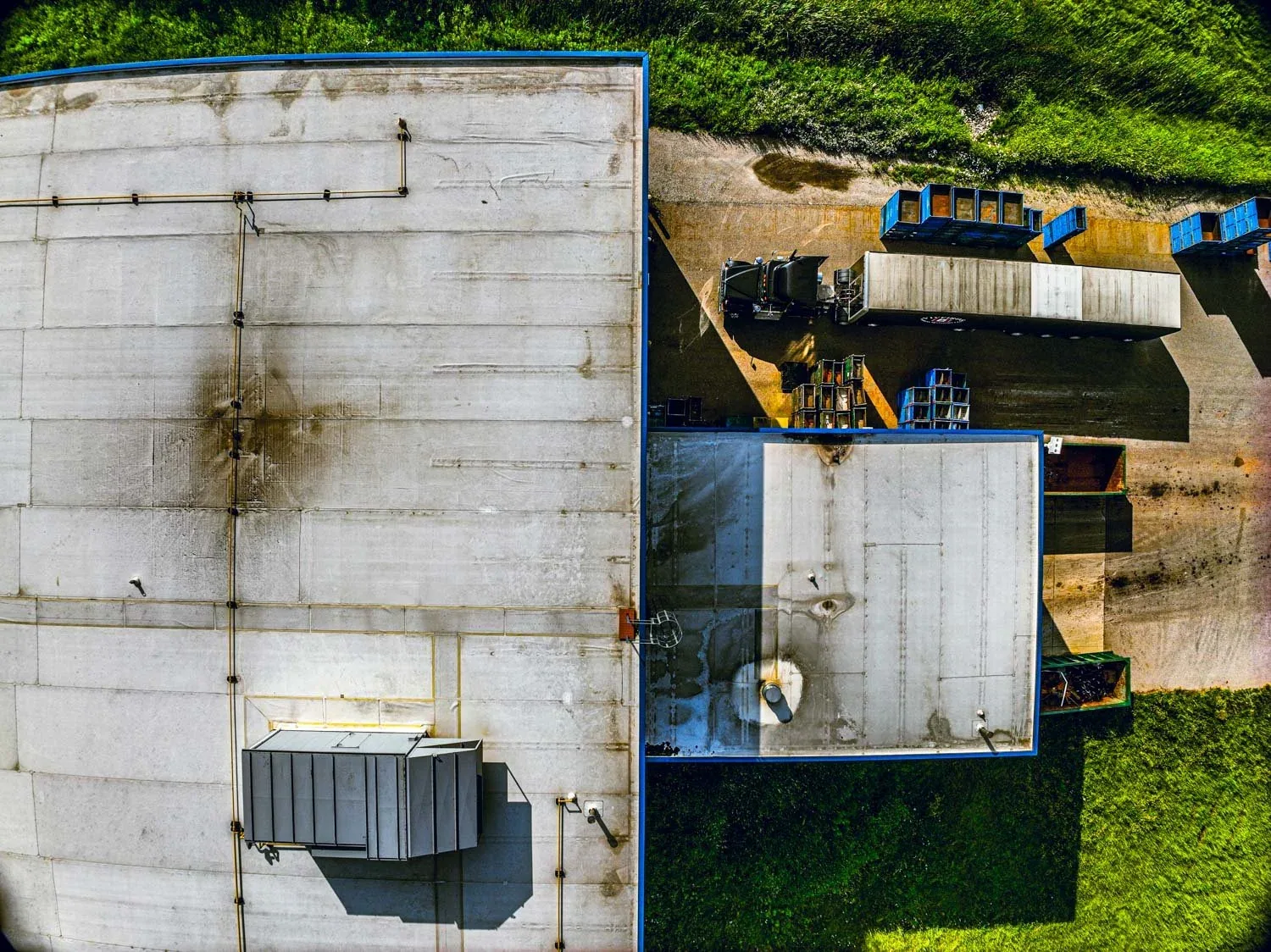
First, we find what exists. An infrared moisture survey and core cuts show whether insulation over the critical zone is wet, which a dry-looking membrane can hide. A drone roof inspection adds a dated image set that can be compared year to year without a crew walking near sensitive equipment.
Second, we deal with drainage. Each drain over or near the critical zone is traced, flushed and tested, and overflow routes are confirmed. A blocked drain with no overflow turns a thaw into a flood. Because Bozeman is designed for 50 psf of ground snow, we also check that the deck, drains and overflow handle melt from a large drift.
How does roof work happen around security and uptime?
Technology buildings have security rules. Crew lists, badges, escorts and delivery windows are part of the schedule, and the first step is to ask for them. Roof hatches and ladders may be restricted. Material staging may need to be off site. We submit the plan, the crew list and the sequence for approval before any material is ordered.
Hot work is the other limit. Torches and flame-heated equipment near a data hall are a fire risk, and insurers may ban them. Cold-applied, mechanically attached and heat-welded systems can avoid open flame, and we write the method into the scope. A fire watch and an extinguisher are standard, and the schedule includes a period after the work stops when the roof is watched.
What about rooftop chillers, generators and cables?
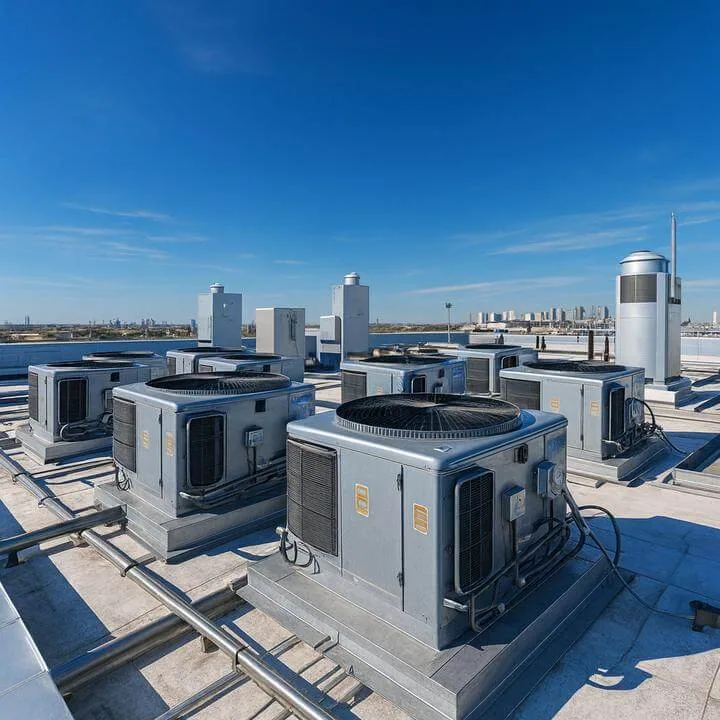
Cooling equipment on the roof is heavy and vibrates. Each equipment curb and support carries weight into the structure, and the load path must be right. Piping and cable runs cross the membrane at many points, and each crossing needs a boot, a pitch pocket or a curb with proper flashing. We count them all and check them in every walk.
Walkway pads protect the sheet along service paths, and a service log records who went up, when and where. If a technician damages the membrane, the log points to the cause, and the repair is quick. For critical zones, a firm cover board under the membrane also resists hail and foot traffic better than soft board alone.
What do hail and wind do to a technology building?
Bozeman was pelted by golfball stones on June 30, 2010, and Belgrade and the north side took the same size, with 89 mph gusts, in early August 2013. A May 2023 storm report lists 1.50-inch hail lasting several minutes on the Gallatin River northwest of town. A bruise over a critical zone is a risk that deserves immediate attention.
After every storm we walk the critical zones first, mark bruises, check equipment tie-downs and clear drains. A roof condition report with photographs gives the owner and the insurer the same record. The report ranks each finding and names what to repair now.
What does the owner receive at closeout?
A roof plan marking every drain, curb and penetration over the critical zones, a dated photo set before and after the work, the moisture survey results, the warranty terms and a list of repairs by location. The file is kept with the facility records so an auditor or insurer can read the roof history in one sitting.
We then set a maintenance schedule: walks before the first snow and after the spring thaw, a drain flush before each, and an extra walk after any hail or wind event. For a critical building, that rhythm costs far less than a single outage, and it keeps the owner ahead of the weather instead of behind it. An owner who also leases space to a technology tenant can hand that tenant the same file, so a question about the roof over a server room gets answered from the record and not from memory.
Questions About Data Center Roofing
Can a data center roof be replaced while the equipment runs?
Often yes, with the work planned in small sections, leak protection below and a rapid-dry-in method. The risk is managed by keeping the open area small and by closing it before weather or end of day.
What is the best way to find a hidden leak risk?
An infrared survey with core cuts. It shows moisture in the insulation before the ceiling shows it. Combine it with a drain flush test, and keep the results with the roof file.
Do we need a different warranty for a critical building?
The warranty terms come from the manufacturer for the assembly. The owner may want extra inspection and documentation, which we provide, since a clean record helps any claim.
How often should a critical-zone roof be inspected?
Quarterly walks of the critical zone are a good baseline, plus a walk after any hail or heavy snow event. Drone images between walks keep the record continuous.
What should be on hand for a security review?
The crew list, material list, work plan, fire watch plan and contact numbers. We prepare these once the owner tells us the review process.