
Self-Storage Facility Roofing in Bozeman, MT
Self-Storage Facility Roofing in Bozeman and the Gallatin Valley
A self-storage site is mostly roof. Row after row of single-story buildings with overhead doors on one face and a long metal slope above, repeated across an acre or more of asphalt. In a Gallatin Valley February those rows tell the story plainly. Snow slides off the low-pitched panels and stacks up against the doors of the next building over, ice builds at the eave where there is no gutter, and the first thaw finds every loose screw head along the ridge.
A customer does not care how the roof is built. A customer cares that a box of records or a mattress stayed dry. If a tenant called you last spring about a wet unit, which building was it in, and which end of that building?
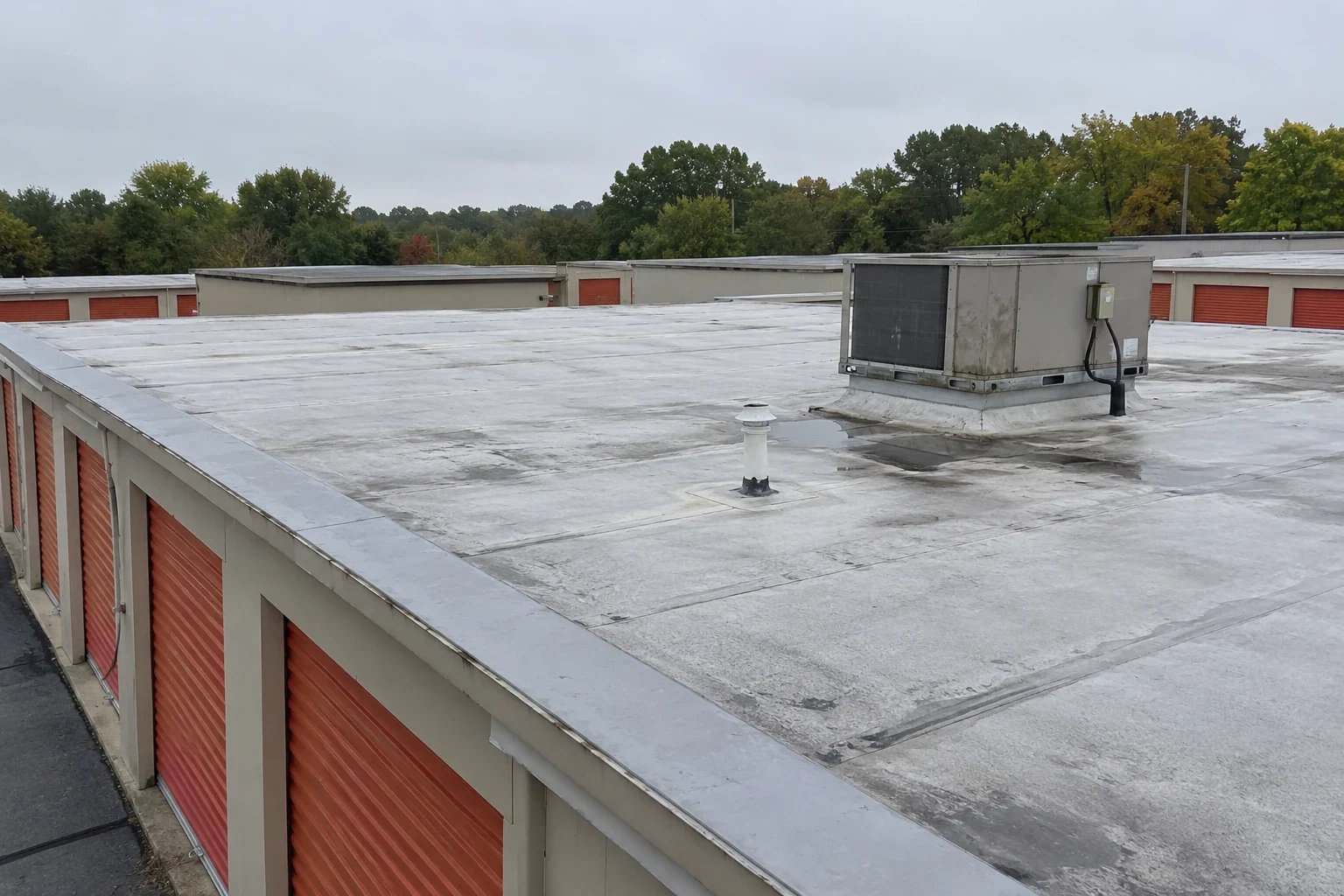
What does the roof of a storage row actually consist of?
Most outdoor-access rows are light steel frames with exposed-fastener metal panels on a low pitch, sometimes with no insulation and no ceiling below them. That makes for a simple roof with a lot of fasteners: thousands of screws, each with a rubber washer that must stay pliable through years of cold and sun. Climate-controlled buildings are different. They tend to carry insulation, a ceiling and sometimes a low-slope membrane with rooftop units, and they have more of the problems of an ordinary commercial roof.
New light industrial and flex buildings near Belgrade tend toward a simple shape. A 12-unit personal warehouse building in the Copper Ranch Road business area, listed in the Four Corners neighborhood, is mostly long eave, long ridge and a lot of panel laps, and it sits minutes from the airport.
How do snow slides threaten doors and drive aisles?
On a storage site the drive aisle is narrow, often just wide enough for a truck, and a roof that sheds toward it dumps its whole snow load at once. Bozeman gets about 91 inches in a year, and the slide comes after a warm afternoon on top of a cold week. It lands on the pavement, on a tenant's car or against the overhead doors, and then it refreezes into a ridge that blocks the door track.
The remedy starts on the roof. Snow guards on the panels hold the pack in place until it melts in small amounts. A gutter and downspout, tied into a drain or a spreader, carries meltwater clear of the door line. Heat cable at the eave keeps ice from capping the opening. Which one fits depends on the slope, the panel type and how the water drains at the foot of the wall. A tenant with an overhead door and a loaded truck has little patience for a wall of ice, and a site that clears snow from the aisle but ignores the roof will clear the same snow again two days later. Our edge metal and gutter work is where these fixes usually begin, since the eave is where the ice builds.
Where does water get in, and why does it drip on stored goods?
Two things cause most storage-roof complaints, and they are not the same. The first is real leaks: a backed-out screw, a cracked washer, a split at the lap, a failed ridge closure or a puncture from a falling branch or a ladder. The second is condensation. A cold uninsulated panel in a damp spring collects moisture on its underside, and the moisture drips onto whatever is below. Both look like a roof leak to a tenant, and each is fixed differently. Sealing a roof that only has a condensation problem wastes the money and leaves the tenant's box just as wet, which is why the diagnosis comes before the work order.
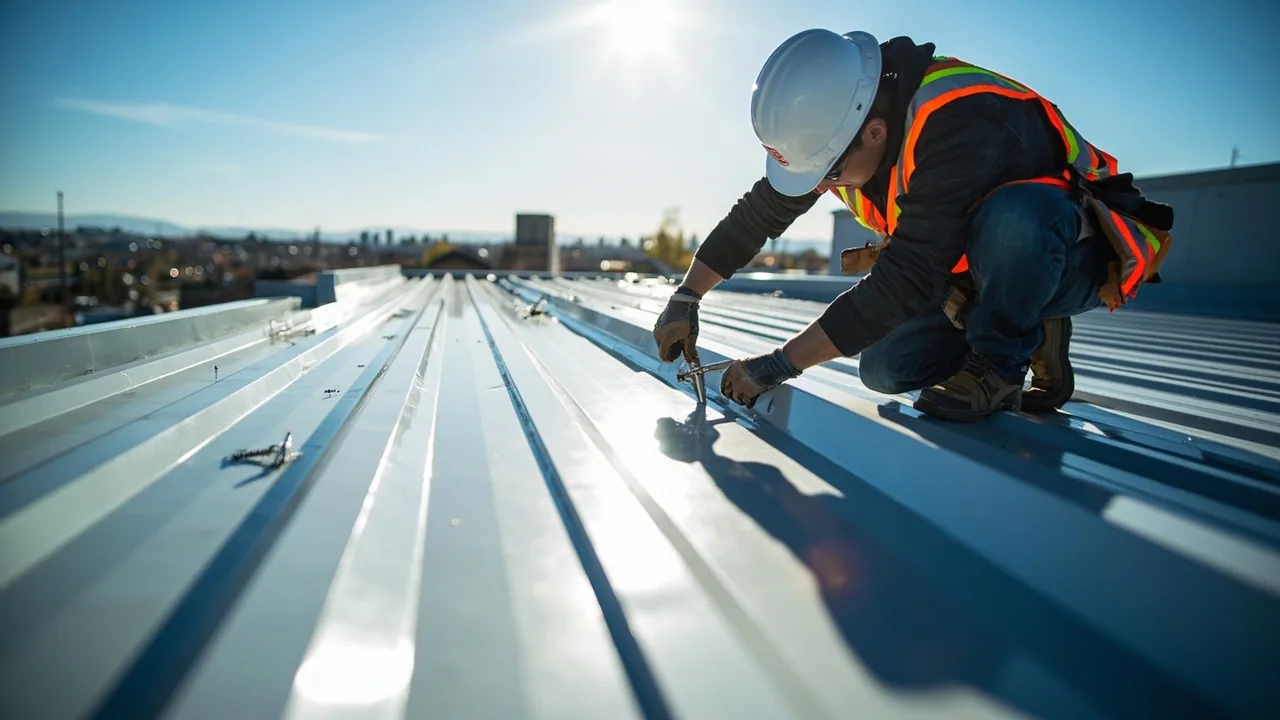
I separate them with a hose test and a look at the weather. A drip that appears only after rain or melting snow points to a leak. A drip that appears on cold mornings with no precipitation points to condensation. For leaks, I replace fasteners with oversized ones, reseal laps and renew closures. For condensation, a thin layer of insulation or a vapor-control approach helps. A commercial roof leak repair visit starts with exactly this distinction.
What does wind do to a long low roof?
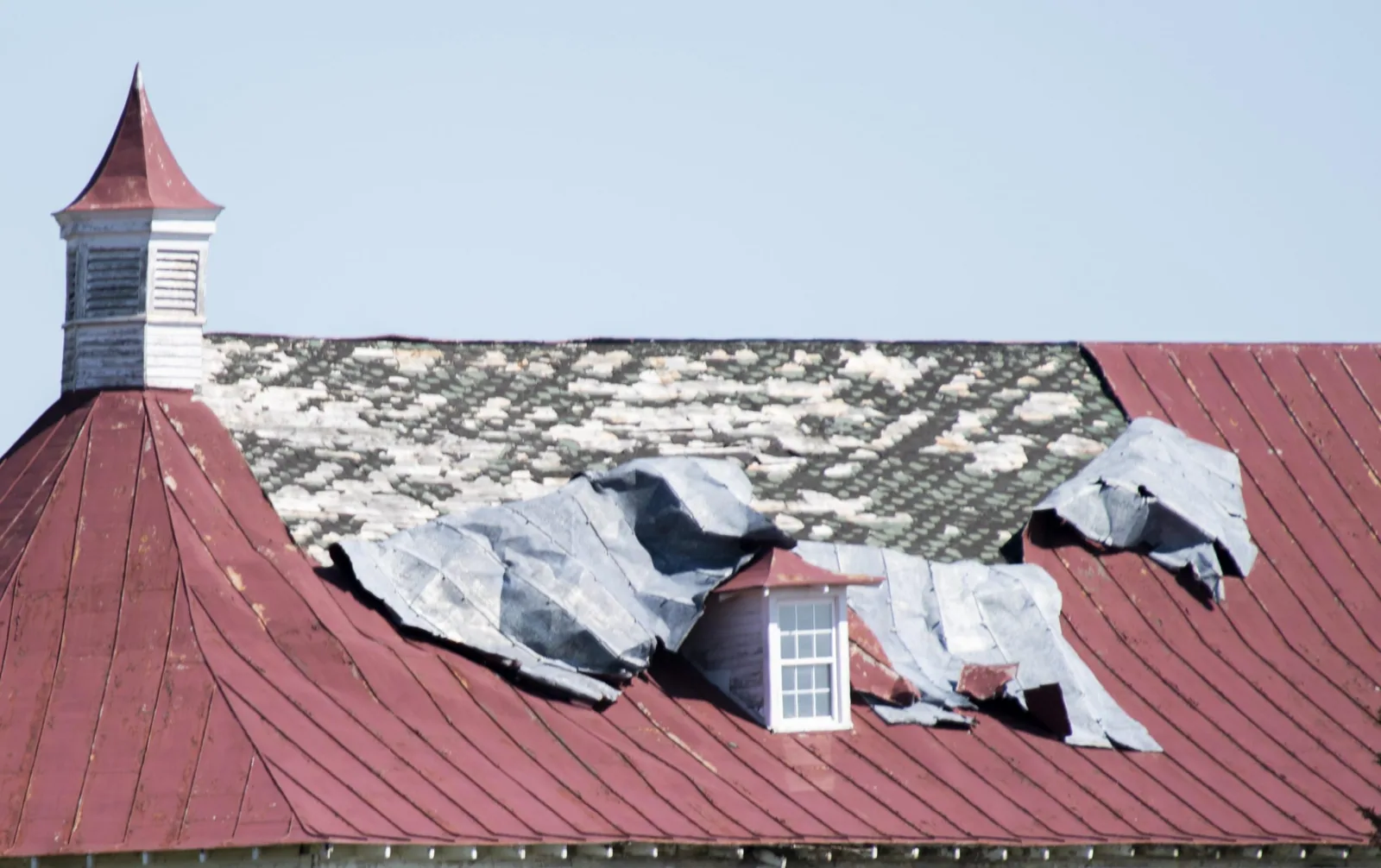
Wind does not push a roof down, it pulls it up. The edge and the corner see the highest uplift, and a metal panel that is loosely fastened will flutter, work its screws loose and curl at the ridge. The basic wind speed listed for Bozeman is 110 mph, and the valley has still seen damaging gusts: 89 mph during the golf-ball hailstorm over Belgrade and north Bozeman in August 2013, and 65 mph on sensors along Triple Tree Road in August 2023.
Livingston, east of Bozeman Pass, has an airport station with one of the strongest average winds in the country. A storage site with open ground on every side takes wind from every direction. I check the ridge cap, the rake trim, the eave fasteners and the end walls, since a gap at the gable end lets wind in under the panel. A wind damage repair scope covers lifted panels, torn trim and the cleanup of anything that blew off the roof.
Repair, retrofit or coat the existing panels?
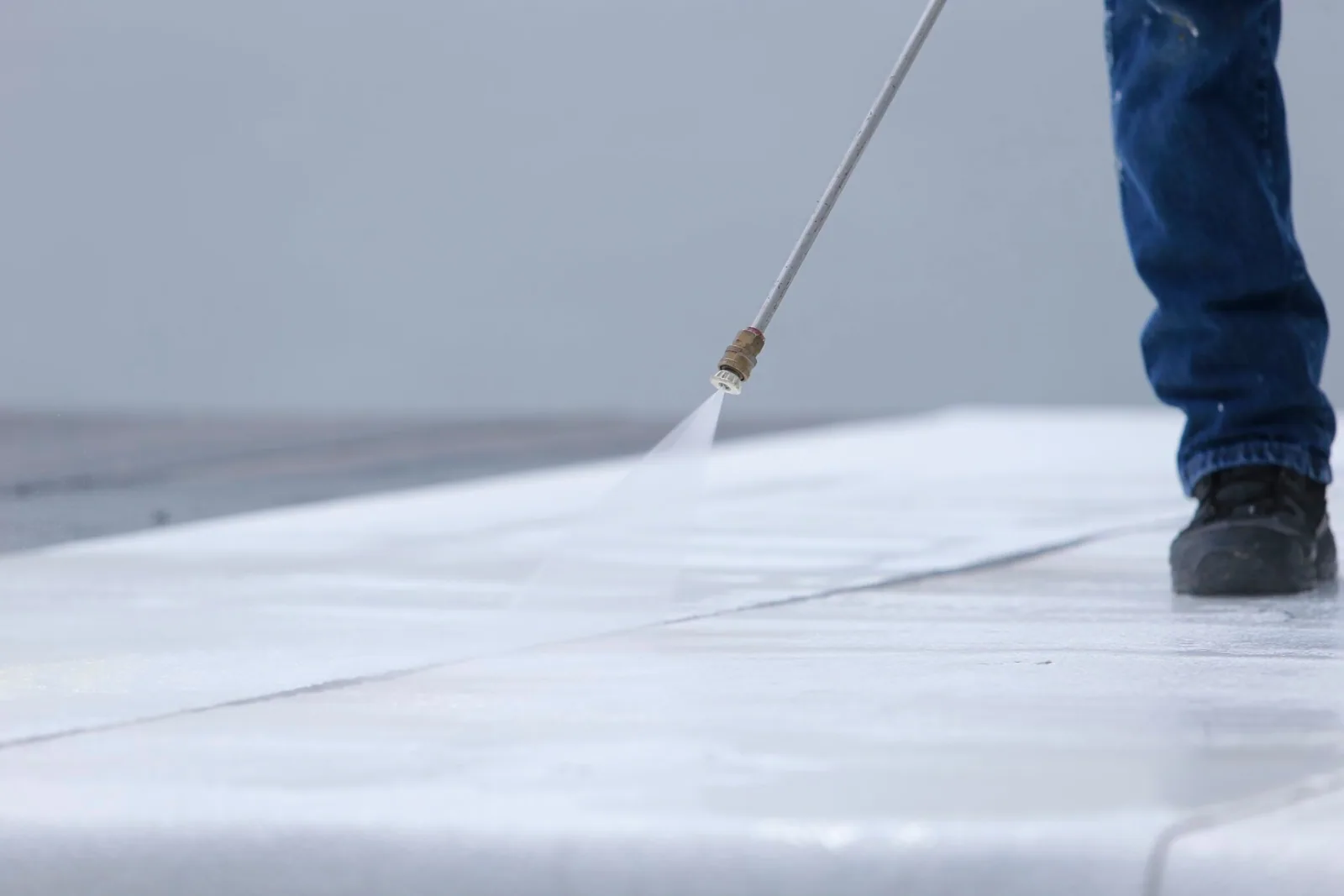
Fasteners and sealant are the cheapest part of a metal roof, and replacing them is often enough for a roof that is ten or fifteen years old but sound. If the panels are rusted through, a metal roof retrofit lays new framing and panels over the old and avoids tear-off. If the panels are sound but weathered, a liquid-applied silicone coating can seal the laps and fasteners and stop the leaks without disturbing the roof or the tenants below.
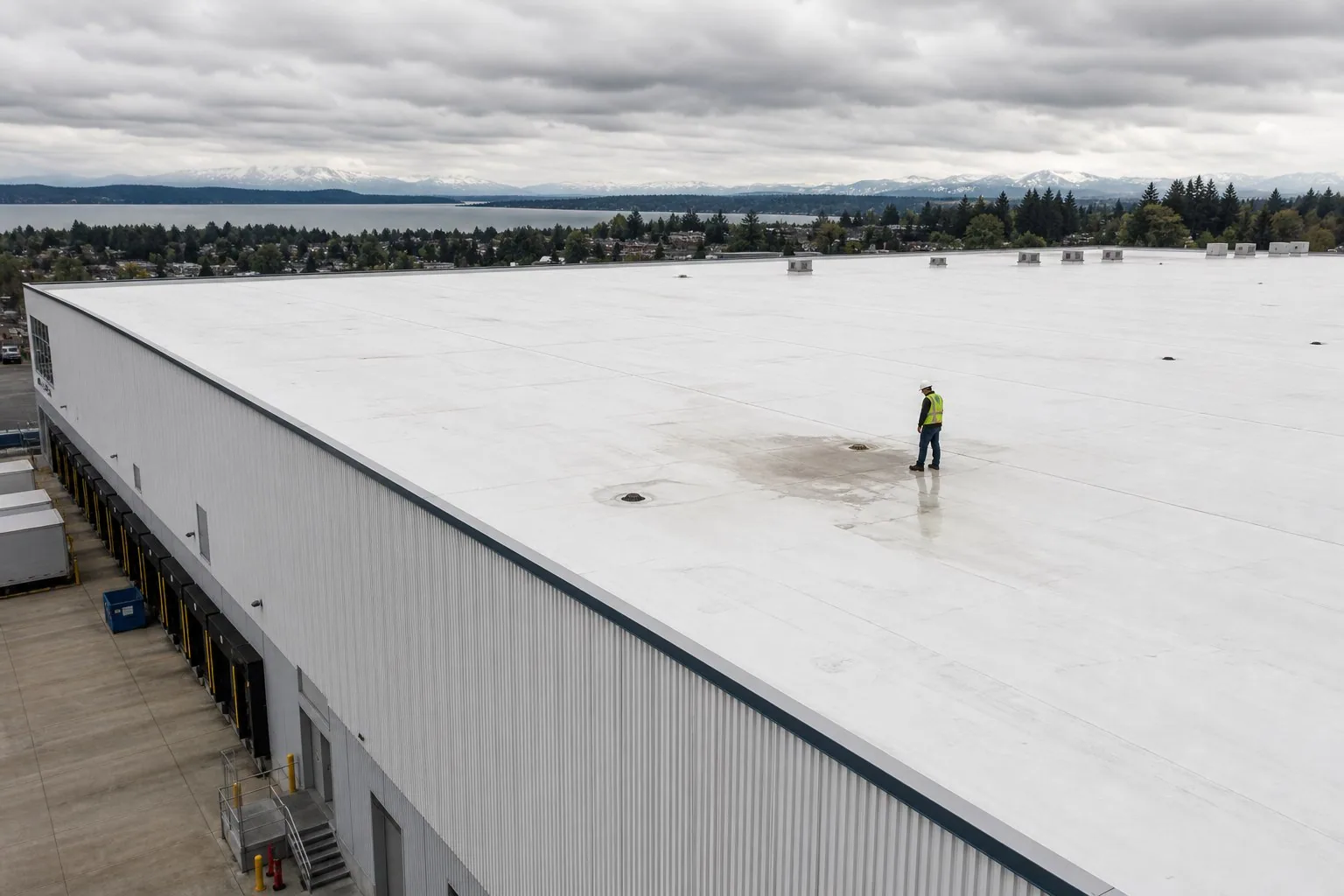
Not every building on a site needs the same answer. A site that mixes outdoor-access rows with a climate-controlled block carries two roof types at once, the way a flex industrial building near Belgrade does. A site with four rows may need new panels on the oldest, fastener work on the second and coating on the third. The sequence can be planned so tenants keep access to units. I walk each building, mark the condition, and write a list by row, so an owner or a regional manager can budget across the whole site. A long warehouse roof follows much the same low-slope logic.
Questions About Self-Storage Facility Roofing
Tenants keep reporting drips on cold, dry mornings. Is the roof leaking?
More likely it is condensation. A cold, uninsulated panel collects moisture on its underside and drips when it warms. A real leak shows up after rain or melting snow. We check both ways and then fix the right problem, which may be a layer of insulation instead of sealant.
Can the roof be recoated while units are occupied?
Yes. Coating work is done from the roof surface, and tenants keep their access. We keep the drive aisles open, hold work off the roof in rain or on frost, and plan around move-in days. The panels must be clean, dry and fastened before the coating goes on.
How do we stop snow from sliding onto the drive aisle?
Snow guards across the panels are the usual answer, set in staggered rows over the door line. Add a gutter at the eave if the water needs a path and heat cable if it ices. The right mix depends on the slope and on where the pack lands.
What should an owner track across several storage buildings?
Keep a row-by-row log. List the building, panel type, age, repairs done and the date of the last inspection. A short log tells a manager which buildings to watch and which ones to put in next year's budget.