
Commercial Roofing in the Copper Ranch Road Business Area, MT
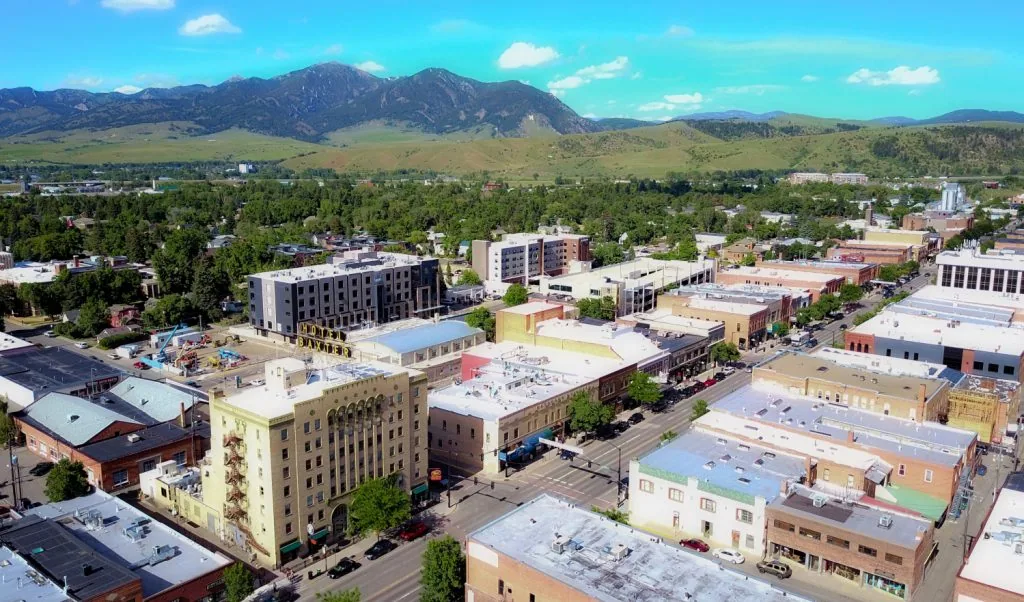
Copper Ranch Road Business Area in Bozeman and the Gallatin Valley
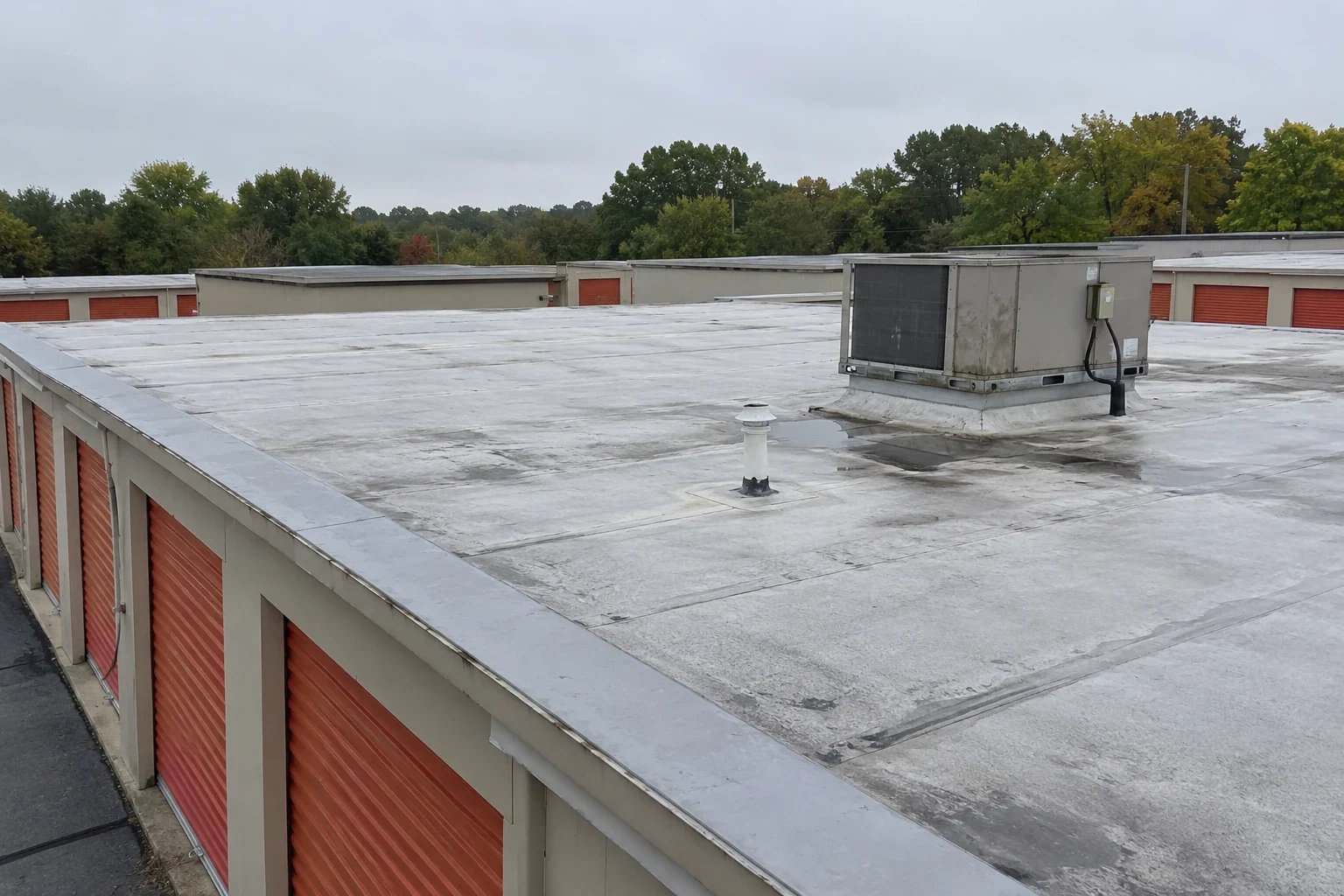
Count the overhead doors on a multi-unit warehouse and you have counted the leak reports it can produce. Twelve units under one roof means twelve owners or tenants who each see their own ceiling and none who see the whole roof. Multi-unit personal-warehouse buildings of twelve units are being built in the Copper Ranch Road area, minutes from Bozeman Yellowstone International Airport, and listings place the area in the Four Corners neighborhood. In a building like that, the question after a Gallatin Valley winter is which unit sits under which seam. Do you know which seam is over your door?
We inspect, repair and replace roofs on multi-unit warehouse and small-bay buildings in the Copper Ranch Road area, and we start by drawing the roof the way the occupants see it.
Why draw a roof map by unit?
Leaks in a shared roof travel. Water enters at one seam, runs along the deck or the insulation and drops in a different unit, and the occupant who sees the drip may be the third one down the line. Without a map, three owners argue about whose roof it is. With one, the argument ends.
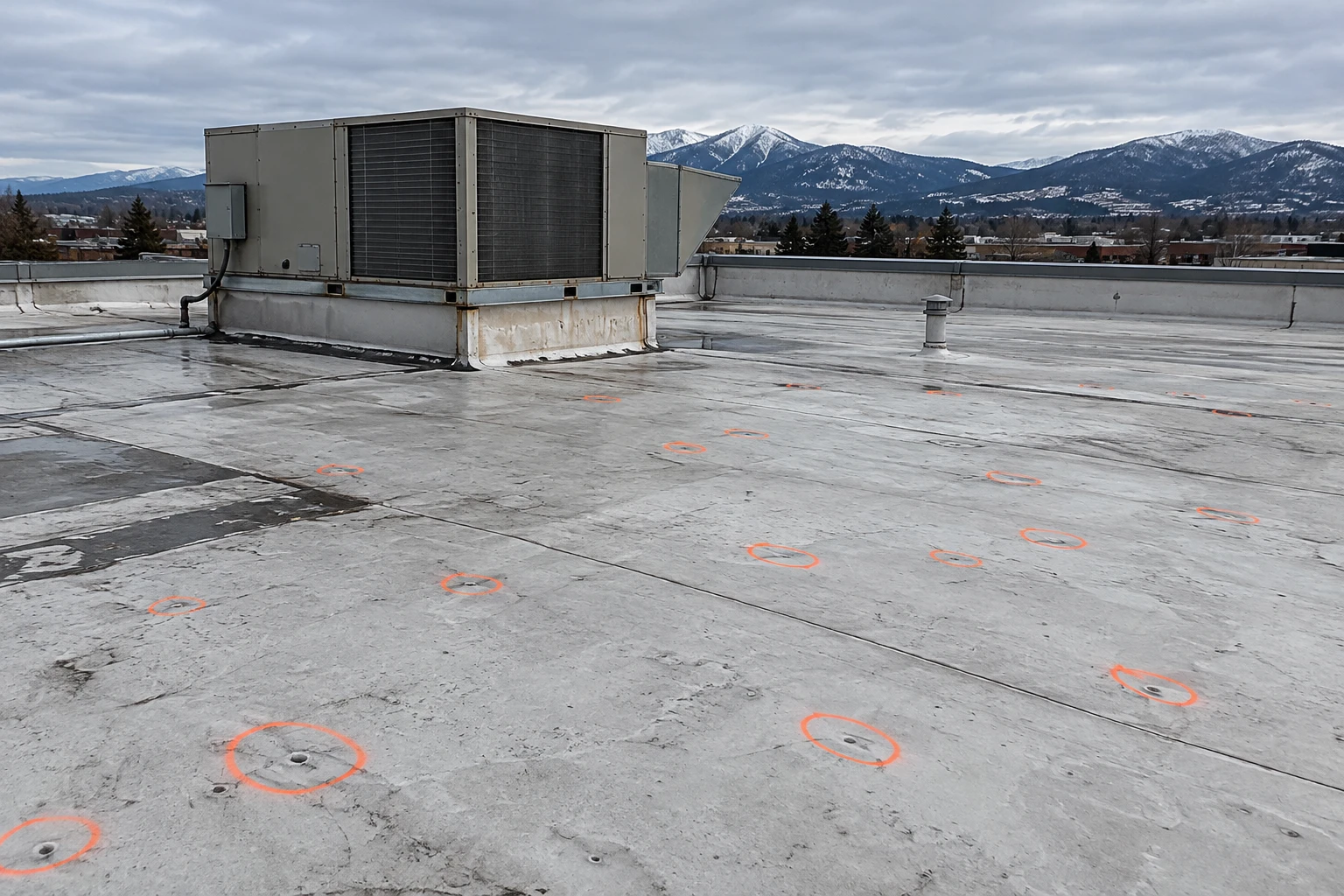
On the first walk we number the units, mark each roof section, drain, curb and penetration and trace any stains uphill. The map goes on one page with photographs. When a leak is reported later, the manager can look up the unit and see what sits above it and when it was last repaired. That page is worth more than any single repair, because it turns a vague complaint into a located one.
The map also guides repairs. A drain that serves four units gets a bigger priority than one that serves a single bay. A curb over a shared wall gets flashing inspected on both sides. We rank each item by the number of units it protects and by what stands in the way of water, and we price the items in that order so a board can fund the top of the list first.
What does a personal-storage style building ask of its roof?
Multi-unit warehouses can hold vehicles, equipment, tools and keepsakes that owners do not want wet. The cost of a leak is stored goods, and the roof is the main guard. On a self-storage building or in flex industrial space, every drip is a loss event.
That means regular walks, quick response to reported leaks and a plan for the failure that tends to come first: seams, fasteners, penetrations and the edge. The roof gets read before anything is assumed. If it is a metal roof with exposed screws, the pull-out count comes first. If it is a membrane, the seam probe does. Either way, the owner receives a written list with photographs.
What else sits in this part of the valley?
Warehouse units as small as 1,500 square feet are listed in the Four Corners commercial corridor, so the area mixes very small units with larger buildings. Four Corners, about 7 miles west of Bozeman at the crossing of U.S. 191, Montana 84 and Montana 85, counted 5,901 residents in 2020, up from 3,146 in 2010.
A building bought into a growing area may come with no history of its roof. A walk gives them a baseline, and the Four Corners neighborhood next door benefits from the same file format when its owners need a repair.
What do we look for on a metal roof?
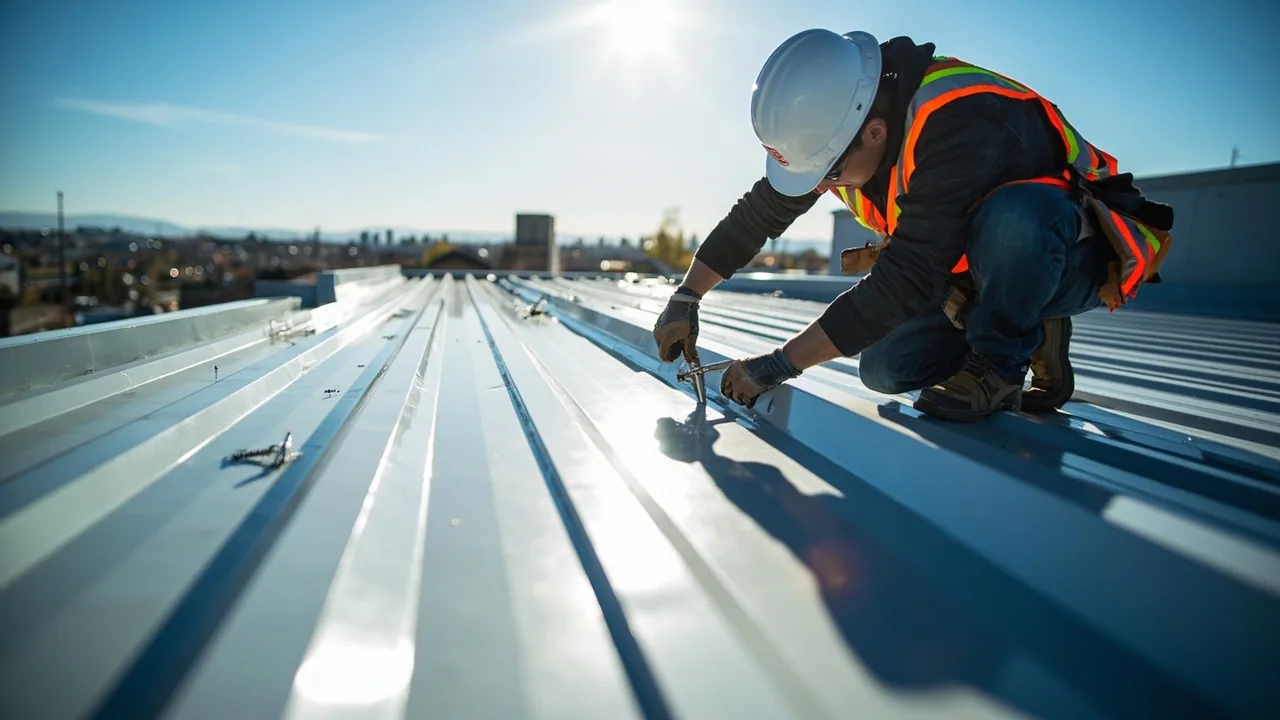
If the roof is metal, the screws are the first check. Thermal movement works each fastener, washers split and heads back out. A hand goes down each screw line to count the loose and missing, and larger-diameter fasteners with new washers replace them. Laps and seams get fresh butyl or sealant. Corroded panels or widespread leaks point toward a metal roof retrofit or a coating restoration.
January nights near 15 degrees F and about 54 snowy days a year are the baseline in Bozeman. Cold, snow and thaw work every fastener, which is why a count each fall beats a guess each spring.
Condensation can mimic a roof leak under metal. A cold panel over a warm, humid space drips on clear mornings. Storage units with vehicles or damp gear are especially prone. We separate the two by timing and by looking at insulation and vapor control, and we do not recommend a coating for a problem a coating cannot cure.
What do hail and wind do near the airport?
Hail has crossed the area before. Baseball-size stones fell east of Gallatin Field on a June 2010 afternoon, and golf-ball hail followed in August 2013 with the 89 mph gusts that flattened crops. A May 2023 report of 1.50-inch hail on the river corridor northwest of Bozeman Hot Springs is the most recent mark.
A multi-unit roof offers plenty of surface to mark. Once a storm has passed we grid it, flag dents and bruises with a scale reference and take a core at the worst. Hail damage repair records go to the owners and the insurer together, so everyone reads the same evidence. The edges of buildings toward the Gallatin Field airport area get a second look for wind.
Insurance claims on shared roofs are easier with one set of photographs. We take them on a fixed grid, label each frame by unit and keep the originals with the roof file, so the board and the adjuster can read the same record.
How do owners share upkeep?
A preventive maintenance plan on a shared roof is a group decision. One walk each spring and fall, one drain flush, one seal-and-fasten pass and one update to the roof map cost a small share per unit. A single leak that goes unreported costs one unit's contents and then the whole roof's insulation. We write the plan so the board or the property manager can approve it in one meeting.
Records finish the job. After every visit the owner group receives the updated map, the photographs and a one-line summary of what was found and fixed. When a unit changes hands, the file moves with the building, and a new owner sees the roof history on day one. A roof map that follows the building is also what a buyer's inspector asks for first, and it keeps the shared roof from becoming a negotiating point.
Questions About Copper Ranch Road Business Area
How do we find which seam is over our unit?
Use the roof map. If none exists, we draw one on the first walk, numbering units and tracing stains uphill along the deck. The map shows seams, drains and curbs by unit.
Who should call about a leak in a shared building?
The manager or the board. One call, one set of photographs and one scope avoids the situation where three owners hire three roofers for one entry point.
Is a coating enough for a leaking metal roof?
Sometimes. If the panels are sound and the fasteners are replaced, a coating can seal laps and seams. Corroded or perforated panels need replacement or a retrofit. A walk and a rust check settle it.
How often should drains and edges be checked?
Twice a year, spring and fall, and after any hail or high wind. A shared building benefits from one dated walk that every owner can see.
What should an owner do after hail?
Photograph the damage, note the date and weather and report it to the manager. We walk the roof within days and deliver a findings sheet that supports an insurance claim.