
Commercial Roofing in Logan, MT
Logan in Bozeman and the Gallatin Valley
A metal-roofed shop beside a railroad line tells you what the roof has been through. The ridge cap has a few screws backed out, the eave trim has a bend where a gust got under it, and the panel laps show a rust streak that began at a fastener. Logan sits on the Gallatin River at about 4,275 feet, reached from Interstate 90 at exit 283, and the buildings that serve a town like this are working buildings: shops, storage, rail-side structures and the occasional community hall.
Those roofs take the Gallatin Valley winter without much shelter. When the first thaw comes, which end of your building drips, the rail side or the road side?
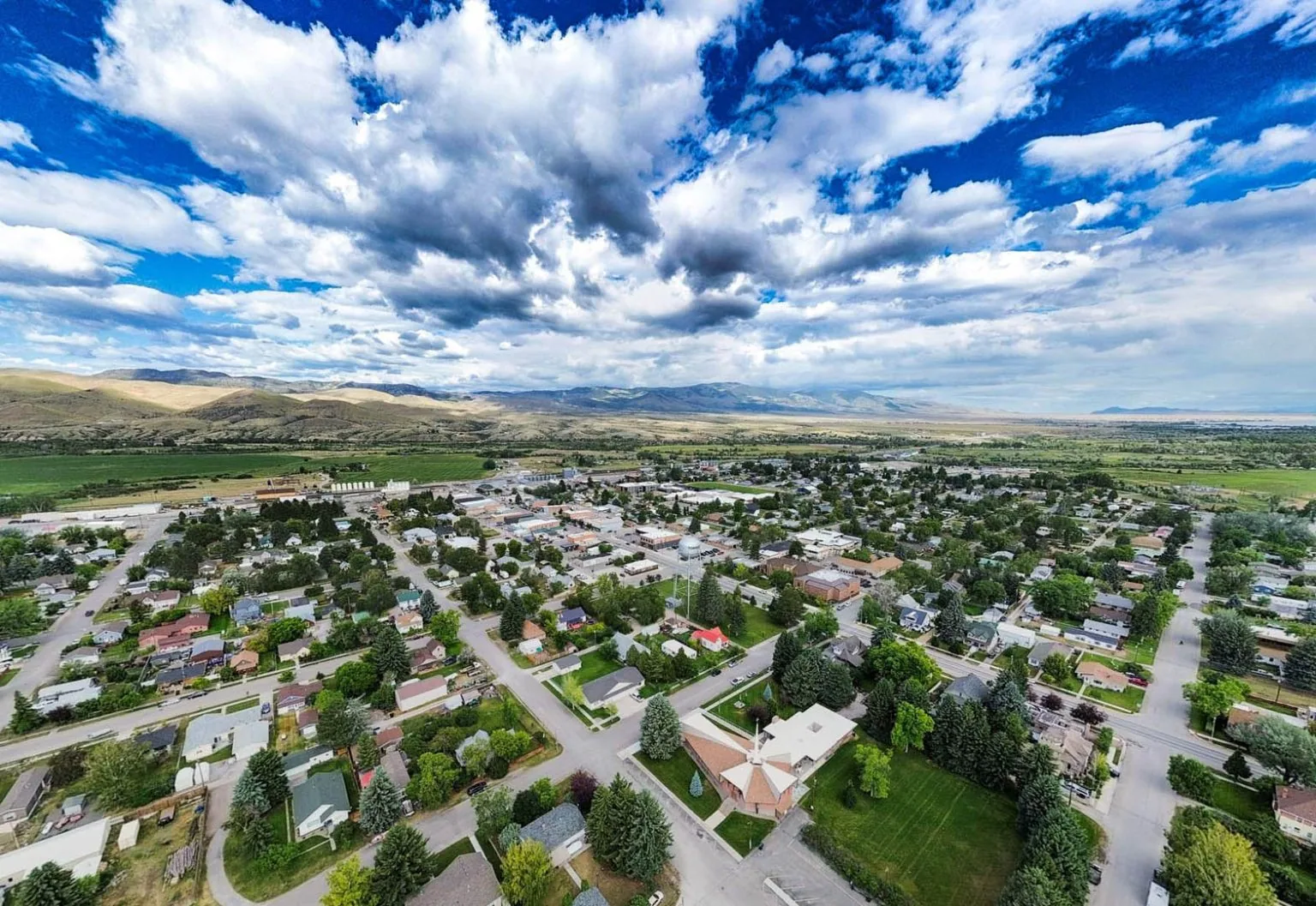
What kind of buildings carry a commercial roof in Logan?
Logan had 72 residents at the 2020 census, so the roofs here are few and each one matters. The town began in 1889 as a Northern Pacific railroad station, and it now sits on a line operated by BNSF Railway. It once had a six-stall roundhouse and coal and water facilities for steam locomotives. That history leaves old industrial footprints near the tracks, and the working buildings of a town this size are likely to be shops, storage and equipment sheds.
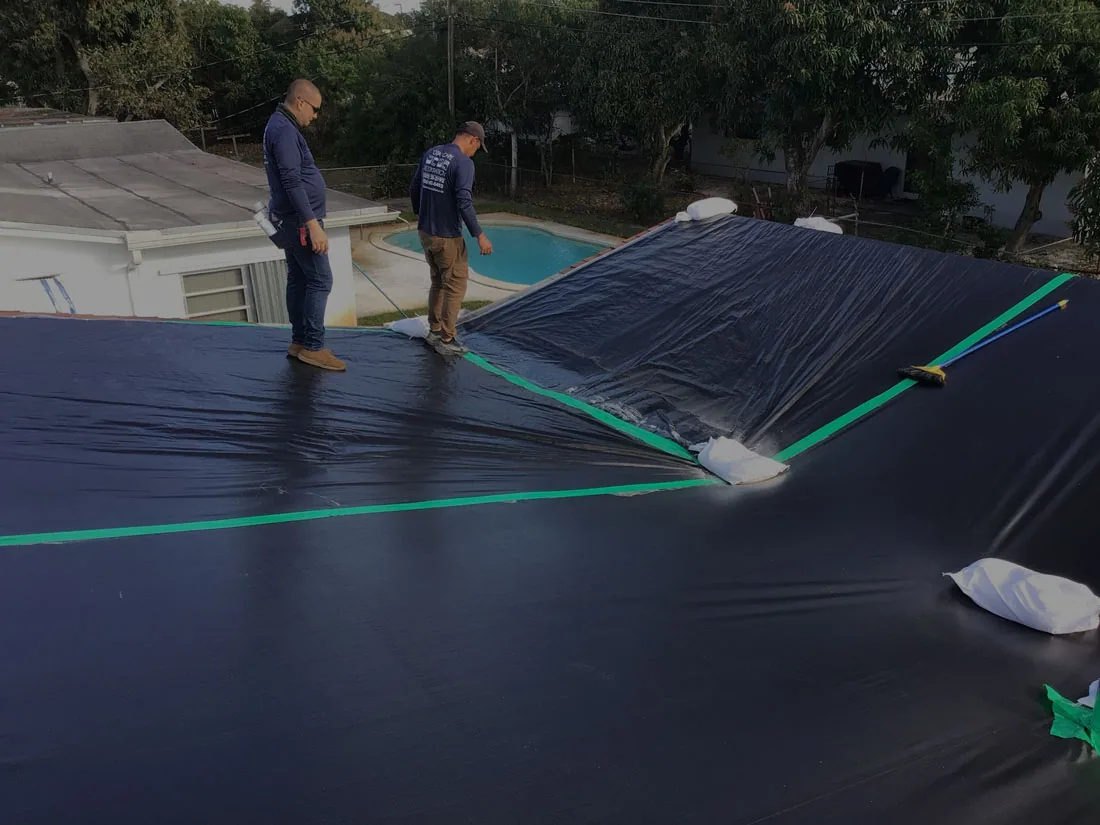
What is on a roof gets settled on the climb. A rail-side building may carry a standing seam metal roof, a rolled membrane or an older built-up roof that was patched many times. My first step is to count the penetrations, walk the seams and look for the point where water has been collecting. A small building can still have a lot of detail, and the details are where the leak starts. A roof over a shop with a wood stove or a gas heater adds a flue, a collar and a clearance detail that a plain storage shed does not have, and a storage building with a single rooftop vent has a very different list. I write the penetration list first, since it sets the order of the walk and the likely cost. The list then travels with the building file.
What does a Gallatin Valley winter do on the river?
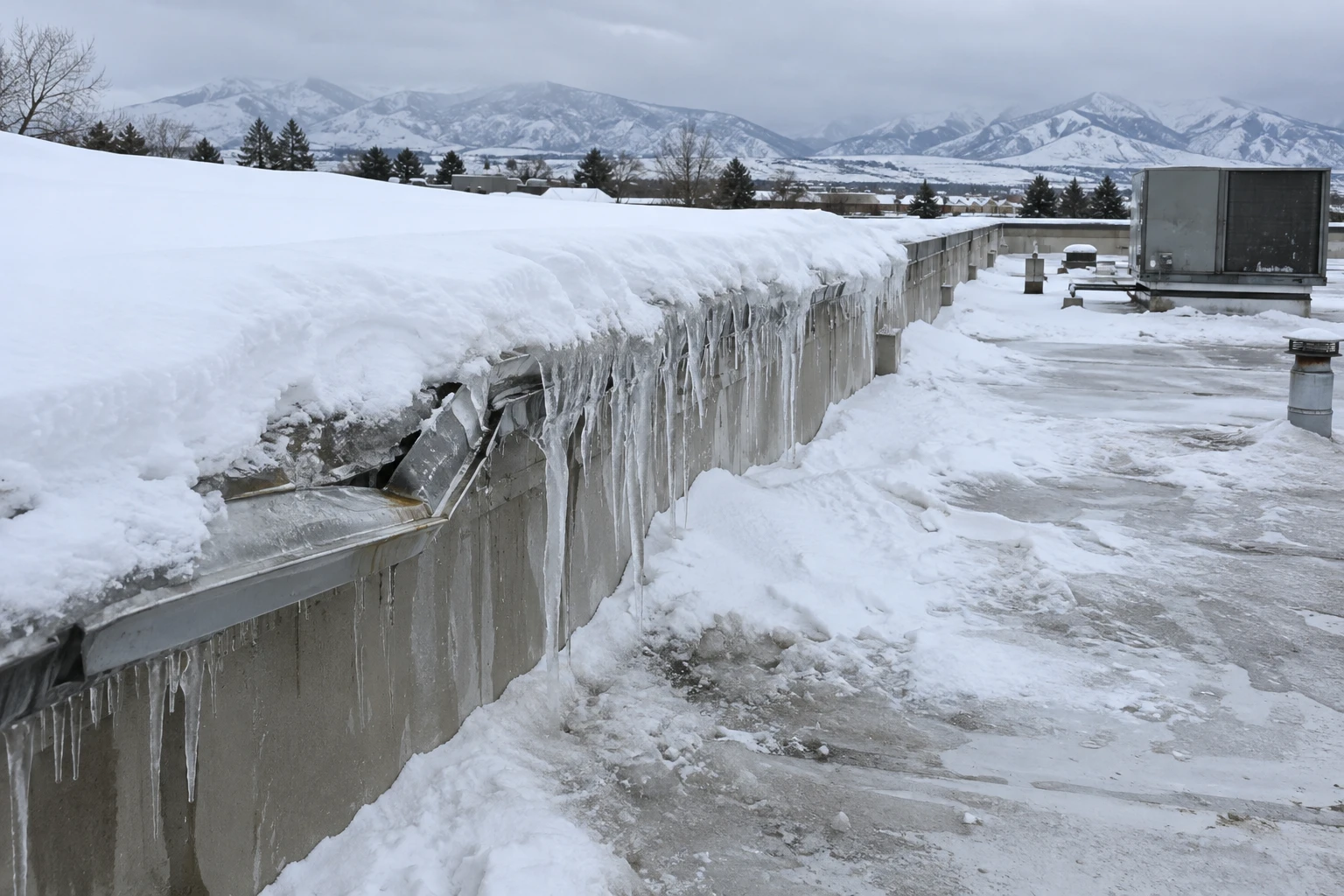
Bozeman's record is the guide: roughly 91 inches of snow in a year, with January lows in the teens. Logan lies in the same Gallatin Valley system, on the river. A drift will form at the lee of a shop wall and sit there until the afternoon sun softens it. Then it runs down the wall, finds a gap in the flashing and freezes again at night.
Metal roofs shed snow quickly, sometimes all at once. A slide can drop onto a door, a yard or a parked vehicle, and a ridge of ice at the eave holds the next slide in place. Guards on the panels, a gutter sized for the load and clear downspouts handle most of it. Where a building has no gutter at all, I look at how the ground below is graded, since meltwater that runs back under a slab causes its own damage. Snow and ice damage repair is the usual start.
Why does wind decide the repair on a freestanding building?
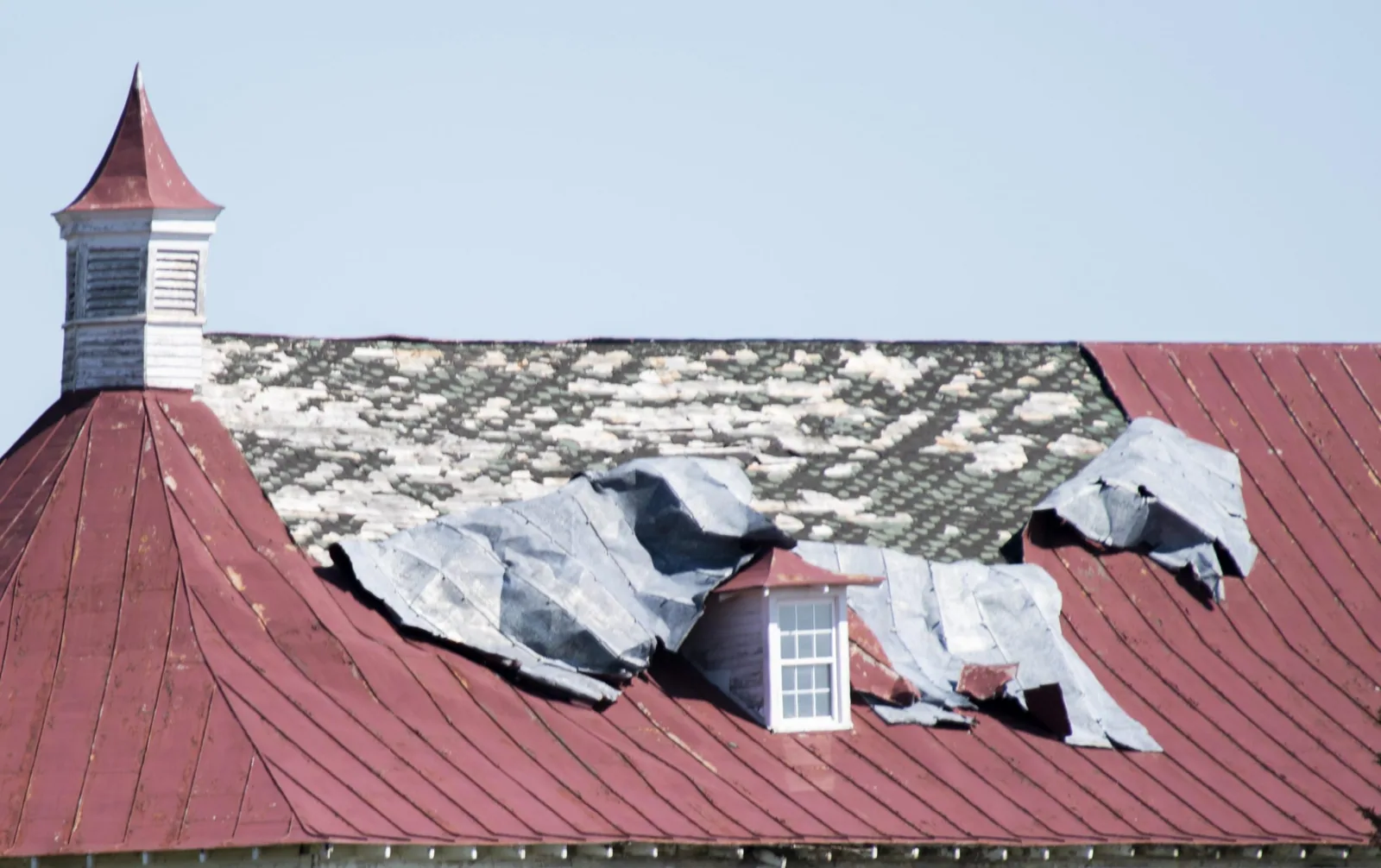
Gusts reached 89 mph in the August 2013 storm that dropped golf-ball hail across Belgrade and the north side, against a design wind of 110 mph for Bozeman. A freestanding building takes the push from every side, and the edge of the roof takes most of it.
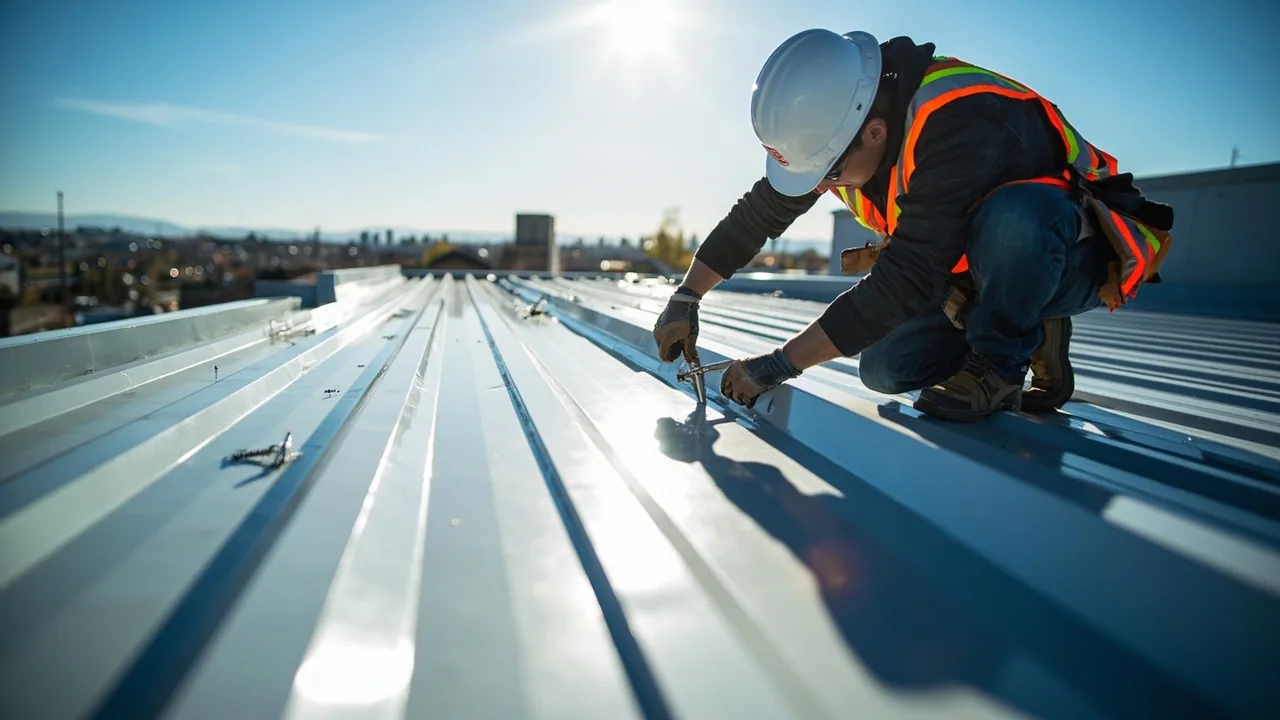
I check the rake trim, the eave metal, the ridge cap and the fasteners along every edge. Exposed-fastener panels lose their screws a little at a time as the metal expands and contracts, and the rubber washers dry out. Replacing screws with oversized ones and resealing laps is cheap and often restores a roof that looks beyond help. The test is whether the panel still holds a thread. A new screw that bites and tightens means years remain, and one that spins freely in a rusted hole means the panel is finished at that spot. When the panels themselves have rusted through, a metal roof retrofit goes over the old roof without a tear-off. For storm damage that has already happened, wind damage repair comes first.
How does a rail line change roof care?
Trains vibrate a building and a roof. In a metal-clad structure close to the tracks, the vibration works fasteners loose faster than in a quiet location. Trains also throw diesel soot and grit, which settles on the roof and clogs drains and gutters. A building near the line may need cleaning more often than one farther away.
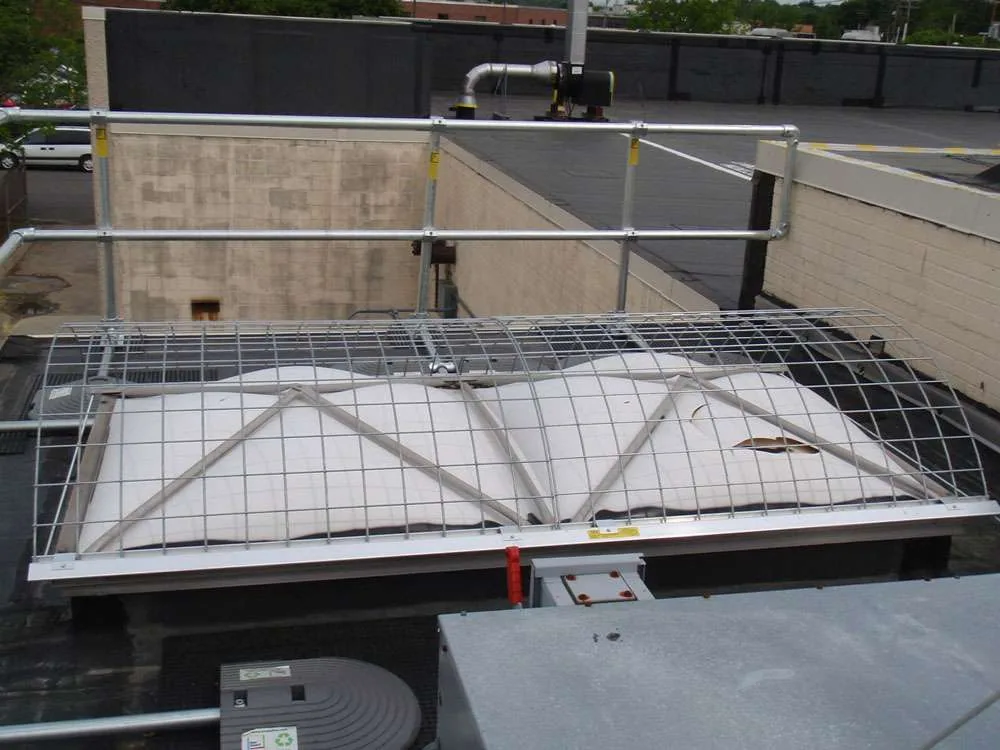
Access is another point. Work near an active rail line means planning crane and lift positions, ladder placement and staging so that nothing crosses the right-of-way. The owner of the building or the railroad may set conditions, and we plan the sequence to meet them. Equipment and material stay on the building's side of the line. Loose material is tied down at the end of every shift, because a gust that carries a sheet of panel toward the track is a safety event and a delay. We also keep the interstate exit in mind when we plan deliveries, so flatbeds arrive early in the day, before afternoon wind builds. If the roof needs a rooftop unit moved or a skylight replaced, skylight and penetration flashing work is done in a day and sealed before the crew leaves.
Repair, recoat or replace a roof out here?
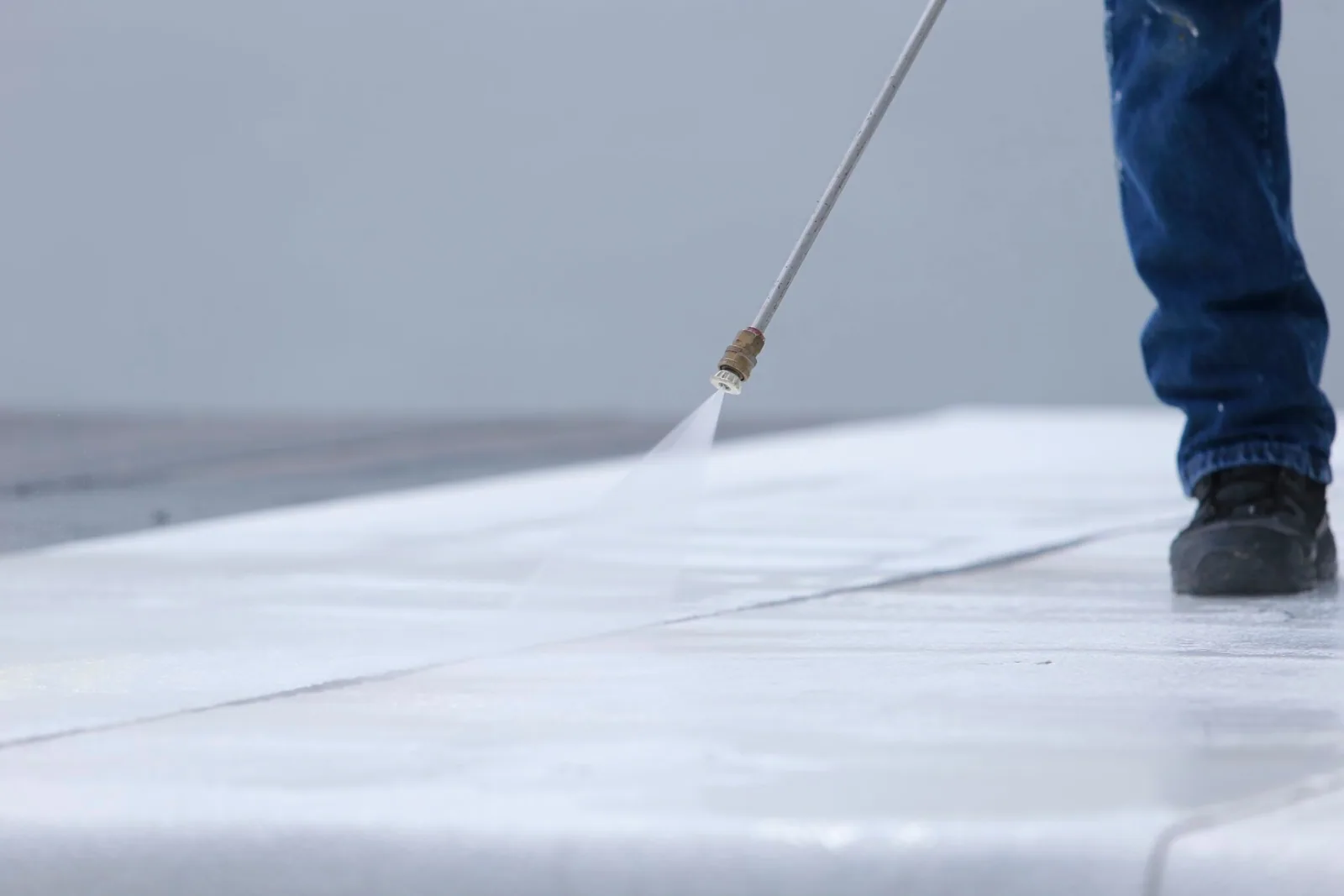
A small town building with a long drive to any supplier wants a repair that lasts, not a patch that fails in the next thaw. I put each roof in one of three groups. Sound panels with loose fasteners need a fastener and sealant pass. A roof with weathered but sound panels is a candidate for a coating, such as silicone, which seals laps and fasteners without a tear-off. A roof with rusted-through panels or wet insulation needs replacement or a retrofit.
Owners in Logan are served from Bozeman, and the practical advice is to walk the roof in fall, before the freeze, and put the work on the calendar. A visit in October is cheaper than an emergency call in February. Our emergency roof repair response runs around the clock for the times when a storm gets ahead of the schedule. Neighboring Three Forks and Manhattan share the same valley and the same wind.
Questions About Logan
Our metal shop roof leaks at the screw lines. Can it be saved?
Usually. Backed-out screws and dried washers are a common cause. We replace fasteners with oversized ones, reseal the laps and renew the ridge closure. If the panels are rusted through at the screws, a retrofit or replacement is the next step.
Does a building next to the tracks need extra roof care?
More frequent cleaning, mainly. Soot and grit clog gutters and drains, and vibration loosens fasteners. A fall walk and a spring walk catch the problems before the thaw.
How far in advance should we book a roof job?
Early fall is best for work before the freeze. Panel work needs dry, calm days, and the window narrows in October. Booking in late summer keeps the schedule open.
What can be done about snow sliding onto a work yard?
Guards across the panels keep the pack up so it melts a little at a time. A gutter and downspout carry the meltwater away from the door line, and heat cable keeps the outlet open. The mix depends on the slope and where people work.