
Commercial Roofing in Willow Creek, MT
Willow Creek in Bozeman and the Gallatin Valley
A machine shed in western Gallatin County looks simple from the road. Long steel panels, a low pitch, a big sliding door on one end. In late winter it looks different from the top: a ridge of ice along the north eave where the sun never reaches, a line of rust at the first screw row, and a drift against the end wall that has been sitting since December. Willow Creek is a small place, about 6 miles southwest of Three Forks at 4,173 feet, and the buildings that carry commercial roofs there are mostly working ones.
When a roof like that fails, it fails slowly and then all at once. Where did the first drip land on your building, and was the door open or shut?
What commercial roofs does a community like Willow Creek have?
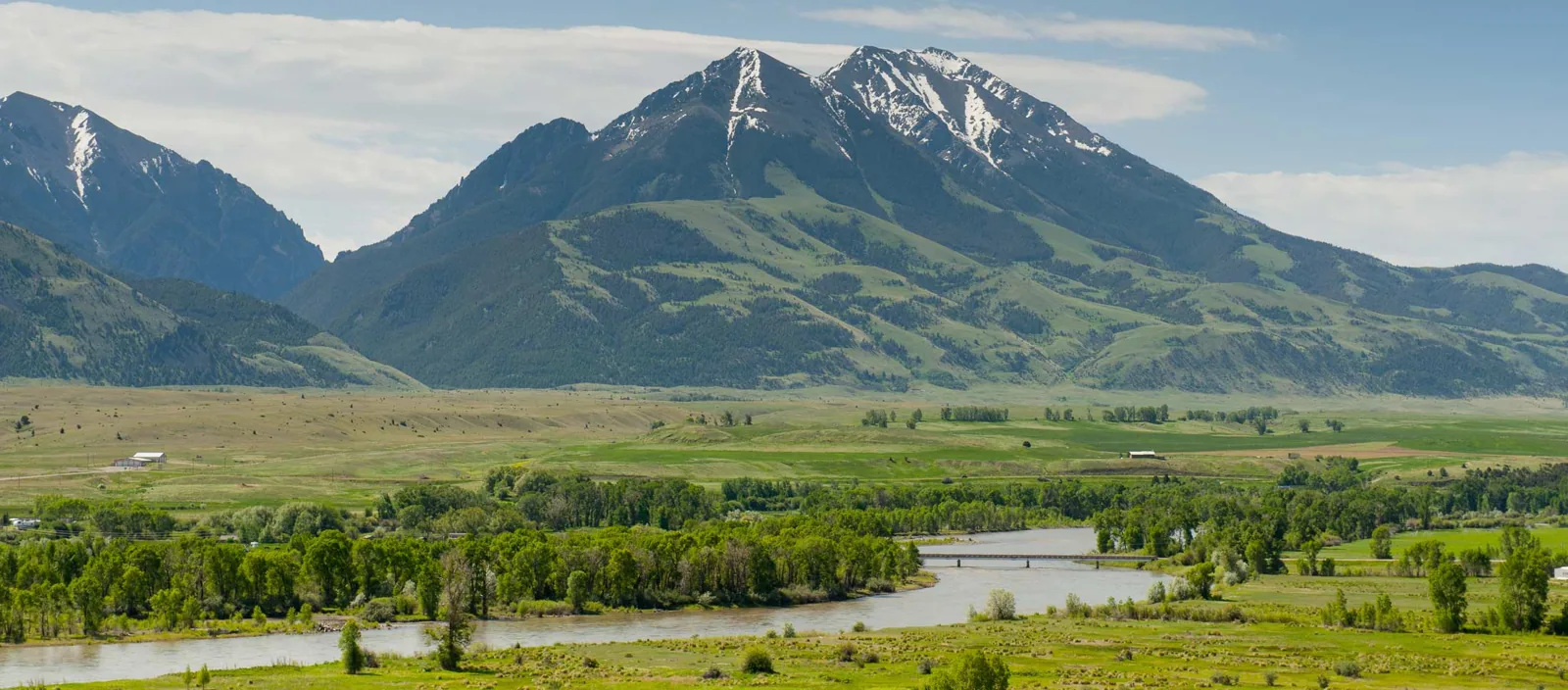
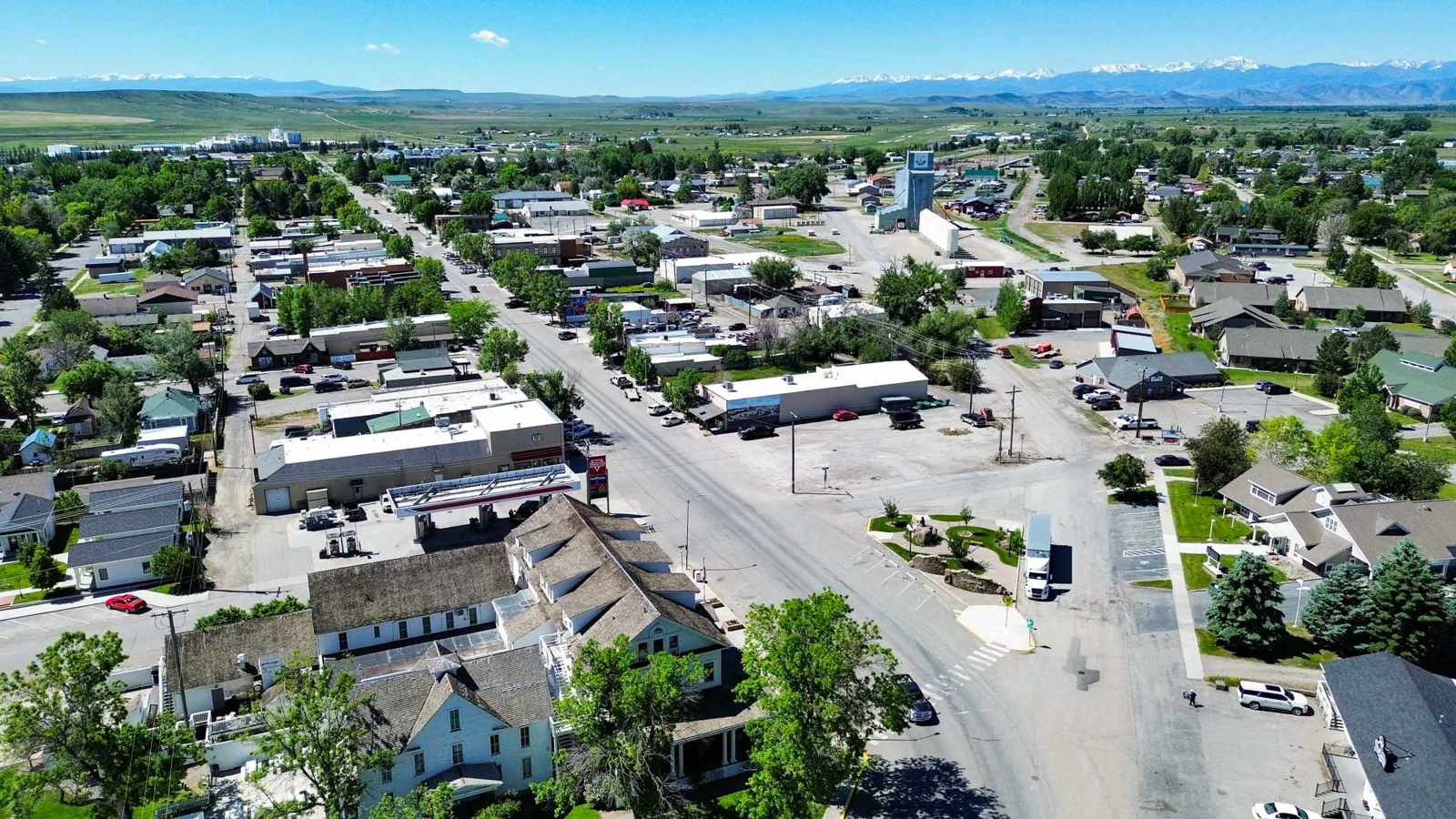
Willow Creek had 230 residents at the 2020 census. It sits in the Bozeman micropolitan statistical area in western Gallatin County, with Interstate 90 about 7 miles to the northeast. That is working country, where roofs go on farm-side buildings, shop and storage space, a few small businesses and community structures. What a roof is made of gets settled on the climb, though this kind of building often wears a steel panel roof, sometimes older rolled roofing or a membrane over a flat addition.
The roof questions are practical. Is the panel system exposed-fastener or standing seam? Are there skylight panels that have yellowed or cracked? Does the building have a gutter, and does the downspout run clear in January? A walk around the outside and a look at the underside of the deck answer most of these before I set a ladder.
The inside view matters as much as the top. Daylight through a seam, frost on the underside of the panels on a cold morning, a dark stain on a purlin or a dripping nail head all point to the part of the roof that needs attention. On a machine shed or a shop with no ceiling, the framing is in plain sight, and rust on a purlin where a screw passes through tells me the screw has been leaking for several seasons. Each of those spots gets a photograph and a mark on the roof plan, so one visit can cover them all.
How do snow and thaw cycles work on a farm-side roof?
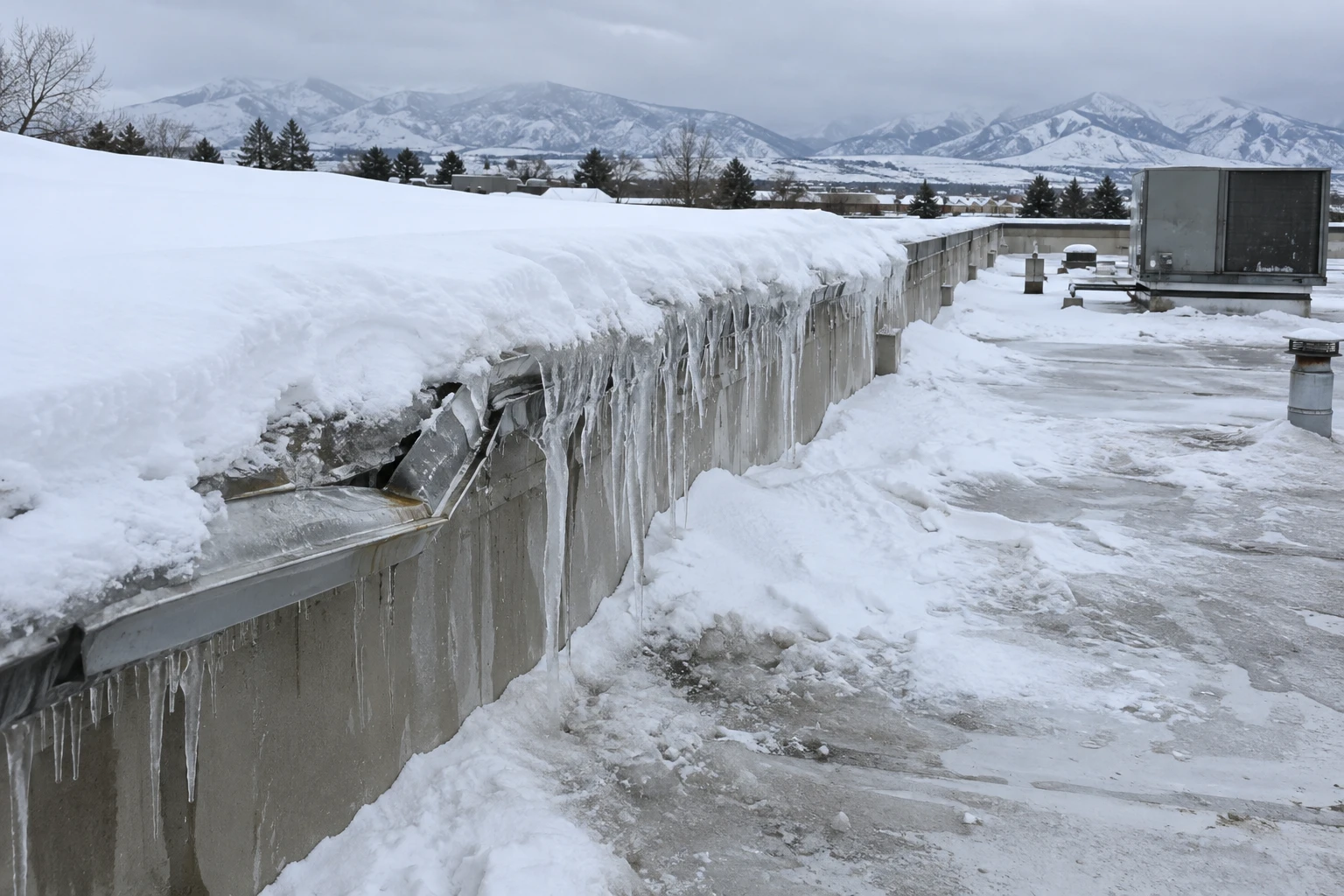
Cold nights and bright afternoons define a Gallatin County winter, and Bozeman's roughly 91 inches of snow a year is the nearest reference. Willow Creek sits at 4,173 feet, well below Big Sky, but the pattern of cold nights and bright afternoons applies across western Gallatin County. A sunny day softens the surface of the pack, the water runs to the eave, and the night freezes it.
On a long steel roof, the whole sheet of snow can let go at once. It lands on a lane, a doorway or the equipment parked below. Guards across the panels keep the pack on the roof until it melts gradually, and a gutter with a clear downspout keeps meltwater from freezing at the foot of the wall. Where a building has no gutter, I check the ground slope instead. Snow and ice damage repair is often a matter of redirecting water, not replacing panels.
What does hail do to steel panels and skylights?
Gallatin County has taken serious hail. Hail marked the valley in 2010 and again in 2013, golf-ball size both times, with baseball-size stones east of Gallatin Field in the first storm and 89 mph gusts in the second. Those storms were reported in other parts of the valley, but they show what the county can produce, and a roof here faces the same kind of sky.
Steel panels dent, and a dent is mostly cosmetic until it opens a seam or cracks the coating. Skylight panels and any plastic glazing crack more easily. After a storm I look at the ridge cap, the panel ribs and every translucent panel, then the fasteners near the dents. A hail damage repair scope lists what is cosmetic and what is leaking, so the owner can decide whether an insurance conversation makes sense.
How does open ground change the repair?
Wind is a regular part of valley life. A shed with open fields on every side takes it from the first row of screws to the last. Design wind for Bozeman is 110 mph, and the 2013 storm pushed gusts to 89 mph elsewhere in the county. Corners and eaves see the highest uplift, so I look at the trim and the fasteners there first. Along the ridge, the cap and its closure strips take the next share, and a ridge that has lifted at one end can pump air and meltwater into the building every time the wind turns.
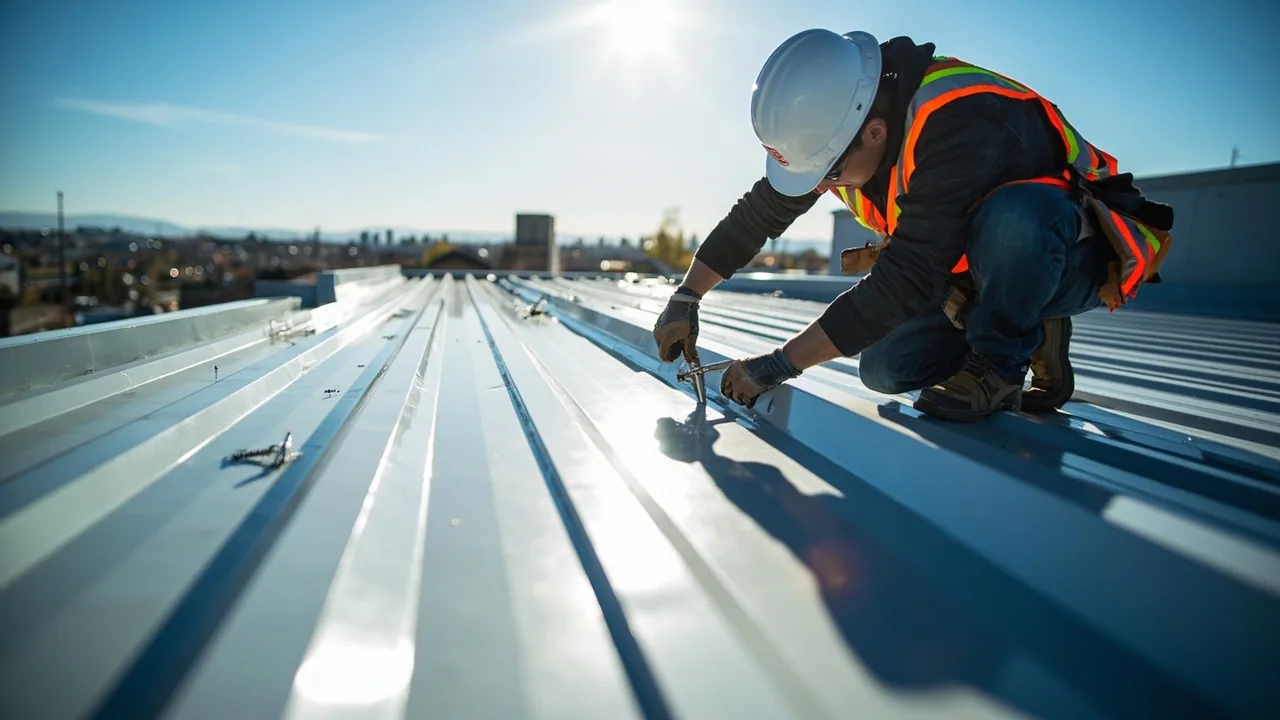
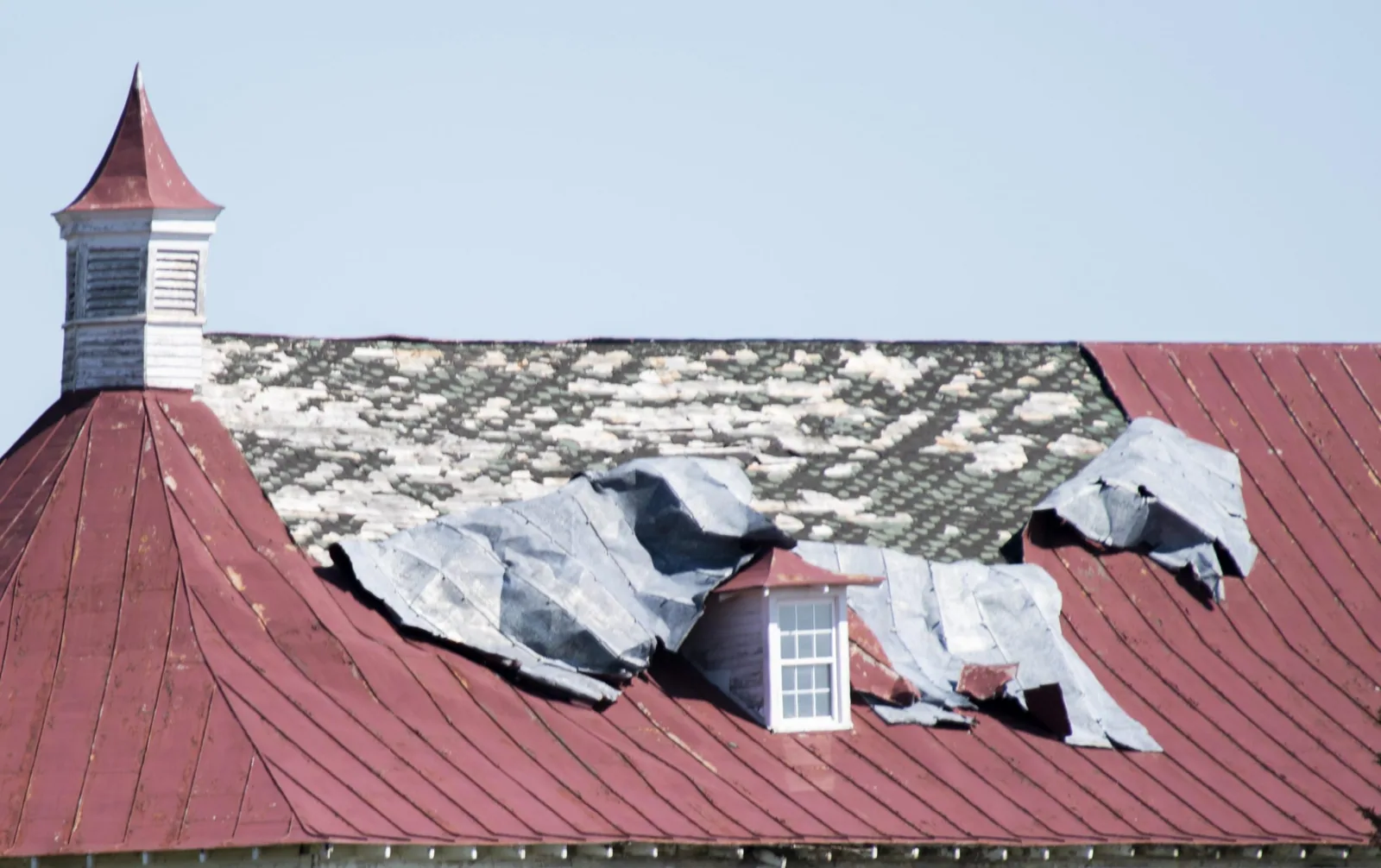
A loose eave trim lets wind under the edge of the panel, and over a winter it bends and tears the metal. The fix is a clean refasten with the right screw spacing, a replacement of any bent trim and a new bead of sealant at the laps. If the panels have rusted at the fasteners, a metal roof retrofit adds a new layer over the old without a tear-off. After a windstorm, the corners come first and the work moves inward, as in wind damage repair.
When is a coating the right answer for an older roof?
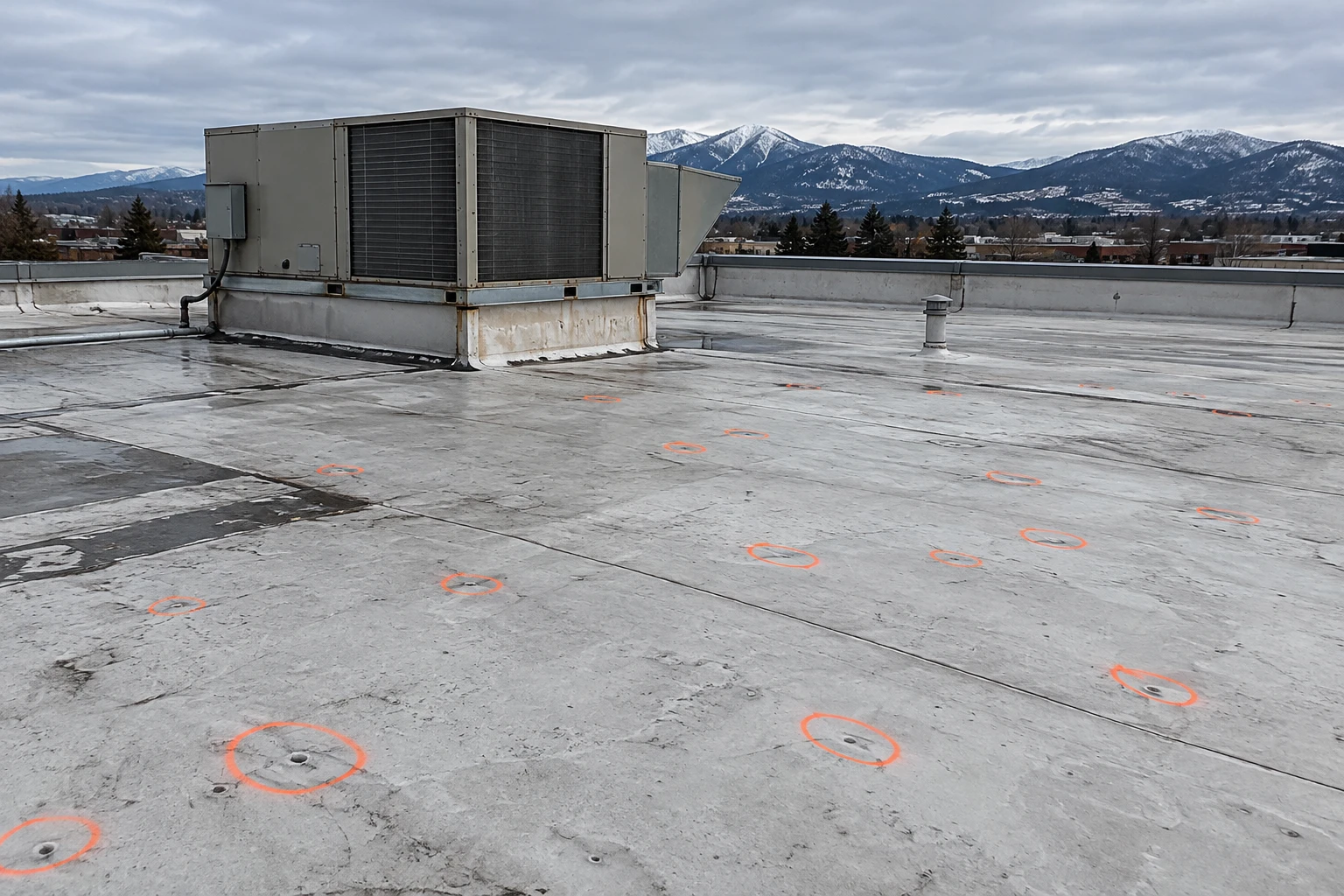
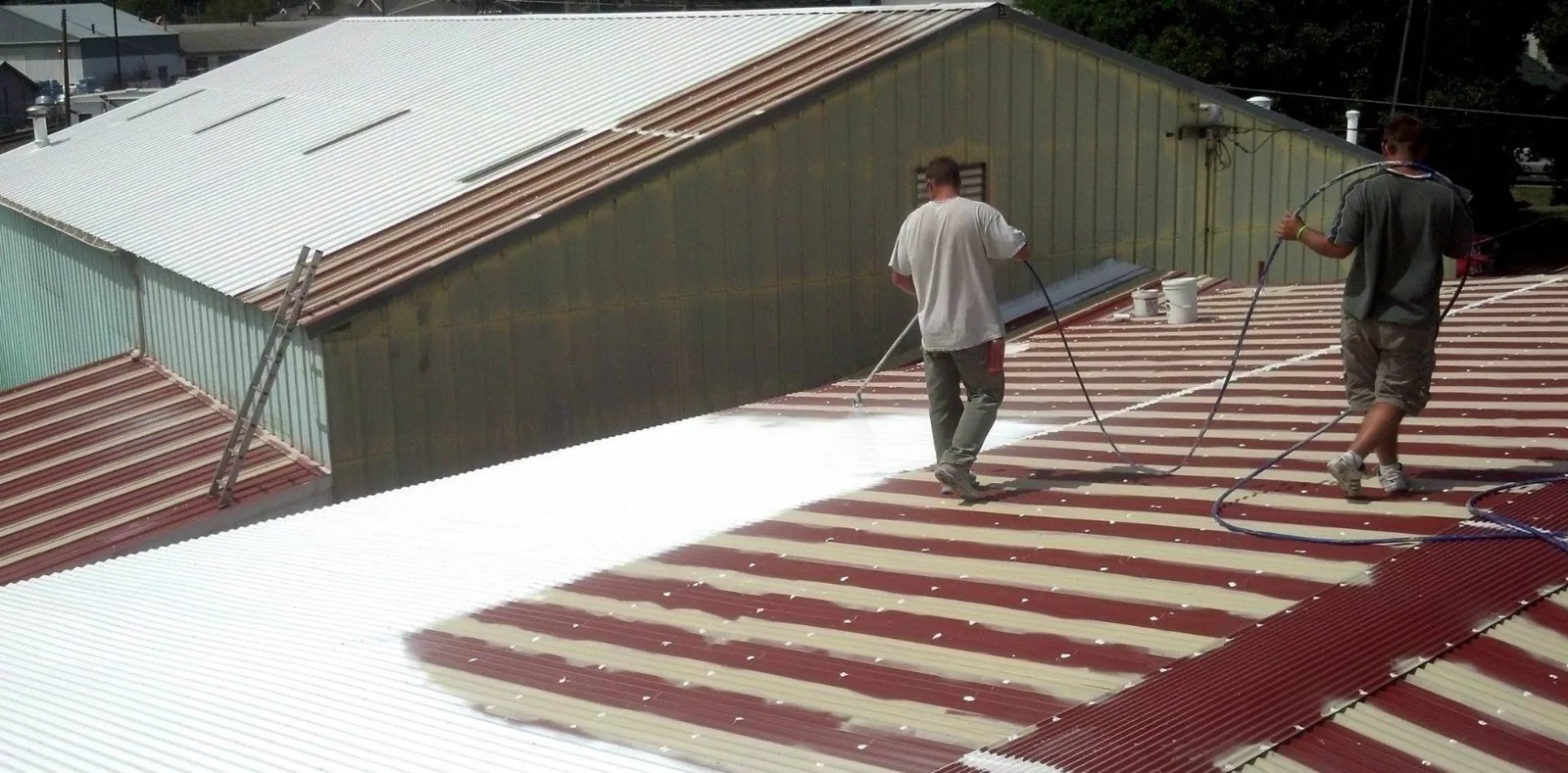
A weathered but sound steel roof can be sealed and recoated, which stops leaks at the laps and extends its life without tearing it off. A coating needs clean, dry metal that still holds a screw. If the panels are rusted through or the insulation under them is wet, a coating hides the problem. I check by probing the rust, pulling a few fasteners and, where there is insulation, taking a core. The result decides between roof coating restoration, a retrofit and replacement.
Planning around the season matters in a place where the working window shrinks fast in October. A roof that is walked in August can be coated in September, and the coating cures before the first hard freeze. Cold-weather limits are real: most liquid coatings need the surface and the air to stay above a minimum temperature and stay dry for hours after application, so a cold snap or an early snow shuts the window. That is why the booking in late summer matters more here than a quick price. A roof that is walked in November waits until spring. The nearest neighbors share the same constraints, whether it is the Three Forks side or the Manhattan side of the valley, and our emergency roof repair response covers storms that arrive out of season.
Questions About Willow Creek
Is it worth fixing a roof on an older farm-side shop?
Often. A building that is still in use and has sound framing can have its panels resealed, its fasteners replaced and its trim repaired for much less than the cost of a new roof. The rust and the framing get checked first, then you get a range.
How can I tell if a skylight panel needs replacing?
Yellowing, cracks, and a chalky surface are signs. A panel that flexes underfoot or lets in water at the rib is finished. We replace panels with matching profile and reseal the laps.
What is the best time of year to schedule a roof job here?
Late summer through early October. The days are dry and calm, adhesives and coatings cure well, and the first hard freeze has not yet arrived. We book walks in July and August to hold slots.
Can you work on a building that is still in use?
Yes. We stage material away from doors and equipment, dry in each section the same day and work around deliveries and livestock or machinery schedules where relevant.