
Distribution Center Roofing in Bozeman, MT
Distribution Center Roofing in Bozeman and the Gallatin Valley
Walk the dock side of a distribution center in February and the roof tells you how the building is used. The dock side takes the abuse: exhaust from idling trucks, ice that slides off the edge, rooftop units clustered over the cross-docks and a trail of boot marks from technicians heading to the same few curbs. The quiet side of the same roof looks nearly new. Interstate 90, U.S. 191 and Montana Rail Link freight all cross the Bozeman, MT area, which keeps distribution buildings on a schedule the roof cannot interrupt. Which side of your roof is wearing out first?
We inspect, repair and replace distribution roofs across the Gallatin Valley, and we plan the job around your shipping windows before any material is ordered.
Why does the valley support distribution buildings?
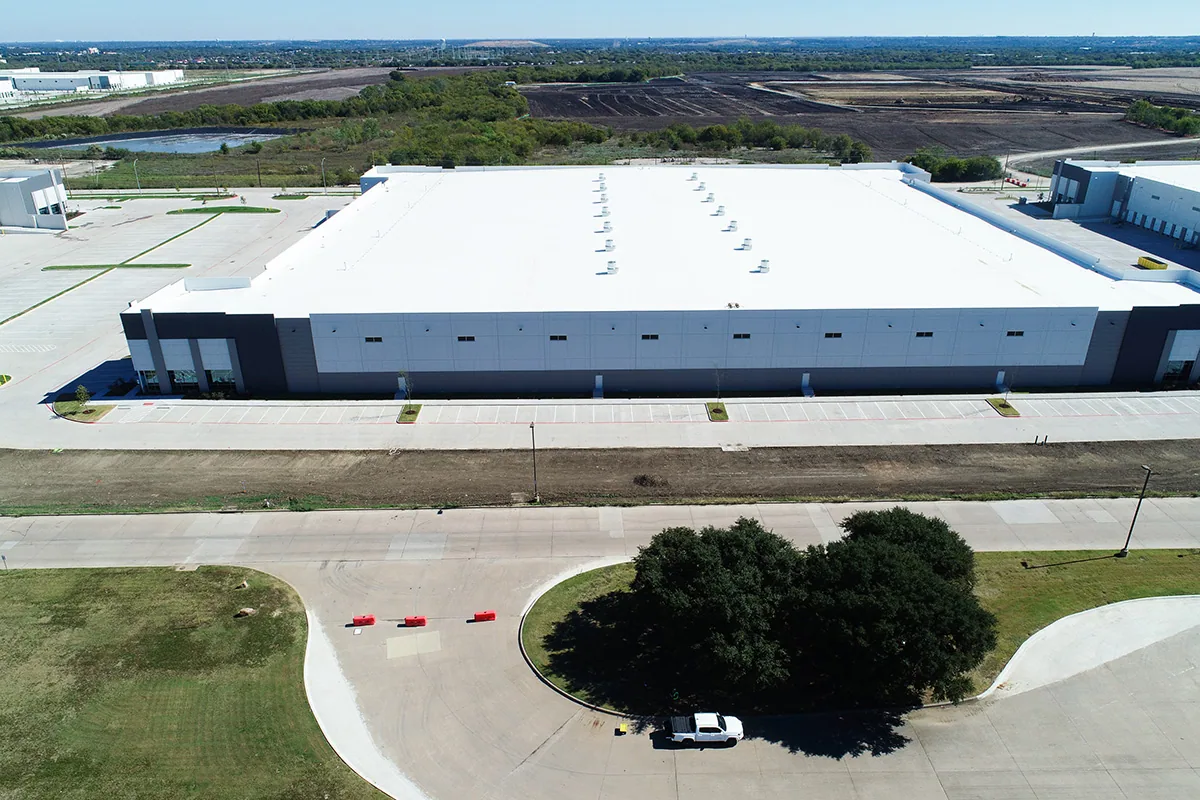
Trucks reach the valley on I-90 and U.S. 191, and freight rail runs through on Montana Rail Link. East of town, I-90 climbs Bozeman Pass at 5,702 feet on its way to Livingston, and west of town Four Corners marks the junction of U.S. 191 with Montana 84 and Montana 85. Corridors like those make the area a plausible home for logistics and fulfillment buildings.
Roofs on those buildings share a shape: long, low-slope fields, many dock doors, rooftop units and a heavy dependence on drains. For logistics and 3PL owners, uptime comes first, so the roof plan is a schedule before it is a spec. A fulfillment building with chilled space shares some concerns with cold storage, and a general-merchandise building shares most with a warehouse.
What fails first on the dock side?
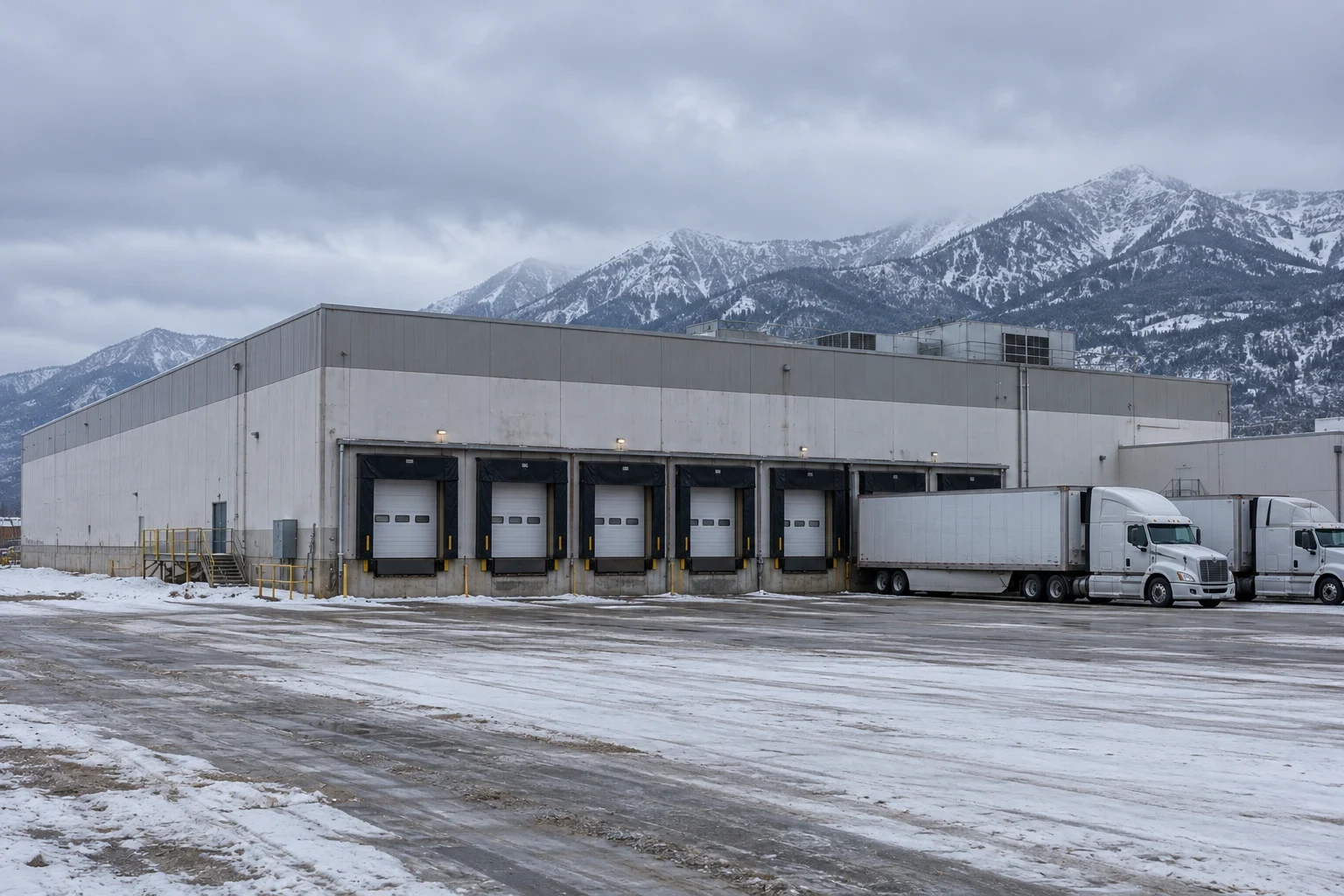
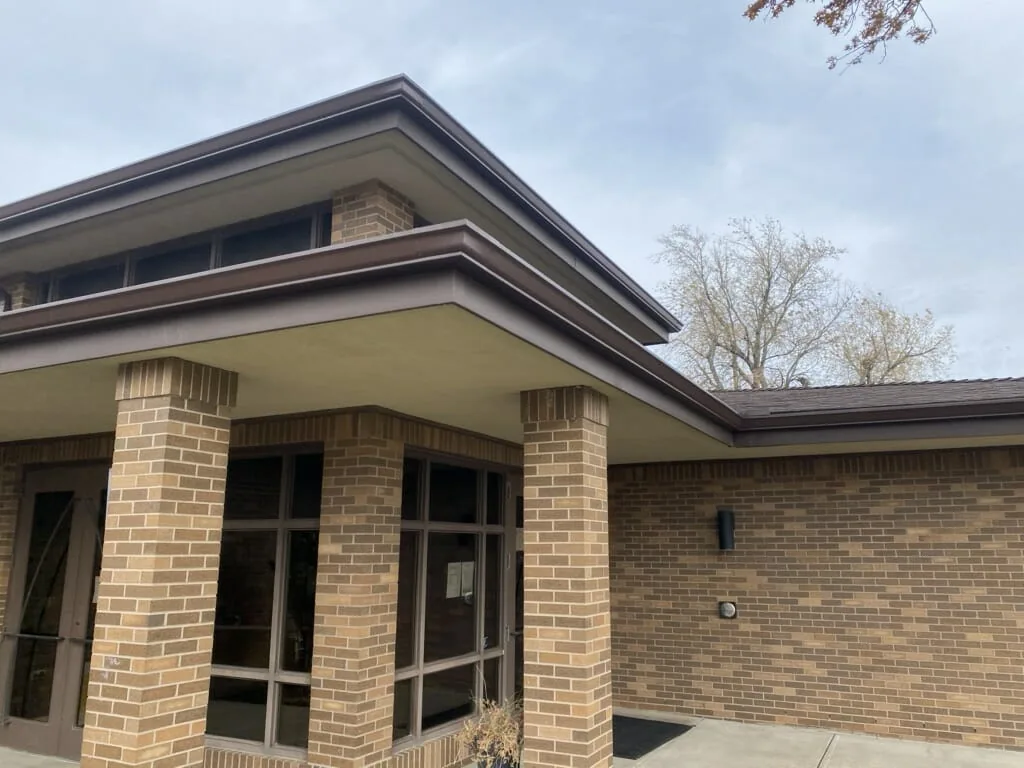
Three things, usually in this order. Edge metal loosens where trucks vibrate the wall and where ice slides off in sheets. Flashings around rooftop units crack where technicians step. Drains near the dock clog with grit and debris that blow off the lot. Each one can be fixed without a new roof if it is caught in time.
We walk the dock side first, tug the edge metal and coping by hand, probe the flashings and trace every drain. A scupper that ices over in January sends meltwater across the field and into a seam. The finding goes on the sheet with a photograph and a position on the roof plan, so the repair crew goes straight to it.
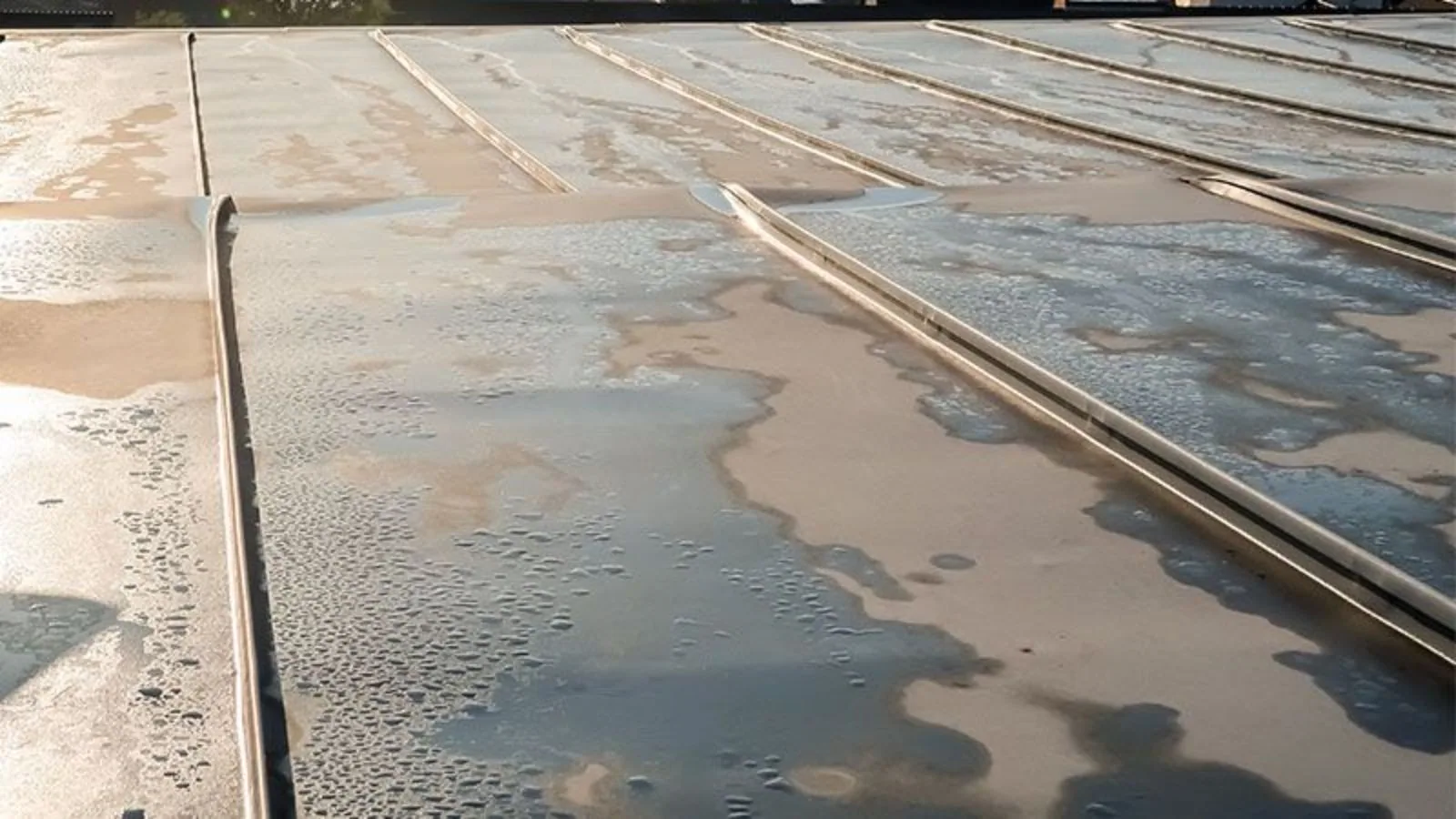
Trucks add vibration and fumes. Idling engines near a wall leave a film on the membrane, and the film holds moisture and grit. We wash the dock side each spring before the walk, so the surface shows its true condition, and we note where diesel residue has softened a sealant bead.
How do snow and ice affect a long, flat roof?
Bozeman carries a 50 psf ground snow load on paper, about 91 inches of snow in an average year and some 54 snowy days. A distribution roof collects drifts behind its parapet and around its units. The drift melts unevenly, and meltwater finds the low spots. A drain that stays iced all day leaves a pond for the night, and the pond freezes.
Ice at the eave is the visible sign. It forms where heat leaving the building melts snow high on the deck, and the meltwater runs to the cold edge. Over a dock door, that ice is a safety hazard as well as a roof problem. We check for ponding water after the first thaw, clear sumps and list the places where a dam forms, so the owner can plan snow removal and edge repairs in the fall.
What do wind and hail do on open ground?
Livingston's airport weather station is among the windiest in the country and the town gets about 56 inches of snow a year. In early August 2013, gusts of 89 mph and golf-ball hail hit Belgrade and north Bozeman together. A long, flat roof catches wind at its edges and corners, and every unsecured part is a risk.
We check edge fasteners, corner details and equipment tie-downs on each walk. After a storm we walk the field for bruises and punctures. Hail marks get a scale in the photograph and a core cut at the worst. The sheet then separates what is cosmetic from what reached the insulation. A dated record is also what an insurer wants to see.
How do rooftop units change the roof plan?
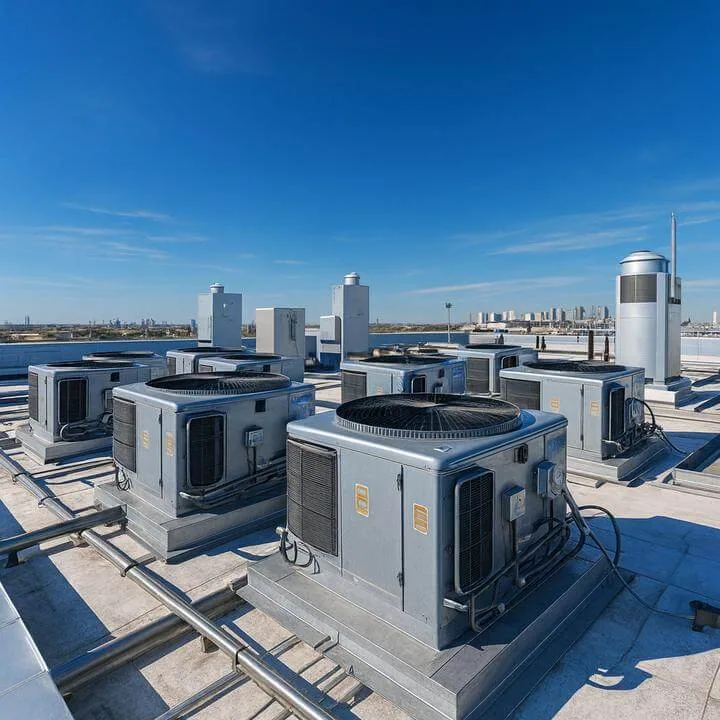
Units concentrate load, traffic and penetrations. Every mechanical room curb and equipment support is a flashing detail, and units that have been moved or replaced over the years can leave old curbs capped but not properly sealed. We map the units, check each curb, count abandoned penetrations and recommend removal where they add risk.
Walkway pads along service paths cost little and prevent much of the membrane damage around units. A service log, kept by the facility team, tells us who went up and where, so damage can be traced to its cause. That record also helps when a roofing warranty requires proof of care.
How do we keep the building shipping during the work?
We divide the roof into sections and schedule them around dock activity. The crane pick, the material hoist and the laydown yard stay away from truck lanes and fire access. Sections are dried in each day, and the crew moves from the quiet side toward the dock side, so the busiest area is last and the work there can be timed to a lull.
The same method suits work at Four Corners and out toward Livingston, where distance adds travel time and weather windows differ. A preventive maintenance visit each spring and fall keeps drains clear and edges tight between larger projects.
When should the work be scheduled?
Ahead of the freeze, and ahead of your own peak. Large scopes belong in the warm, dry window, which in the valley runs from late spring into early fall. Cold-weather adhesive windows and short days limit what can be installed outside it. Temporary repairs hold through winter, and the permanent scope waits for the first workable week.
The best time to book is the walk. Once we have seen the roof, we can price in sections, set a backup date and tell you which sections can wait a year without risk. That gives a facility manager a defensible plan and a capital line the building can carry, instead of an emergency in January when the dock doors are busiest.
Questions About Distribution Center Roofing
Can a distribution roof be replaced without stopping shipments?
Generally yes, with sections, protected dock approaches and a staged laydown yard. The plan names which doors stay open each day, and the schedule avoids your peak weeks where the weather window allows.
What does ice at the dock edge mean for the roof?
It points to heat loss through the deck, a blocked drain or an edge without enough slope. The fix may be insulation, a cleared scupper or re-sloped edge metal. We trace the cause before choosing the repair.
How many rooftop units are too many for one roof?
The count matters less than the curbs, flashings and paths. A crowded roof needs good walkway protection and a service log. We map each unit and check its connections.
Do I need a moisture survey before replacing?
It is the best first step. An infrared survey and core cuts show where insulation is wet, which fixes the replacement boundary and prevents paying to remove dry material.
What does a good roof record contain for a logistics building?
The roof plan, the unit map, drain locations, a dated photo set and a list of repairs by location. Keep it where the facility team can reach it, and update it after every visit.