
Commercial Roofing in Gallatin River Ranch, MT
Gallatin River Ranch in Bozeman and the Gallatin Valley
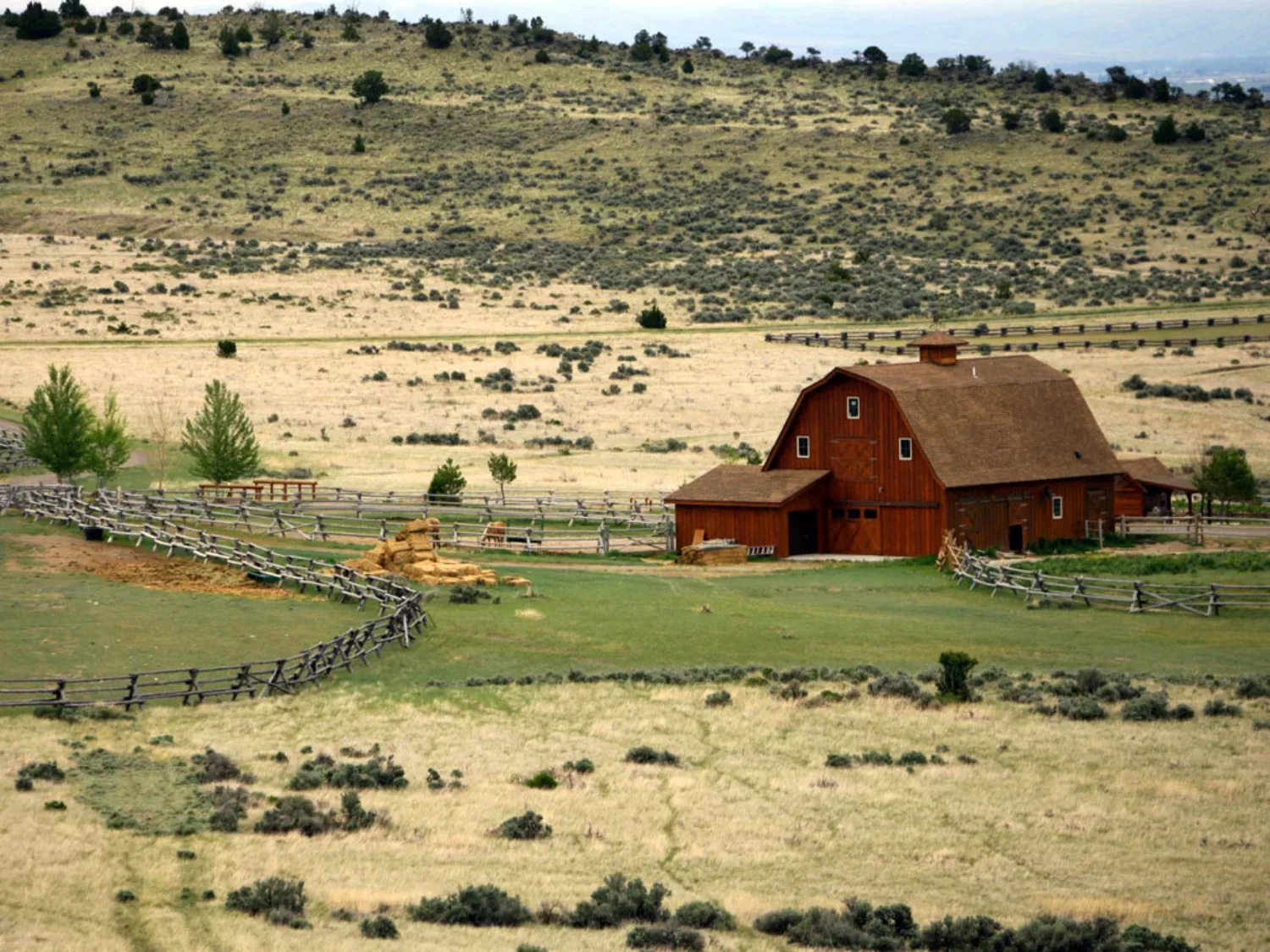
On open ground in the northern Gallatin Valley, a barn-style shop or an equipment building shows its roof to the weather from every side. In February the north slope carries a clean white pack. On the south slope, the sun has already started a melt, and a line of ice forms where the water meets the cold eave. Gallatin River Ranch is a census-designated place of 117 residents at 4,479 feet, roughly 21 miles north-northwest of Bozeman by straight line, and the commercial roofs there are working roofs on shops, outbuildings and small commercial structures.
A building in a place like this has no neighbor to block the wind. Which wall of yours takes the first gust, and what does the roof edge above it look like?
What kinds of commercial roofs fit a ranch community?
The census-designated place covers 7.12 square miles in Gallatin County and falls in the Manhattan Elementary and Manhattan High School districts. With 117 residents at the 2020 census, it is a low-density setting where roofs tend to sit on utility buildings: equipment sheds, shops, storage barns, small office buildings and the occasional community structure.
A roof's makeup gets settled on the walk. Steel panels on a low or moderate pitch are common on buildings of this type, though older rolled roofing and flat additions with membrane turn up too. The checks are the same. How many penetrations are there? Are the laps tight? Does the building have a gutter? Is the downspout carrying water away from the foundation? The answers come quickly from a walk around the building and a look at the underside of the deck.
The underside tells the rest. Frost on the inside of the panels on a cold morning means warm moist air is reaching a cold deck, and the drips that follow in spring look like a leak but are not one. Light through a seam, a dark ring around a screw or rust on a purlin tell me where water has been getting in, and for how long. I photograph each of those spots and mark them on a simple roof plan so every fix lands where the evidence is.
Why is wind the main variable on this ground?
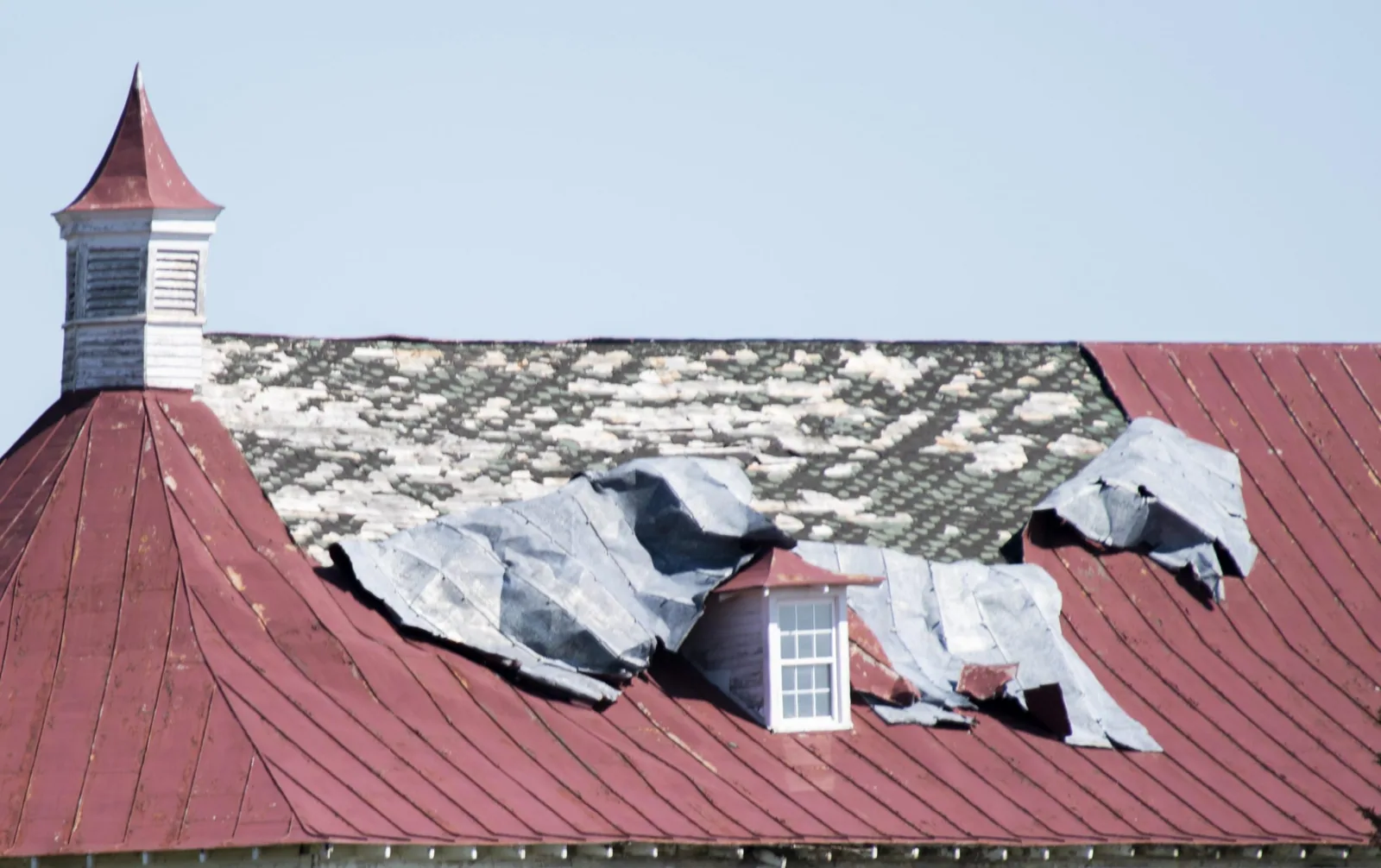
A roof beside open fields takes the push. The August 2013 storm sent 89 mph gusts and golf-ball stones across Belgrade and north Bozeman, and a sensor on Triple Tree Road logged 65 mph in late August 2023. Bozeman is designed for 110 mph. Gallatin River Ranch is not Bozeman, but its roofs are in the same valley and see the same kind of weather.
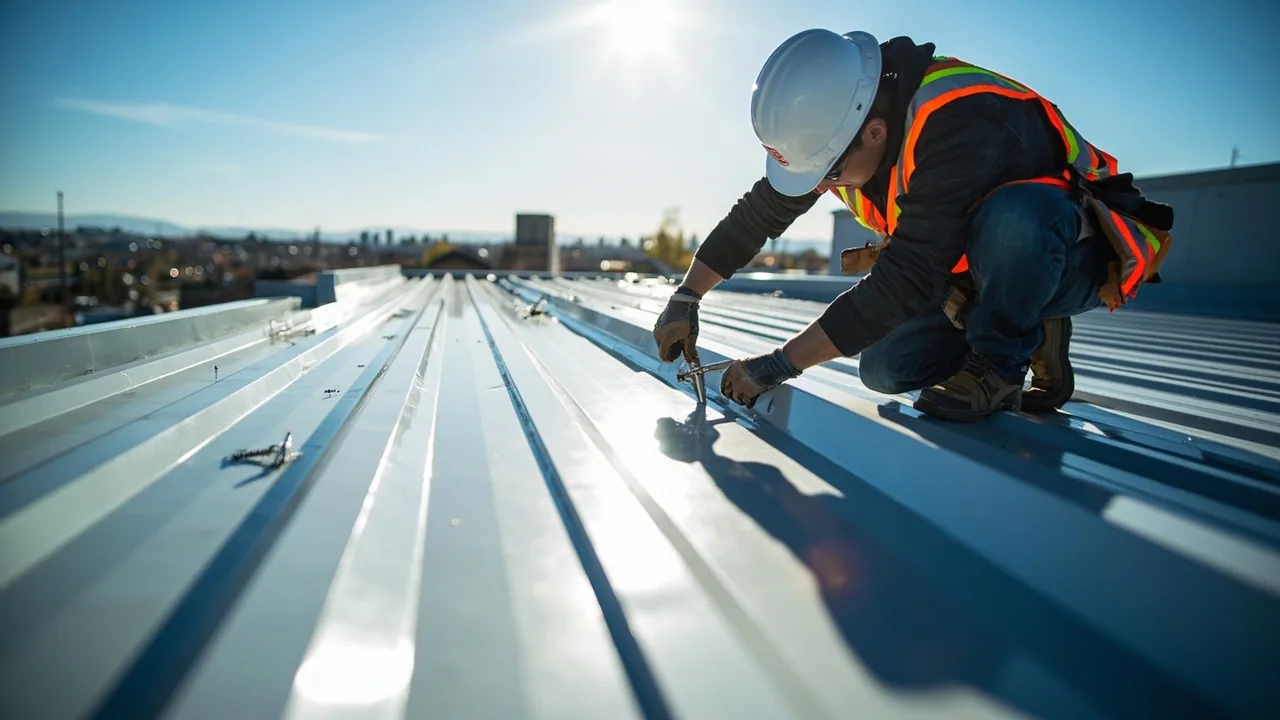
I start with the edges. Eave and rake trim, ridge cap closures, and the first rows of fasteners are where wind finds a gap. If a trim piece is bent, the panel beneath it is next. A fastener replacement with oversized screws and a bead of sealant at the laps is a small job that prevents a large one. The test is simple: if a new screw bites and tightens, the panel has years left, and if it spins in a rusted hole, that spot needs a larger repair. When panels have been lifted, wind damage repair works from the corner inward. Where a roof is worn out, a metal roof retrofit is an option that avoids tear-off.
What do snow, drift and thaw do on a farm-side building?
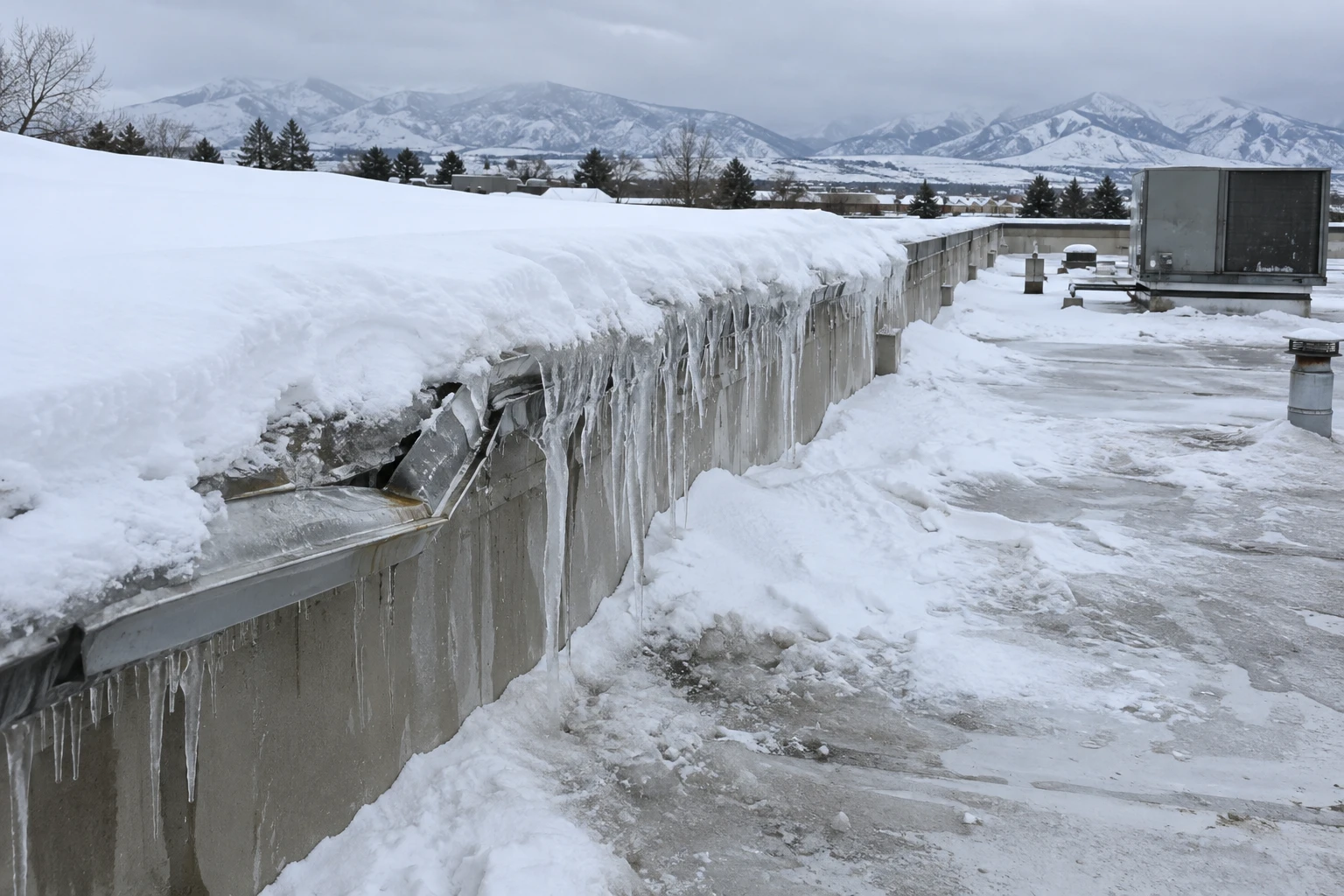
Bozeman's winter, with about 91 inches of snow over 54 snowy days and January lows near 15 degrees F, is the nearest reference. Gallatin River Ranch sits at 4,479 feet, so I plan on snow that blows and drifts. A drift forms behind any rise on the roof or against any wall, and the melt travels to the lowest spot. If a building has no gutter, the water drips along the eave and freezes into a ridge that can pull trim loose.
On a long steel roof, the whole sheet can slide. Guards across the panels hold it back so it melts gradually. A gutter and downspout carry meltwater to the ground, away from the slab. Heat cable at a problem edge keeps ice from building. Where a roof sheds onto a door or a fuel tank, relocating the discharge point is often a better answer than adding more equipment. For roofs that have already suffered, snow and ice damage repair starts with the eave and the drains. For the fall, preventive maintenance catches these items before the first freeze.
What should an owner look for after a hailstorm?
A hailstorm leaves marks that fade into weather over a season. Golf-ball stones hit Bozeman on June 30, 2010, and in May 2023 a storm report listed 1.50-inch hail along the river corridor near Bozeman Hot Springs. Whether any of it fell on Gallatin River Ranch is unrecorded, but the river valley has taken real hail, and a roof here faces the same sky.
After a storm, I look for dents in the ribs and ridge of steel panels, cracked plastic panels, soft spots in a membrane and damage to vents and flashings. Photographs with dates matter. A hail damage repair scope separates cosmetic dents from damage that leaks, and the dated record lets an owner decide whether to open a claim. Our insurance claim documentation helps with the paperwork.
How do we schedule work for an outlying building?
The drive is long enough that I plan it. We combine inspections with repairs where we can, carry material for the likely fix and book in the dry months. A walk in late summer lets an owner choose between repair, retrofit and replacement before the weather turns. Work on a sloped steel roof needs calm mornings and a clear forecast, and the window narrows in October. Material is staged on the downwind side, panels are tied down overnight and any open section is dried in before the crew leaves. On a building with livestock, equipment or stored product below, we protect it with tarps or move it before the first panel comes off.
Neighbors in the area share the same concerns. Manhattan is the town whose school districts include this ground, and Belgrade is the main commercial center in the northern valley. Our emergency roof repair crews respond around the clock when a storm gets ahead of the schedule. A building owner should keep a dated photo record of the roof, which saves time at every visit. Record the date of any storm, the weather that followed and where water showed up inside, since a leak that appears two days after a thaw tells a different story from one that appears during a rain.
Questions About Gallatin River Ranch
Is it worth repairing an older shop roof out here?
Frequently. Sound framing and panels that still hold a screw make new fasteners, sealed laps and repaired trim a far cheaper path than a new roof. We check the rust and the framing first, then give you a range.
How do I keep ice from forming at the eave?
Improve ventilation and air sealing under the roof so heat does not melt the snow from below. Add a gutter and downspout with heat cable if water must pass through the cold edge.
What records should I keep?
Dated photos of the roof, a list of repairs, the type of panel or membrane and any warranty papers. They make each visit faster and support any claim.
Can you work during winter?
Emergency repairs, yes, to stop water. Planned work waits for dry days, since adhesives, sealants and coatings need warmth and dryness to cure.