
Commercial Roofing in Springhill, MT
Springhill in Bozeman and the Gallatin Valley
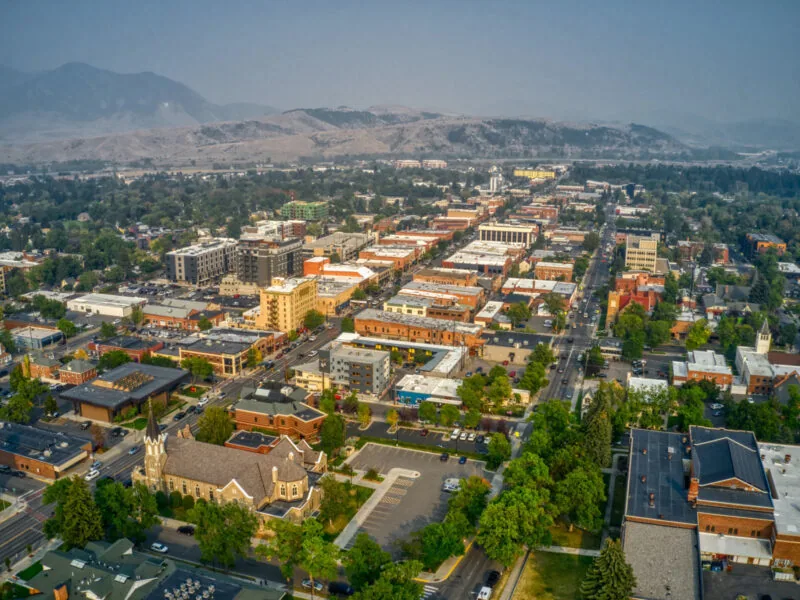
North of Bozeman the valley opens up, the ground rises a little and the wind gets a longer run. Springhill sits 14 miles north of the city at 4,738 feet, and the commercial buildings out here are the kind that stand alone on a lot with a gravel apron: shops, equipment buildings, agricultural storage and small commercial structures. After a winter the roof on one of those shows the same signs I find across the northern Gallatin Valley. Snow slides off the north slope and packs against the door, the ridge cap lifts a little on the windward side, and the first thaw opens a seam that nobody saw in October.
If you own a building in Springhill, which direction does the weather come from, and which wall of the roof takes it first?
What commercial roofs sit in a small place like Springhill?
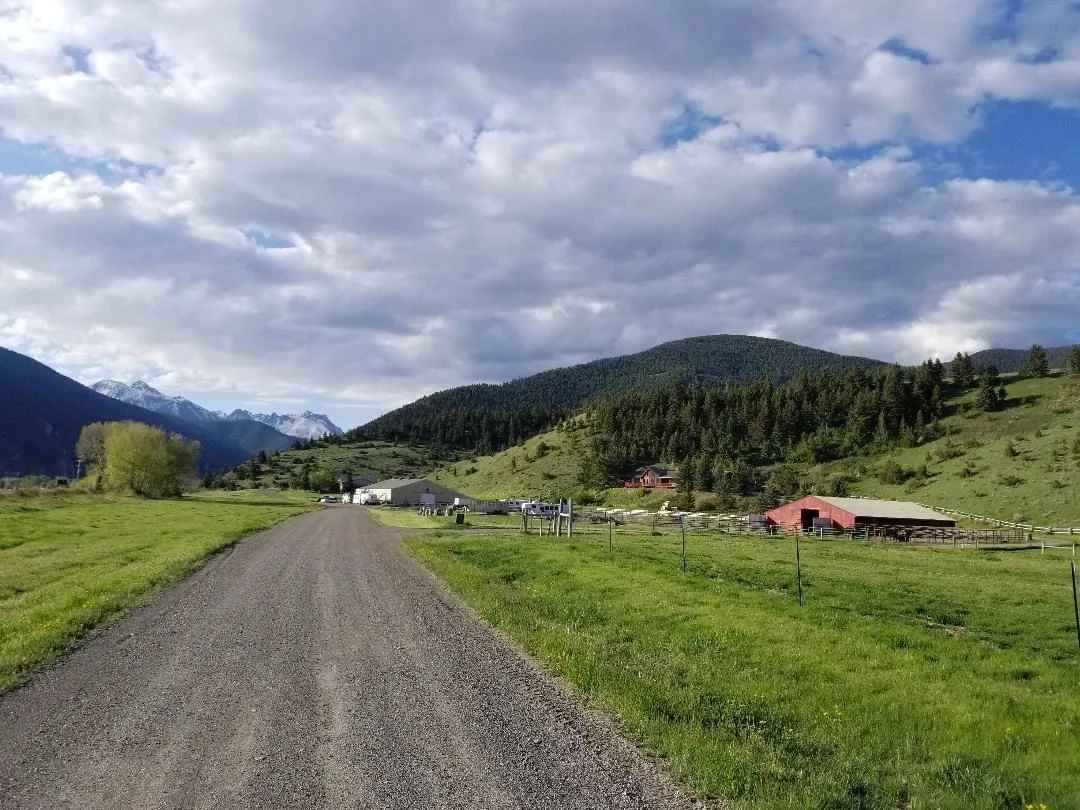
Springhill had 120 residents at the 2020 census, and it lies within the Belgrade Elementary and High School Districts. That tells me the community is small and tied to Belgrade for schools and services. The commercial roofs are few, and most are on utility and working buildings: metal-clad shops, farm-side structures, a handful of small business buildings and the roofs on community facilities.
What a roof is made of is not a guess. A walk tells me whether the panels are exposed-fastener steel, whether there is a membrane over a flat addition, and whether the building has a gutter. Before I set a ladder I count the penetrations, look at the roof edge from the ground and note any signs of water on the walls. The roof of a small building can have more problem spots per square foot than a big one, since a small roof is mostly edge and detail.
That detail work is where a sensible budget goes. A building with forty feet of ridge and sixty feet of eave has a lot of trim to inspect and very little open field, so the repair list is often a stack of small items: a boot, a closure strip, a run of sealant, a length of trim. Done together in one visit, those items cost less than a single emergency call in the middle of a storm, and they take away the usual leak paths.
How did the 2013 storm change the way we inspect northern Gallatin Valley roofs?
The early August 2013 storm hit Belgrade and north Bozeman with golf-ball stones and 89 mph gusts, in the same northern part of the Gallatin Valley where Springhill sits. The storm's reach is documented in Belgrade and north Bozeman, not at a particular Springhill address, but any building in that stretch of valley is worth a hail walk if the date lines up with its history.
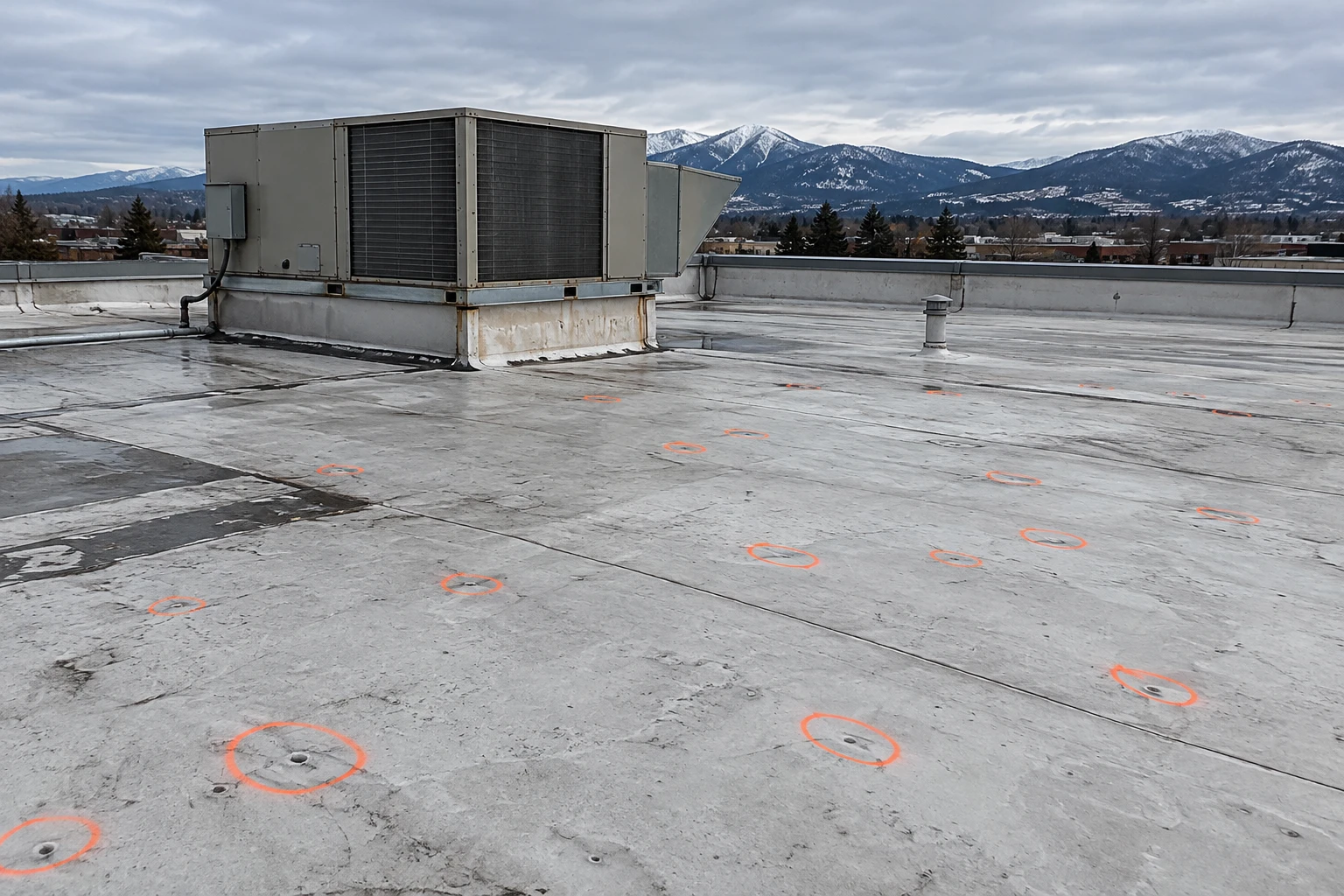
Hail on a steel roof leaves dents along the ribs and on the ridge cap. On a membrane it leaves bruises, small round soft spots with a cracked or crushed layer beneath. Plastic skylight panels crack. After a storm I walk the roof, check the ribs and the metal flashings, press on the field of any flat section and photograph what I find with a date. A hail damage repair write-up keeps cosmetic dents apart from damage that leaks, and the dated record is what an insurer will ask for.
What does snow do at 4,700 feet?
Bozeman's year brings about 91 inches of snow on 54 snowy days, with January nights near 15 degrees F. Springhill sits at 4,738 feet, higher than the city, so I plan on at least that much snow and expect the wind to move it. Snow can blow across fields and builds against the first wall it meets. On a shop with a big door on the north side, the drift sits in front of the door through several thaws.
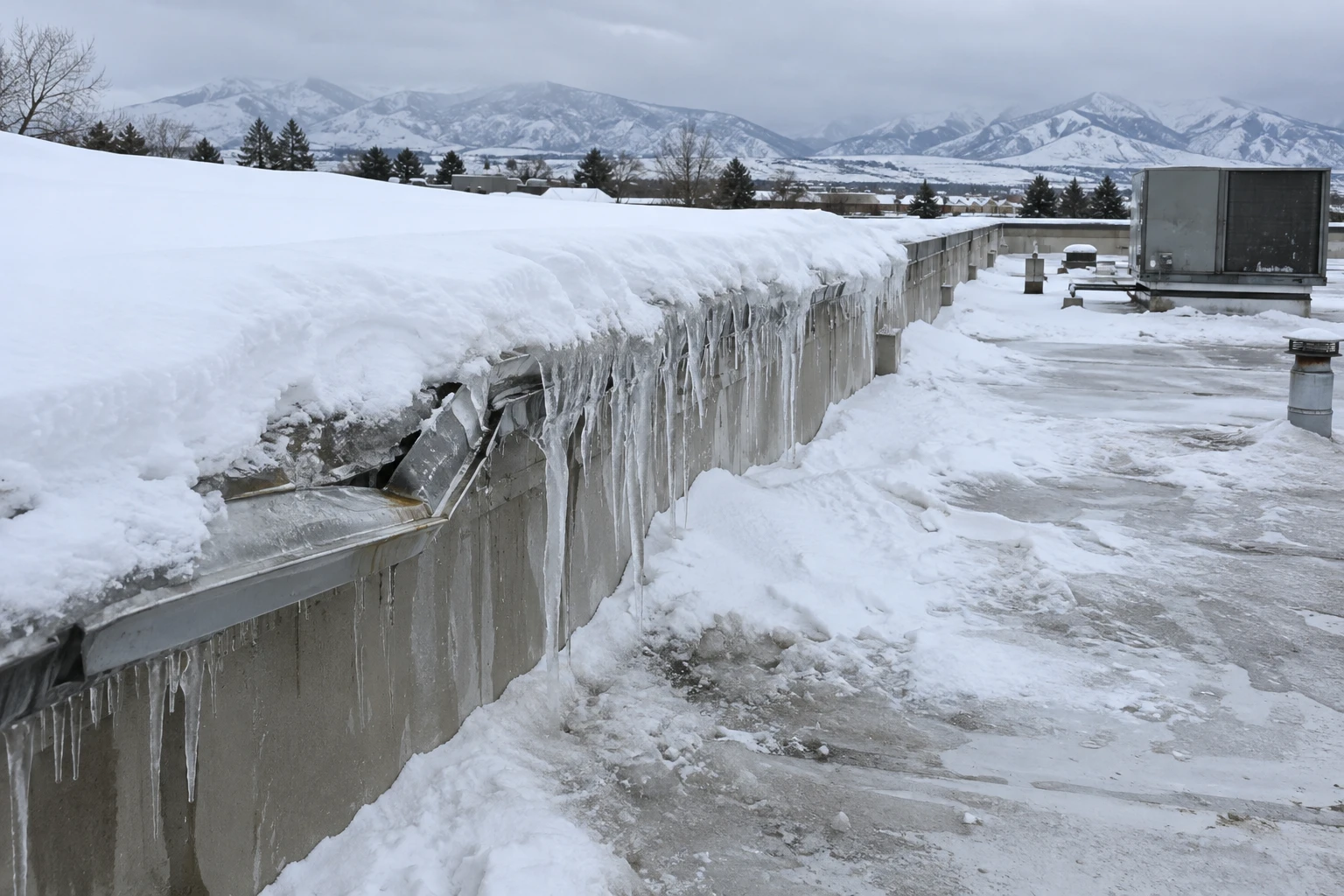
On the roof, the drift forms behind any rise: a ridge vent, a skylight curb, an end wall. Water from the melt finds the lowest seam, and the next night it freezes under the panel. The cure is a few small changes: snow guards on the slope above the door, a gutter or a diverter at the eave, and sealant at the laps nearest the ridge. Our snow and ice damage repair work starts there, and preventive maintenance in October keeps the same problems from returning.
Where does wind take a metal roof apart first?
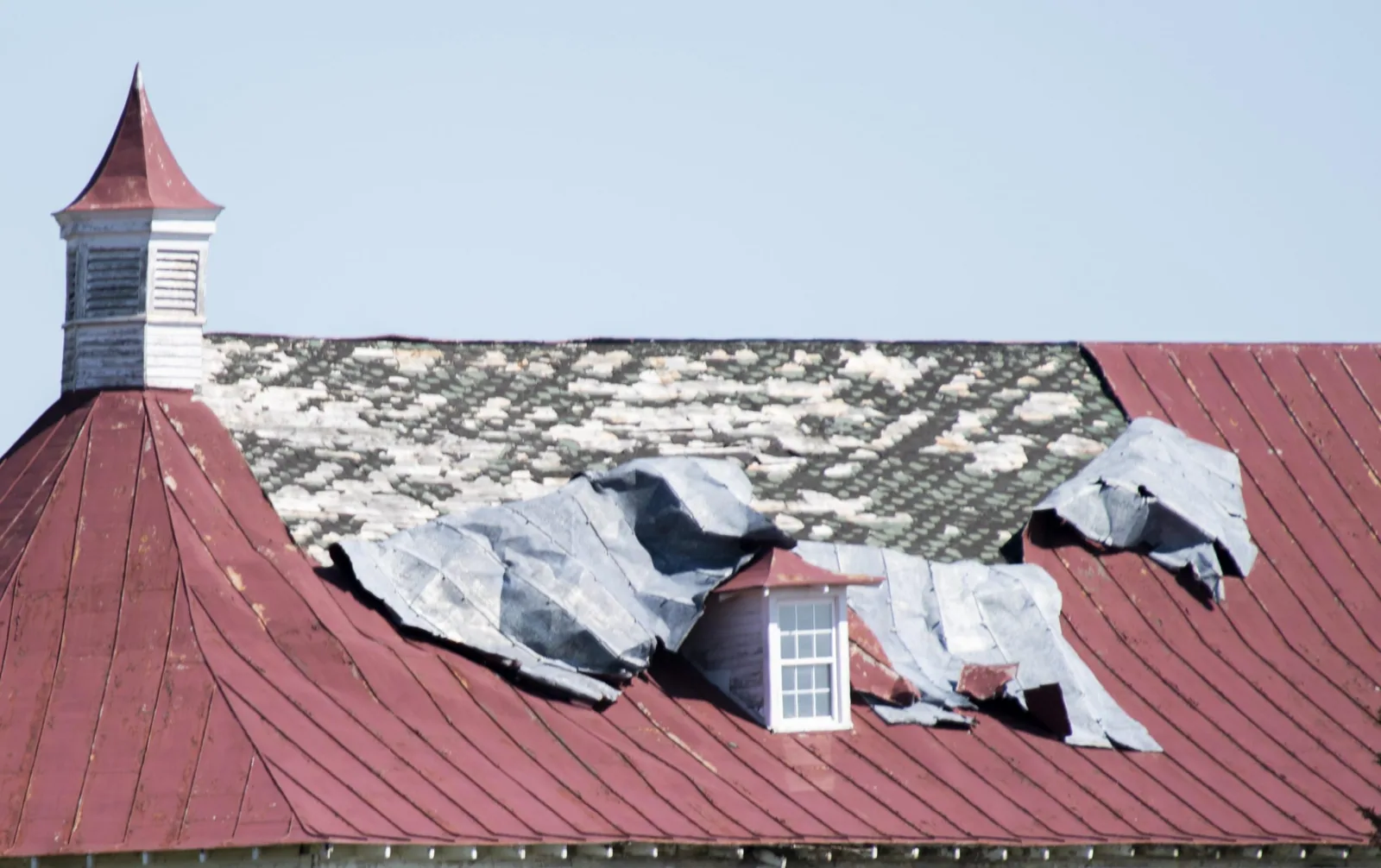
At the corners and the edge. Bozeman's design wind is 110 mph, while the 2013 storm peaked at 89 mph in the valley. A freestanding roof feels the push from every direction, and the eave and rake trim take it. Fasteners work loose gradually as the metal moves, and the washers dry out. A bent trim piece that is ignored over one winter can tear a panel the next. Ridge caps are the other early failure, since the closure strips beneath them compress and let wind-driven snow in at the peak.
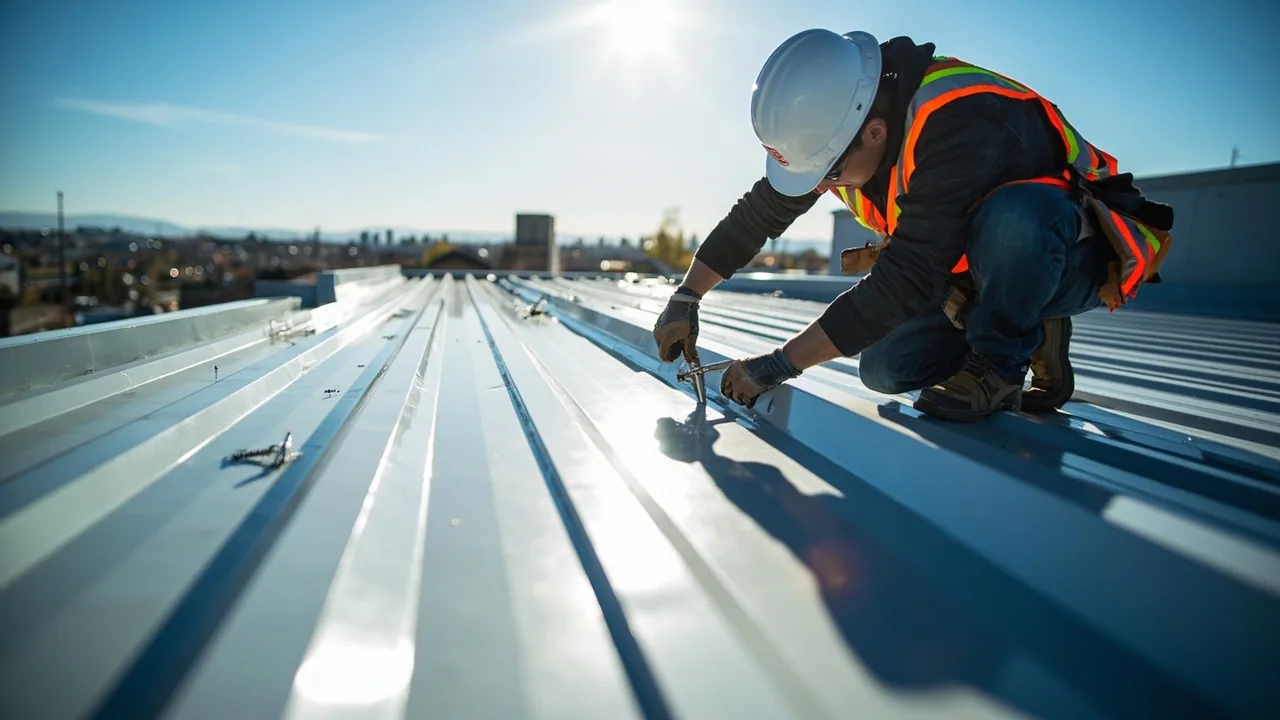
My inspection starts with a hand check of the trim, then the ridge cap, then the screws along the first three rows from every edge. A loose eave gets refastened at the right spacing. A bent rake gets replaced. A metal roof that has been in service for decades and shows rust at the laps may be a candidate for a metal roof retrofit, which adds a new roof over the old one without a tear-off. After a windstorm, wind damage repair comes before any other work.
How do we plan the work from Bozeman?
The drive is 14 miles, and the plan reflects it. We bundle inspections, combine repairs on a single visit and carry the material for the likely fix. Roof walks are scheduled in late summer and early fall, when the days are dry and the wind is lower. We schedule tear-off and panel work for calm mornings, because a sheet of steel in a gust is a hazard to the crew and to anything on the ground. Material is staged on the downwind side of the building and tied down overnight. Repairs follow within weeks, and any replacement is set for the next dry window.
Neighbors in the northern valley share the same issues: Belgrade is the closest commercial center, the airport area has its own wind pattern, and Bridger Canyon up Montana 86 carries far heavier snow. A building in Springhill with an older roof benefits from the same record keeping as any other: a dated photo set, a list of penetrations and a note of repairs. Emergency calls go through emergency roof repair, which runs around the clock.
Questions About Springhill
How do I know if the 2013 hail damaged my roof?
Walk the roof and the metal. Look for dents along the ribs and ridge, soft spots in a membrane and cracked plastic panels. If the building was in place in 2013, an inspection can compare the damage to wear. The report we write gives dates, photos and locations.
Why does the north side of my shop keep icing?
The sun does not reach it, so meltwater from the roof refreezes at the eave. A gutter, a longer overhang or heat cable at the edge keeps the ice from building. Snow guards above the door keep the slide from landing on it.
Is a retrofit cheaper than a new roof?
Usually, because it avoids tear-off and disposal. It requires framing that can carry the extra weight and a roof surface that is sound. We check both before suggesting it.
Do you serve small buildings outside town?
Yes. A small building gets the same walk, the same photos and the same written scope as a larger one. We plan trips to combine work.