
Roofing for School Districts in Bozeman, MT
School Districts in Bozeman and the Gallatin Valley
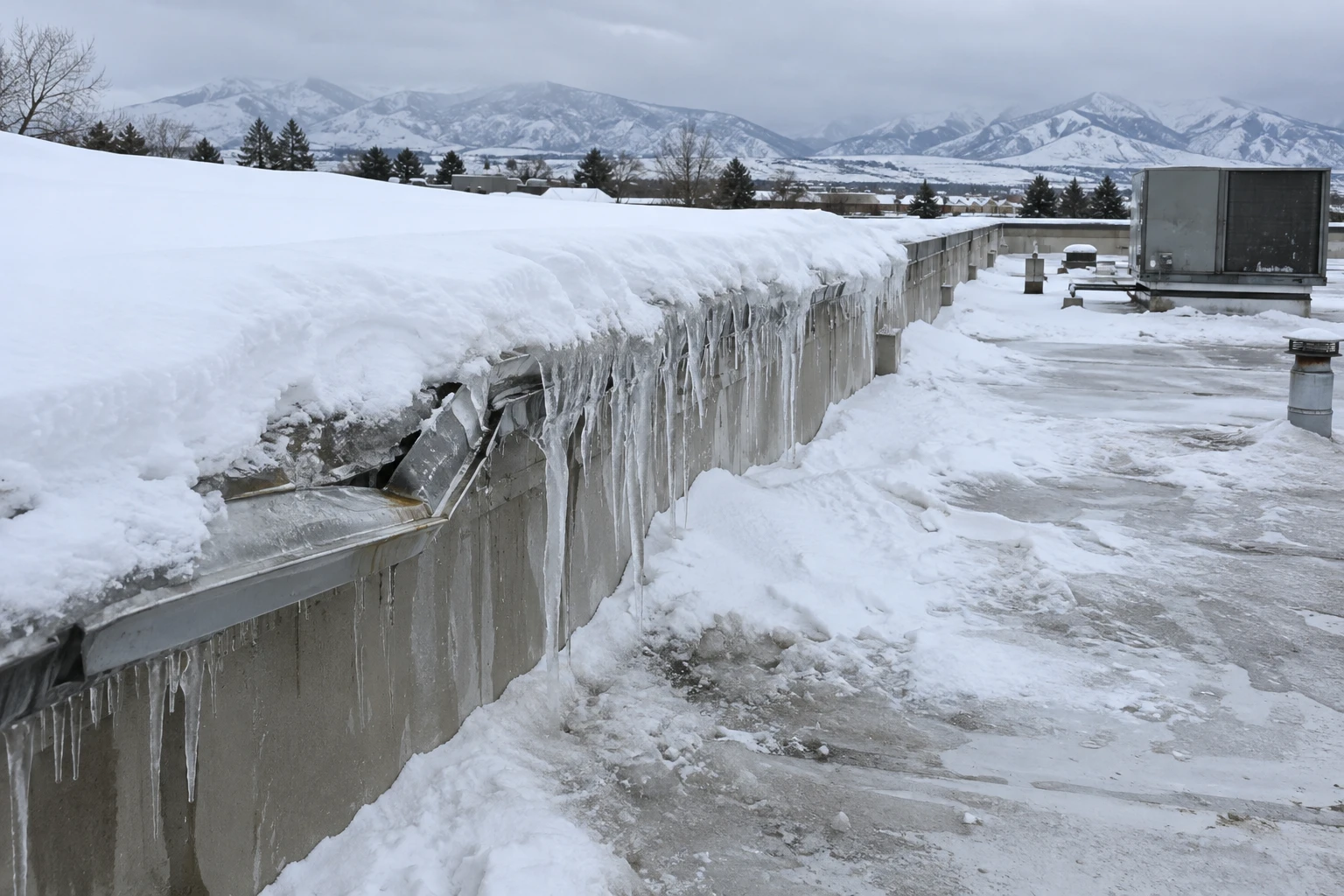
A school roof tells on itself in the first week of January. Kids come back from break, the boiler is running hard, and the gym or the cafeteria addition has a bucket under a seam that was bone dry in September. Bozeman takes some 91 inches of snow a year and January nights near 15 degrees, so a flat or low-slope school roof goes through weeks of loading, drifting and thaw before a facilities director ever sees the damage. Drifts pile behind parapets and mechanical screens, ice builds at the scupper, and meltwater finds the weakest lap.
A district does not own one roof. It owns a set of them, each with its own age, its own additions and its own story. The question I start with is plain: which building leaked this winter, and was the water at the drain, at the wall or at the unit on the roof?
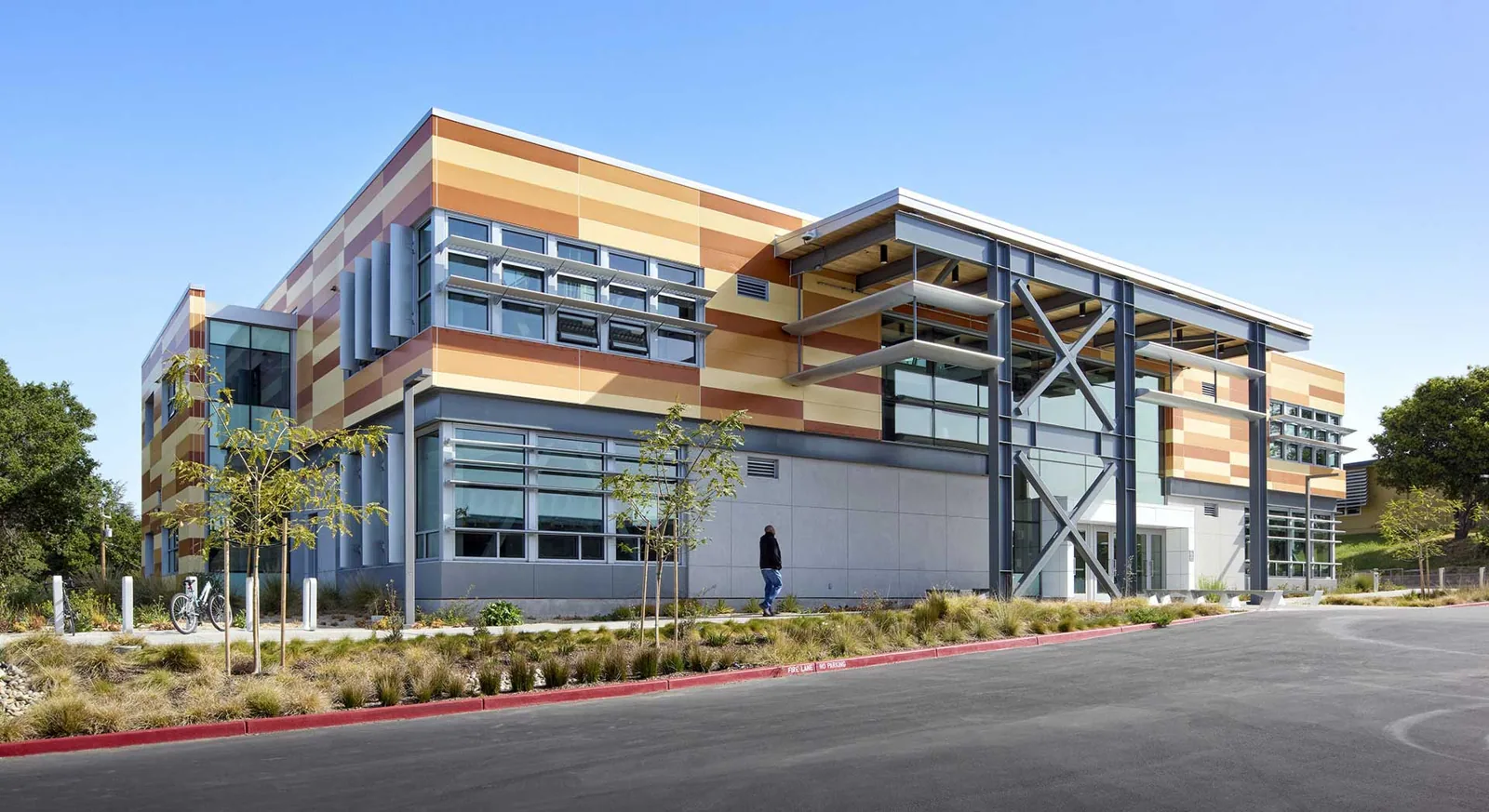
Why is a district roof set never uniform?
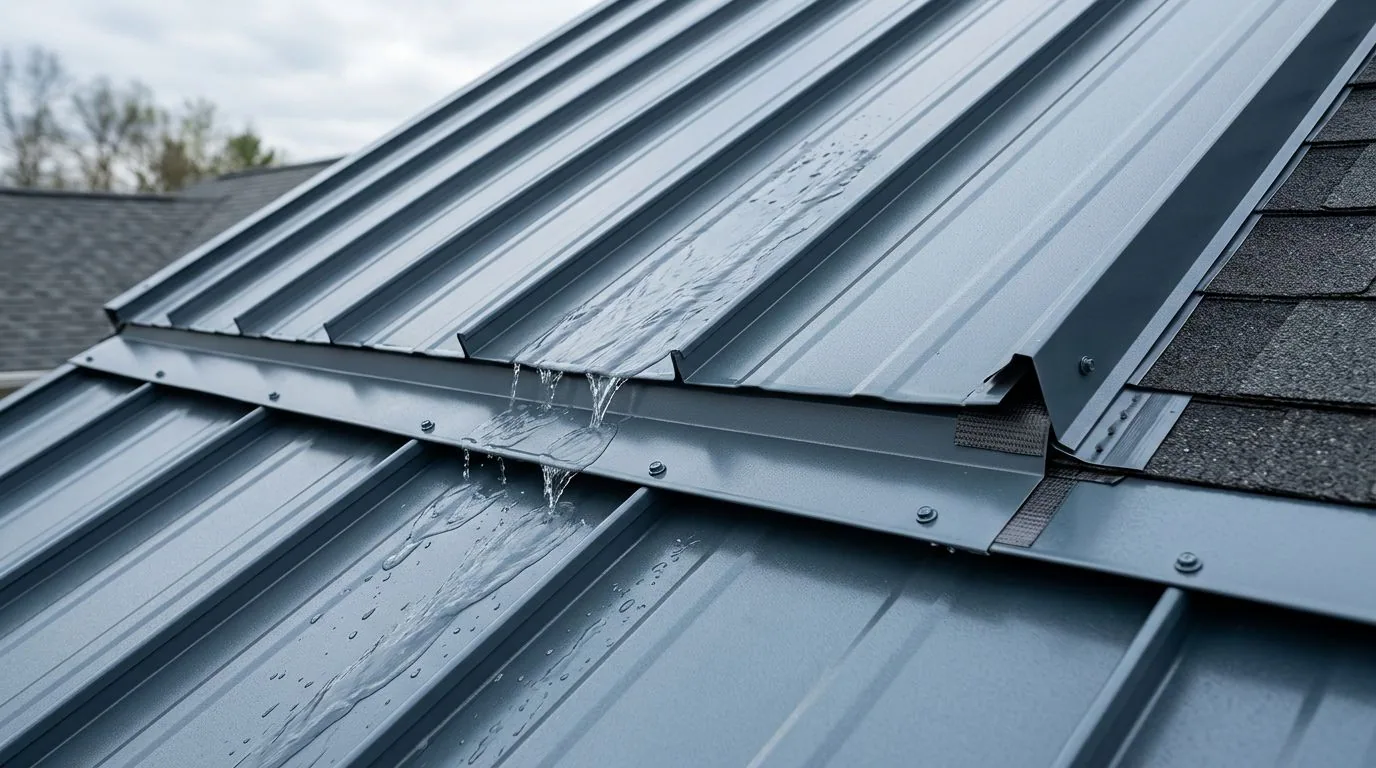
Schools grow in pieces. A main building from one decade gets a wing in another, a gym in a third, a portable-to-permanent classroom block after that. Each addition arrives with a different membrane, different insulation and a different set of flashings where new meets old. The seam between two roof ages is where I look first, because the transition is a drainage and movement problem as much as a waterproofing one.
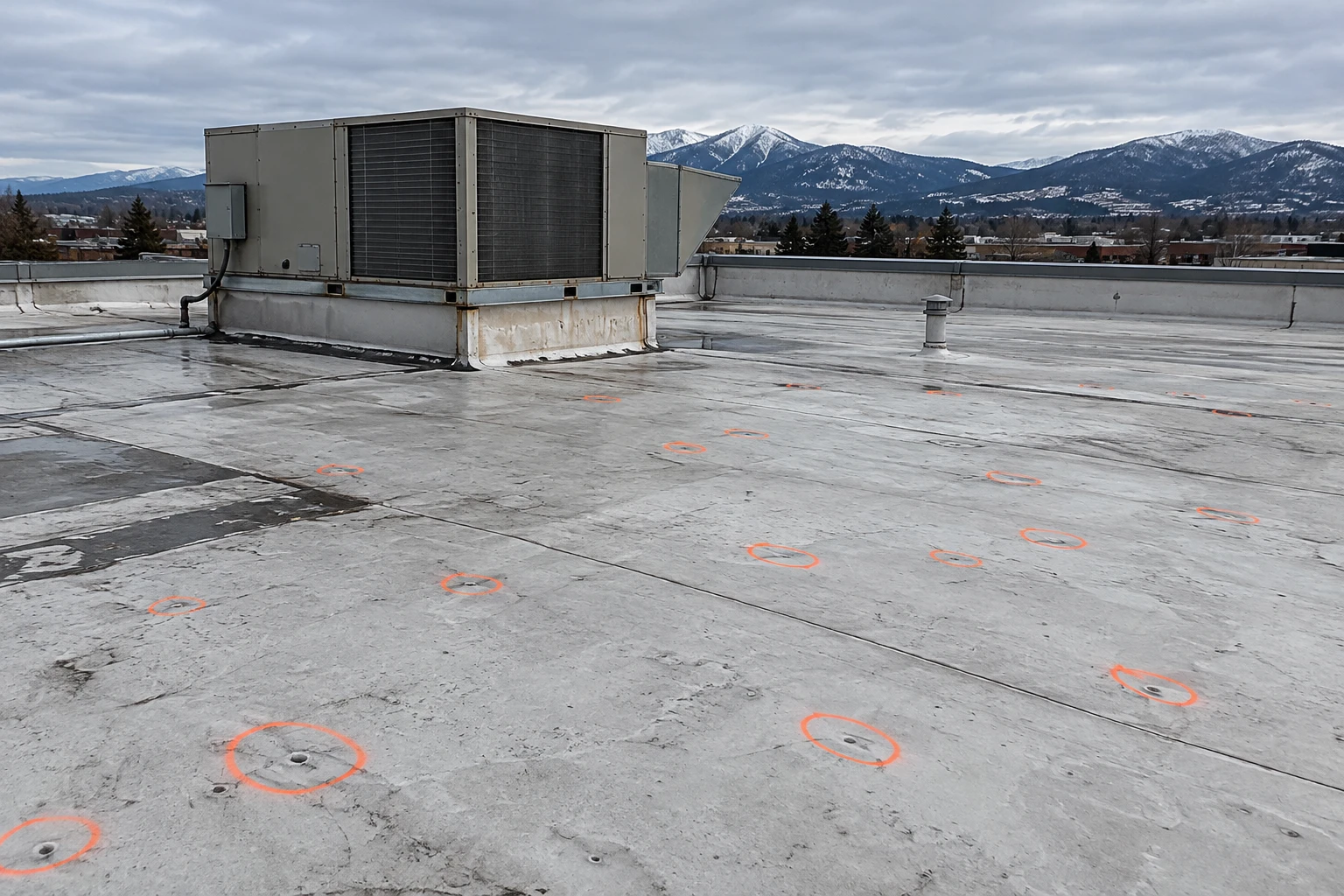
Records are usually patchy. A district may hold a warranty for one wing and nothing for another, and original drawings may show a roof that was altered twice since. A core cut tells you what is actually up there. We take a few per building where the history is unclear, write down the layers and use the findings to rank the roofs for repair, replacement or watching. That ranking, built from evidence, is more useful to a board than a list of roof ages alone.
What does snow do to a school roof?
It loads, it drifts and it melts in the wrong places. A 50 psf ground snow load applies in Bozeman against a statewide minimum of 30 psf, so a roof needs real structure behind it. A taller gym or a mechanical room next to a low classroom roof builds a drift on the lower roof, and that drift can exceed what the lower roof was designed to carry. When I see a sagging deck or a deflected purlin near a step in the roof, I stop and tell the facilities director before anything else.
Thaw cycles do the quiet damage. Snow melts at midday, runs to an iced drain and refreezes before the buses leave. Water backs up under flashing and into the insulation. A district that clears drains in November and again in February avoids much of it, and our snow and ice damage repair work starts with the same drain and scupper checks. For roofs with gutters or sloped edges, snow guards matter over entries and walkways.
How does hail enter a district's planning?
Half an hour of golfball hail on June 30, 2010 broke dozens of Montana State University windows and damaged a skylight at a fire station on North 19th Avenue. A district with schools in the valley should plan with a storm like that in mind. In early August 2013, golf-ball stones came again over much of Belgrade and north Bozeman, with gusts to 89 mph.
Hail leaves bruises, not holes, and bruised membrane leaks months later. After any severe storm we walk the field of every building, photograph impact marks and cut cores where we suspect a fractured insulation board. That record helps with an insurance claim and helps a board decide whether a roof is worth patching. Our hail damage repair findings are written so a business manager can read them without a roofing background.
When can the work happen with students in the building?
Summer is the obvious window, and it is shorter than it looks. Cold-weather adhesive limits push the start of a membrane job toward late spring, and fall nights close the window again by October. A job that must finish before the first day of school has to be bid, approved and ordered while snow is still on the ground. Material lead times have little give, so a board that votes in June may be asking for a roof that cannot be done before August.
For work during the school year, we phase by wing, keep staging away from bus lanes and entries, and coordinate noise with testing days. Work over an occupied building is mostly routes and schedule: where the crane sits, where debris leaves, who monitors the ground. Background checks and badge rules are the district's call, and we plan for them from the first walk.
How do you build a roof budget for many buildings?
Start with condition, then rank by consequence. A leaking roof over a library or computer lab costs more than the same leak over a storage wing. We write a condition report for each building, sort items into repair now, plan next year and watch, and give a board a range of work for each tier. Capital planning across the set turns those tiers into a multi-year schedule that levels the spending.
Districts that treat roofs as a program, not a series of emergencies, save on mobilization and avoid winter panics. A multi-site roof program keeps the same inspection format, the same photograph standards and the same warranty file for every building, which makes next year's decision easier than this year's.
Do roofs in Belgrade and on the university side behave differently?
Setting changes the details. Belgrade sits next to the airport and Interstate 90, and the valley wind that pushes snow into drifts behind parapets does not care which district a roof belongs to. Roofs near the Montana State University campus, on the south side of Bozeman, are in a different part of town with different neighbors. We note each school's setting before choosing details, and we record it in the Belgrade and Montana State University area files so the next crew sees the same pattern.
Districts are not alone on these roofs. City and county buildings share the same winter, so a facilities director who also handles shared recreation space faces the questions public agency owners do. Property managers who lease space keep the same kind of file, and their roof programs look much alike.

Questions About School Districts
Our board approves in spring. Can a summer roof still be done?
Yes, if the bid, submittals and material order happen before the thaw. Lead times vary by system, and a long-lead item can push a start past July. Bring us the buildings by February and we will give a schedule that shows what a late approval would cost in calendar time and in cold-weather limits.
How do we decide between repairing a school roof and replacing it?
Look at the layers, the moisture and the trend. A dry roof with a few failed details is a repair. Wet insulation across a wide area is a replacement, because patching leaves water in the assembly. A moisture scan and a few cores give the board a defensible answer. Pair that with a leak history by year and the pattern shows.
Can solar go on a school roof we plan to redo?
Yes, and it is best planned with the new roof. Racks need structural checks and flashed supports, and a membrane that will sit under panels should have a long life ahead of it. Replacing a roof before installing panels costs less than lifting an array later. We map curbs and loads first.
What happens to the warranty if another contractor patches the roof?
Terms vary by manufacturer and by the installer, and many require approved repairs. Send the warranty paperwork and we will read the conditions before any patch goes down. Keep a log of every repair, who did it and what material was used.
Who inspects after a hailstorm?
We can walk every roof the day after a storm, photograph impact marks and write a condition record for the district and its insurer. Teachers and custodians can help by reporting new drips, but a roof can bruise without leaking, so the walk should not wait for a stain.